
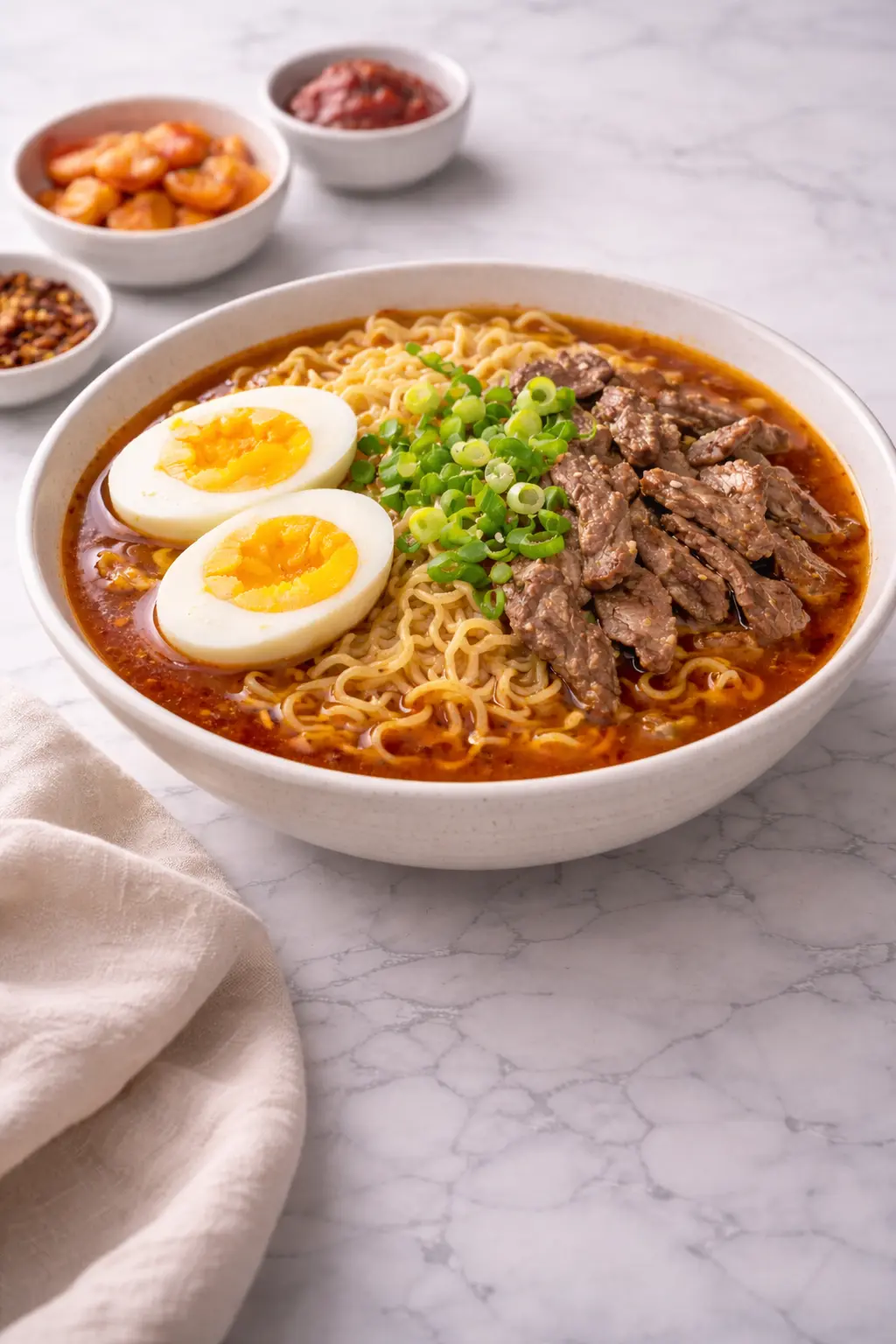
I’m Chef Thomas, and Korean Spicy Ramen with Beef is the bowl that shows up when the week has taken a bite out of you. I remember sliding a hot pot across the stove for my kids, all of us leaning in over the steam. Forks got left behind. We slurped and laughed. It was simple, a little messy, and exactly what we needed.
This version is slurpy and savory with a clean hit of heat. It’s fast enough for a weeknight and steady enough to make again. I often keep it in mind alongside something likeitalian-spinach-bake when I want a soft, comforting finish after dinner.
- ✅ Deep, steady heat that doesn’t overpower the broth
- Thin-sliced beef stays tender if cooked properly
- Feels like a full meal in one bowl
- Gochujang may require a special trip to the store
- Noodles can overcook quickly if not watched
Table of Contents
Why I keep this ramen in rotation
Korean Spicy Ramen with Beef gives you a lot without asking much back. It cooks fast and fills the bowl with real flavor. I use ingredients that behave well in hot broth and don’t fall apart under heat.
I’ve also found it’s a good way to pull kids into the kitchen. They can rinse greens, slice mushrooms, and stir noodles. That matters to me.
Ready in about the time it takes to cook noodles
Savory heat that feels warming, not sharp
Easy to adjust with what’s already in the fridge
Looks good in the bowl without extra effort
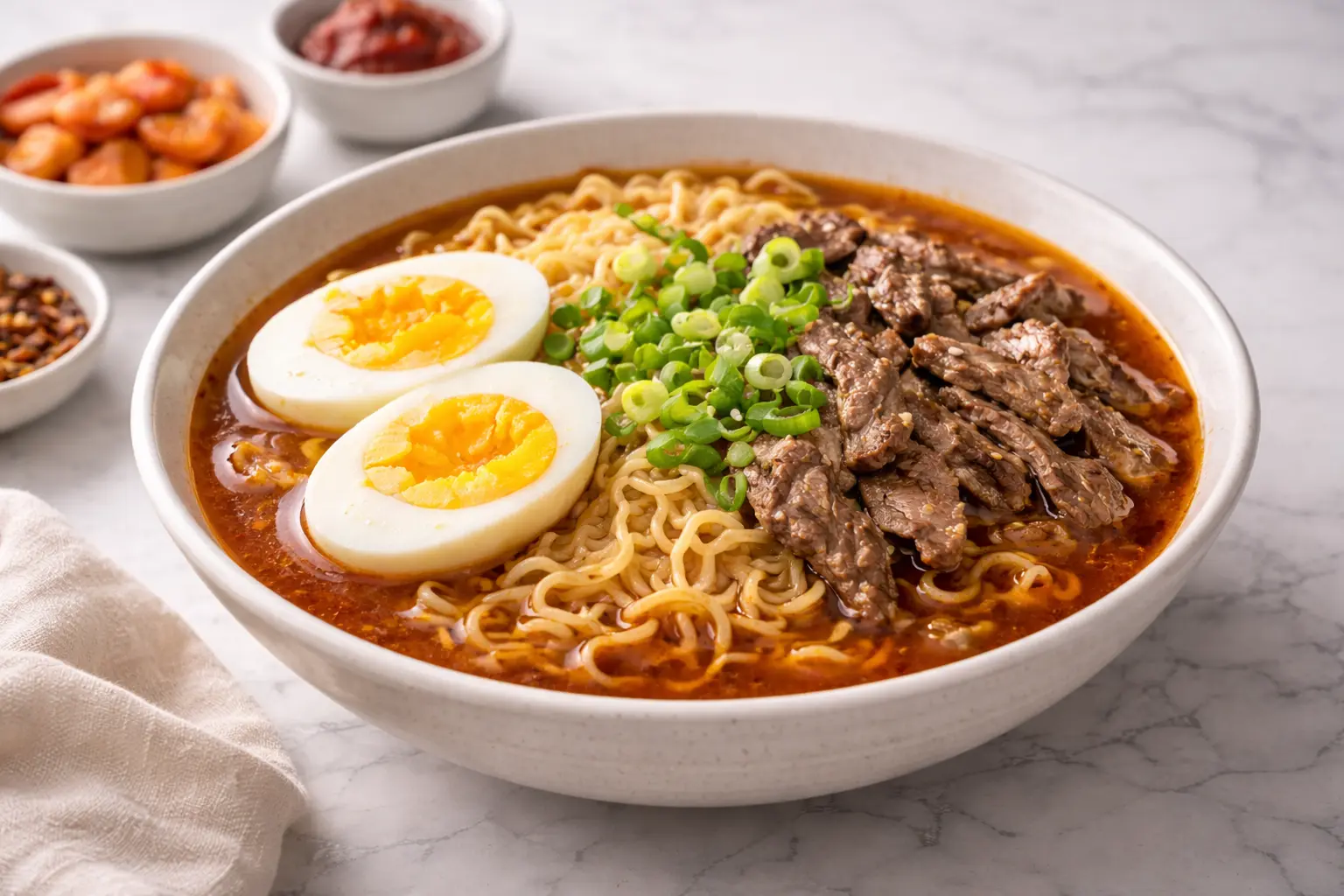
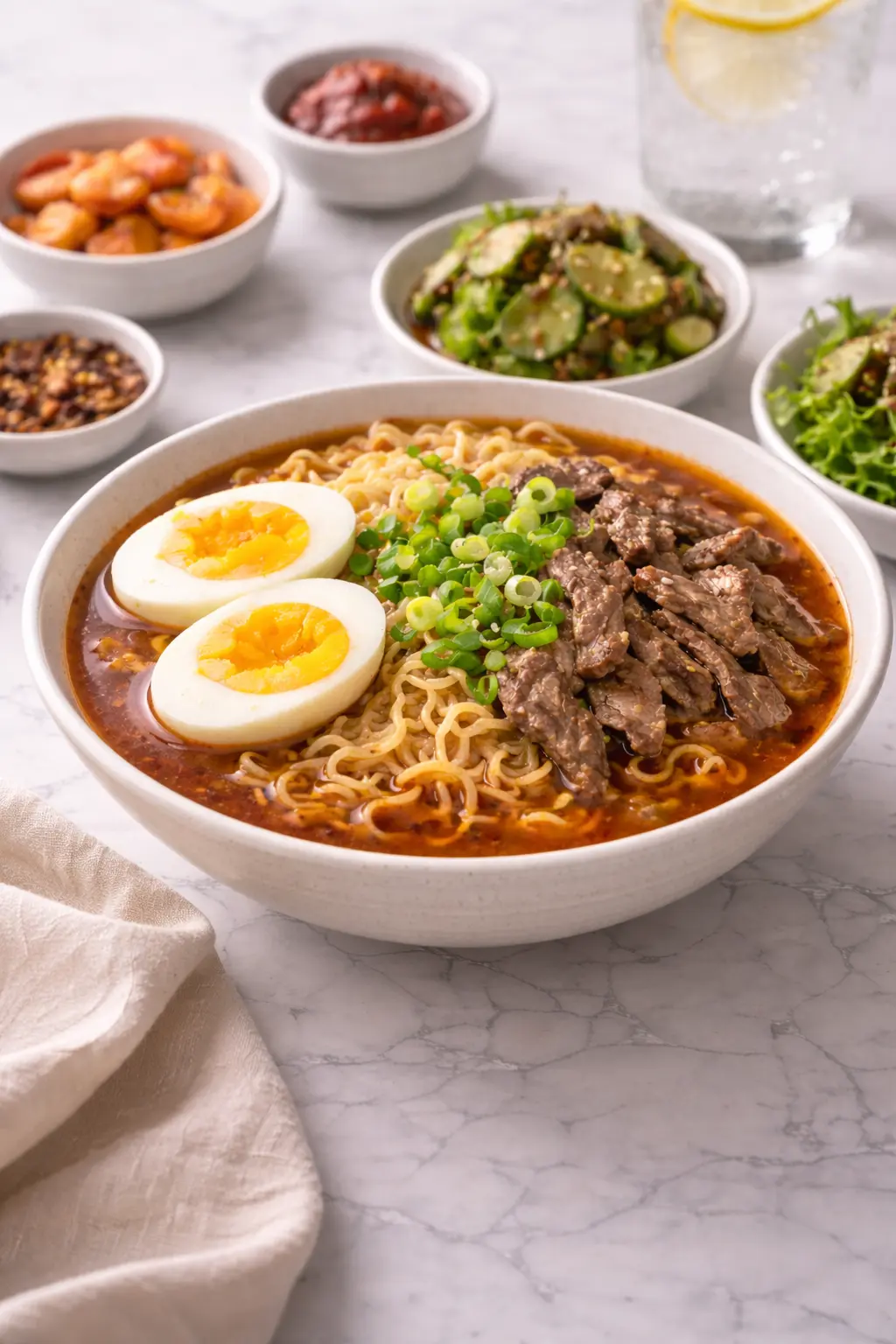
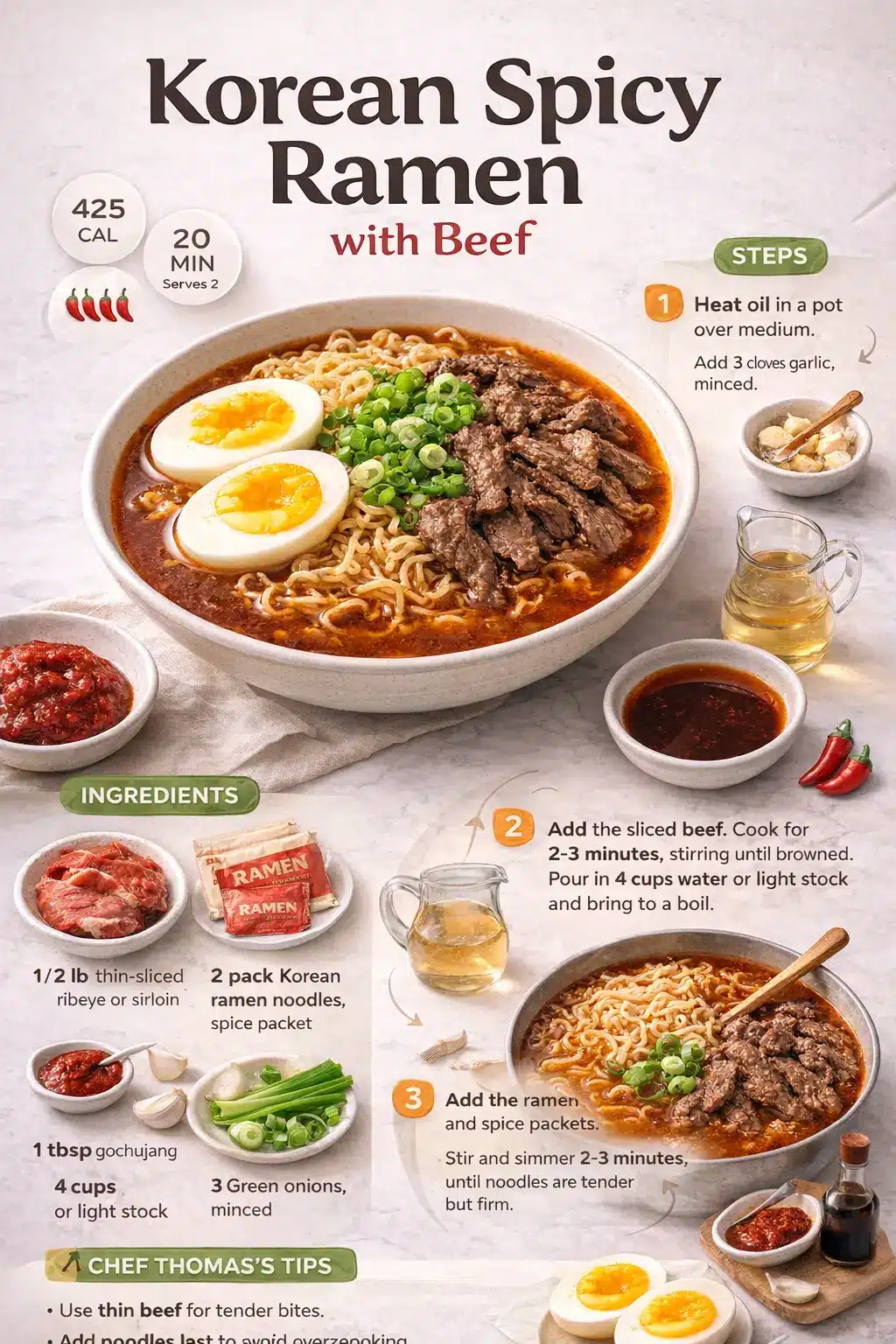
Korean Spicy Ramen with Beef
Ingredients

Equipment
Instructions
- Heat a large pot over medium-high heat. Add the oil. Lay the beef in a single layer. Let it brown before stirring. This takes about 2 minutes.
- Remove the beef and set it aside. It will finish cooking later.
- Lower the heat to medium. Add garlic and ginger to the same pot. Stir for about 30 seconds. You want the smell to rise, not the color to darken.
- Pour in the beef stock. Add soy sauce and gochujang. Stir until the chili paste dissolves. Bring to a steady simmer.
- Taste the broth. Add more gochujang if you want more heat.
- Add the mushrooms. Simmer for 3 to 4 minutes. They should soften but still hold shape.
- Add the ramen noodles directly into the broth. Press them down gently so they soak evenly.
- Cook until just tender. Start checking early. Soft noodles turn mushy fast.
- Return the beef to the pot. Add the spinach. Cook for 1 minute.
- Turn off the heat. Stir in sesame oil. That small spoon makes a difference.
- Ladle into bowls. Top with green onions and a soft-boiled egg if you like.
Notes
These give you depth, heat, and some fresh lift at the end. I’ve leaned on this mix for years. Chef Thomas still does.


How I make Korean Spicy Ramen with Beef
Chef Thomas’s Tip: Warm stock helps the dish start cooking evenly.
EQUIPMENT & TOOLS I USED FOR THIS RECIPE
This ramen comes together in one pot, which is part of why I like it on a busy night. You do not need much, but a few steady tools make the process smooth. These are the ones I use when I make this at home.
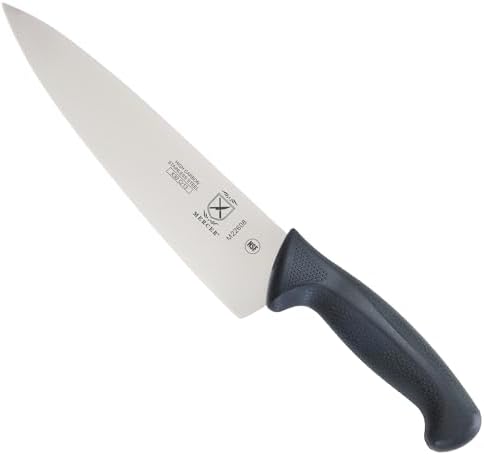
- QUALITY CONSTRUCTION: Knife is crafted with one-piece high-carbon Japanese steel for easy edge maintenance and long-last…
- SUPERIOR DESIGN: Built to last ergonomic handle with textured finger points offers a non-slip grip with added comfort, d…
- BEST USE: The perfect knife for chopping, mincing, and cutting. Ideal for dicing onions, mincing shallots, chopping herb…

- Stainless Steel
- Imported
- HIGH-QUALITY MESH STRAINERS: The Cuisinart Mesh Strainer with handle set comes in three sizes, including 3⅛″, 5½″, and 7…

- Perfect Heat Distribution: Made of thick gauge aluminum, the non-stick stockpot provides even heat conduction and preven…
- Effortless Cleanup: 6-qt stockpot black with nonstick coating black interior makes food release and cleaning easy
- Keep Cool Handles: Handles stay cool and are riveted for strength and durability
Good tools do not have to be fancy, but they should feel solid and reliable. If you are building your kitchen step by step, browse my complete list of recommended cooking essentials:
Variations I’ve used
Swap the protein
Thin pork or shredded chicken both work well.
Change the noodles
Udon gives a chewier bite. Fresh ramen cooks faster, so I shorten the time.
Adjust the heat
I start with less gochujang and add more at the table. Chili oil brings a deeper warmth if needed.
Change the broth feel
More broth makes it soupy. A few extra minutes on the stove thickens it slightly so it clings to the noodles.
I stay loose here. Kitchens and schedules vary. Chef Thomas learned that early.
Making it ahead and storing
Leftovers are fine, though noodles drink up broth as they sit. If I plan to eat it the next day, I store everything together. For longer storage, I keep noodles separate when I can.
When reheating, I warm the broth first, then add noodles just long enough to heat through. A small spoon of soy or gochujang brings the flavor back if it’s gone quiet. Toppings wait until the end so they stay fresh. Chef Thomas relies on that habit.
The small detail that matters
Timing makes this bowl work. Noodles cook until just tender. Greens go in last. That keeps the textures clear. Soft beef, springy noodles, and fresh vegetables all show up the way they should.
I’ve watched cooks rush this and lose the contrast. A few seconds make a difference. Chef Thomas learned that by paying attention.
Final thoughts
Korean Spicy Ramen with Beef is honest food. It’s quick, warming, and easy to repeat. It fits into a busy kitchen without asking you to slow down more than you can.