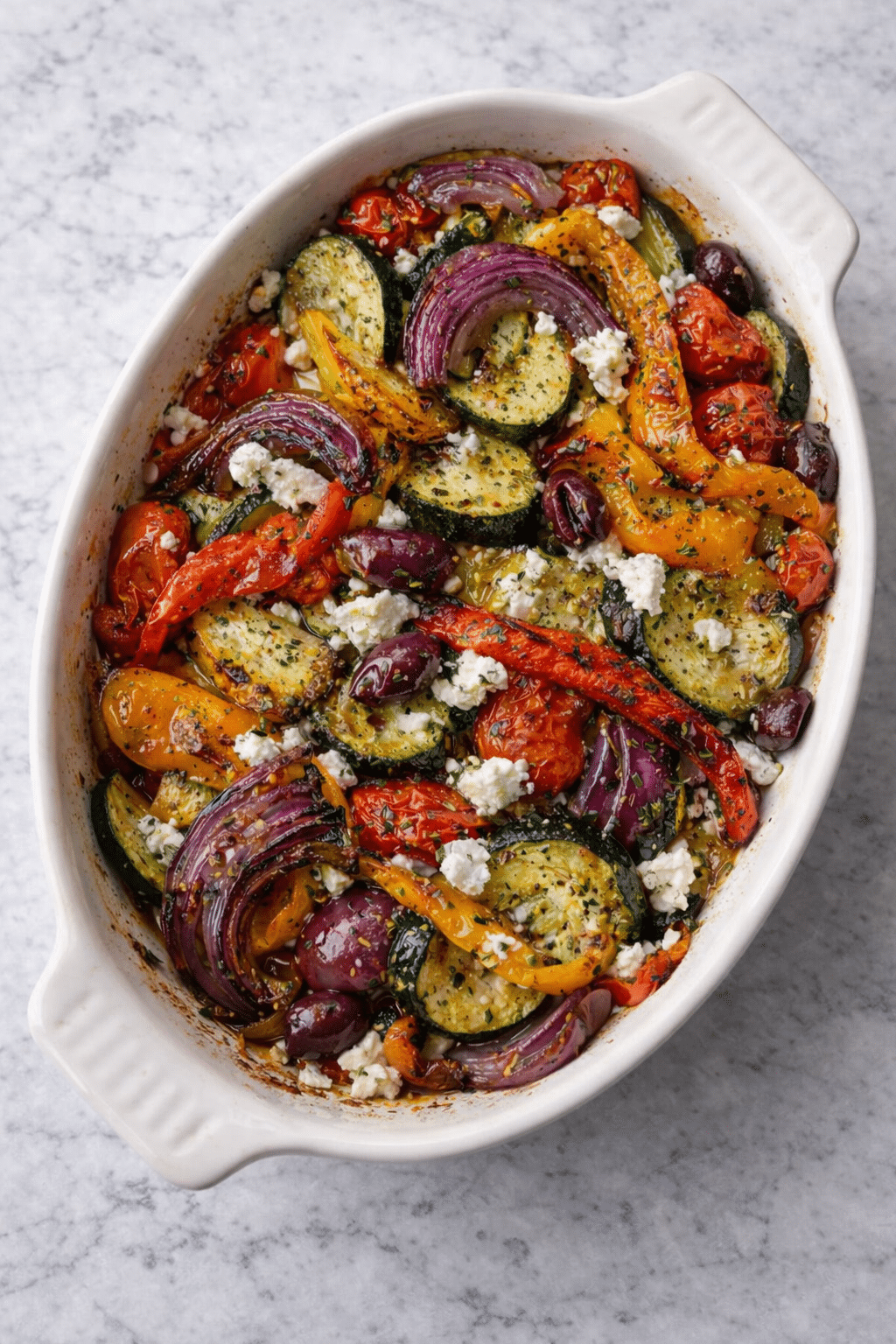
One-Pan Greek Vegetables make their way onto my table when I want something bright but simple. Most nights, I don’t have the energy for a full spread, and that’s where a single pan saves the day. I’m Chef Thomas, and this dish came from many evenings of wanting big flavor without extra cleanup.
The vegetables roast together until tender and lightly caramelized, tasting fresh but still comforting. If you like easy weeknight meals, you might also try this Irish Vegetarian Stew. This one brings comfort without extra work.
- Fresh, well-balanced flavor
- Cooks evenly on one pan
- Works with everyday ingredients
- Needs careful timing to avoid overcooked zucchini
- Not ideal if you need dinner on the table in 20 minutes
Table of Contents
Why You’ll Love One-Pan Greek Vegetables
One-Pan Greek Vegetables is one of those dishes I’ve come to trust after years of weeknight cooking. I’m Chef Thomas, and what keeps me coming back to it is how steady it feels nothing complicated, just good ingredients that work together every time.
The mix of roasted vegetables brings out natural sweetness and a little tang from the olive oil and herbs, much like the earthy depth you’ll find in this Creamy Mushroom Vegan Ramen. It fits into real life because it’s simple, forgiving, and tastes like more effort than it takes.
I make this most weeks when I want something warm and easy that still feels fresh at the table.
Get One-Pan Greek Vegetables Recipe
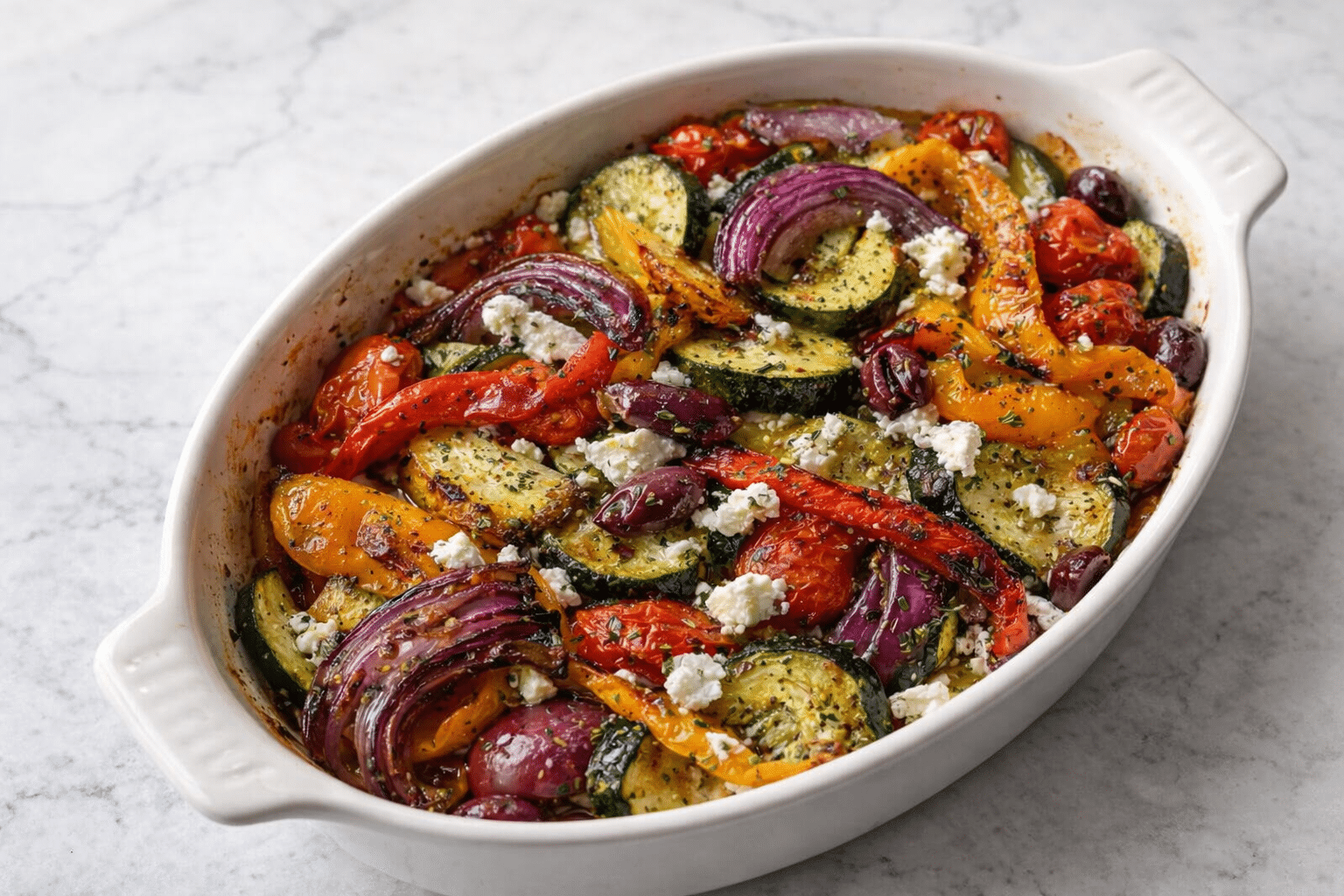
One-Pan Greek Vegetables
Ingredients
Instructions
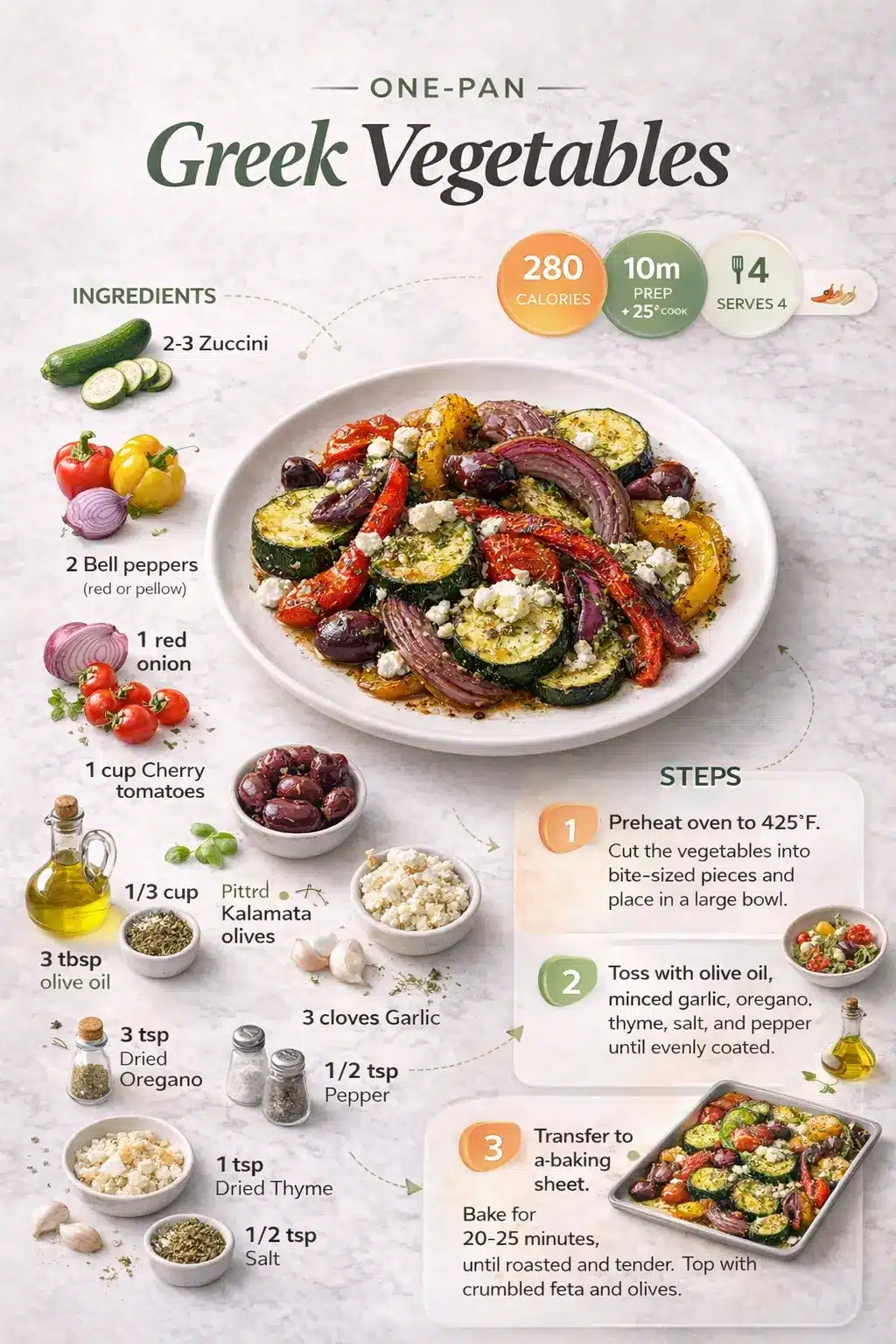
- Preheat your oven to 400°F (200°C).
- In a large bowl, combine the zucchini, bell peppers, cherry tomatoes, onion, and minced garlic.
- Drizzle the vegetables with olive oil and sprinkle with oregano, salt, and pepper.
- Gently toss everything together until well coated.
- Transfer the mixture onto a baking sheet, spreading it out evenly.
- Roast in the oven for 20-25 minutes, or until the vegetables are tender and slightly charred.
- Remove from the oven and top with feta cheese, if desired. Serve warm and savor the flavors!
Notes
Ingredients for One-Pan Greek Vegetables
| Ingredient | Amount |
|---|---|
| 2 cups zucchini, chopped | 2 cups |
| 1 cup bell peppers, chopped (any color) | 1 cup |
| 1 cup cherry tomatoes, halved | 1 cup |
| 1 onion, sliced | 1 |
| 2 cloves garlic, minced | 2 cloves |
| 2 tablespoons olive oil | 2 tablespoons |
| 1 teaspoon dried oregano | 1 teaspoon |
| Salt and pepper, to taste | Salt and pepper, to taste |
| Feta cheese for topping (optional) | Feta cheese for topping (optional) |
When I look at this list as Chef Thomas, I see a simple mix that gives you sweetness from the roasted vegetables, a bit of tang from the tomatoes, and a savory edge from the garlic, oregano, and feta. The olive oil pulls everything together on the pan, helping the vegetables brown and carry flavor, and you can read a bit more about how it is commonly used in cooking in this olive oil overview.
How To Make Pan Greek Vegetables
Visual idea: Oven dial set to 400°F with a warm glow inside.
Chef Thomas’s Tip:
If it looks dry in spots, add a small drizzle more oil so nothing burns on the pan.
Chef Thomas’s Tip:
If your oven runs hot, start checking a bit early so the cherry tomatoes don’t collapse too much.
Tools I Used For Pan Greek Vegetables
Roasting vegetables to perfection is all about using simple, reliable tools. With the right equipment, prep stays quick and the veggies roast evenly with that delicious Mediterranean char and flavor.

- [ HIGH QUALITY ] : 100% made of Food Grade Silicone Material. Low Carbon and Environmentally Friendly Non-toxic, lead fr…
- [ SEAMLESS ONE PIECE DESIGN] :Seamless one piece design compact and sturdy ,easy to clean ,and Non-Stick ,Soft Handle fo…
- [ HEAT RESISTANT ] : Temperature Resistant -104℉~600℉(-40℃~315℃). The average heat resistance of a typical silicone spat…

- SET OF 3 BAKING SHEETS: GoodCook’s Nonstick Cookie Sheet Set comes with a small 13” x 9”, medium 15” x 10” and large 17”…
- EVEN BAKE, EVERY TIME: The heavy-duty gauge baking pans in this bakeware set ensure long-lasting durability and even hea…
- MADE WITH DURABLE CARBON STEEL: Constructed from carbon steel material, these kitchen pans resist warping and scratching…

- INCLUDES: This prep set contains (1) 2-quart clear glass batter bowl. Embossed lines make measuring easy, a molded spout…
- DURABLE AND VERSATILE USE: This batter bowl melts, mixes, reheats, and pours. Pancakes, waffles, cakes, and all manner o…
- COOK. STORE. CLEAN: These baking dishes are microwave, fridge, freezer, dishwasher, and pre-heated oven (up to 425) safe…
For more kitchen tools that make everyday cooking easier and more enjoyable, feel free to explore my curated recommendations. Browse my complete list of recommended cooking essentials
How I Serve One-Pan Greek Vegetables
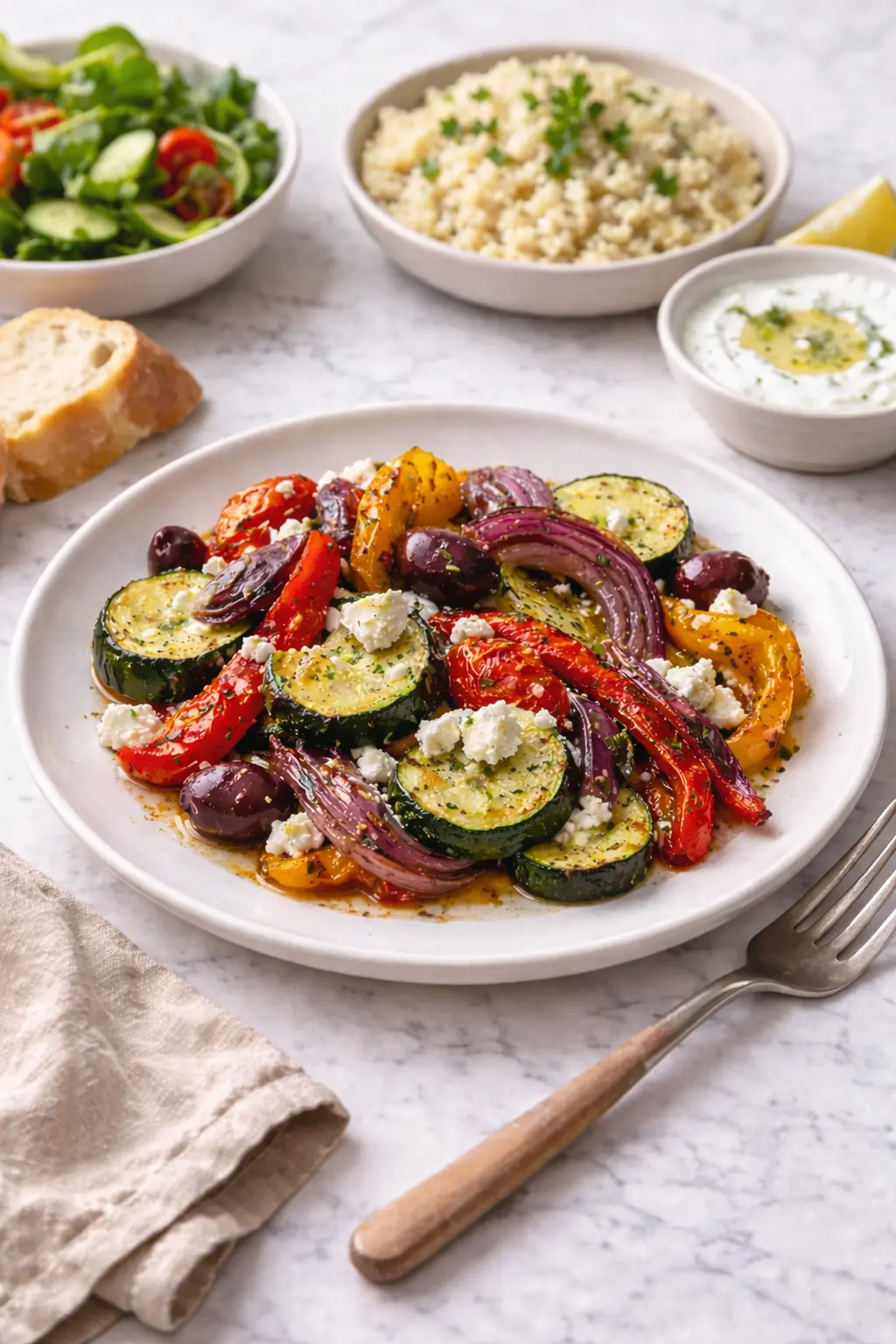
One-Pan Greek Vegetables usually land on my table on a weeknight when I want something warm and simple. I’m Chef Thomas, and most of the time I serve this straight from the pan in the center of the table with a bowl of crumbled feta and some bread on the side.
Most often, I treat it as a main dish with plenty of crusty bread or pita so everyone can scoop up the soft vegetables and juices. If I have leftover rice or quinoa in the fridge, I’ll spoon the vegetables over a warm bowlful and let the feta melt in a bit. On slower evenings, I might add a simple green salad and call it dinner.
When we want a bit more protein, I’ll grill or pan-sear some chicken or fish and serve it next to the vegetables, letting the roasted juices work like a loose sauce. On colder days, I like pairing it with a comforting bowl of Vegan Creamy Sun-Dried Tomato Pasta for a full, satisfying spread.
- Warm flatbread or crusty bread
- Cooked rice, quinoa, or couscous
- Grilled or baked chicken
- Simple pan-seared fish
- A basic green salad with lemon and olive oil
Variations and Adjustments for One-Pan Greek Vegetables
One-Pan Greek Vegetables has seen a lot of small changes in my kitchen over the years. I’m Chef Thomas, and these are the tweaks I reach for when I’m using what I have or cooking for different tastes, while still keeping the same basic method.
Mild or Spicy
If someone at the table likes a little heat, I sprinkle a pinch of red pepper flakes over the vegetables before roasting. For a very mild version, I keep the seasoning as written and skip any extra pepper so the oregano and roasted sweetness stay front and center.
Texture Adjustments
When I want softer, almost stew-like vegetables, I roast them a few extra minutes until they slump and the juices gather on the pan. If I’m serving this alongside something grilled, I pull the pan a bit earlier so the vegetables keep more bite and the edges stay just lightly browned.
Protein or Ingredient Swaps
If I have olives on hand, I toss a small handful on the pan before roasting for a saltier, deeper flavor. Sometimes I swap part of the bell peppers for sliced mushrooms or small potato chunks, knowing the potatoes may need a few extra minutes to get tender.
Cooking Method Changes
On very hot days, I make a similar mix in a large skillet on the stove over medium heat, cooking until the vegetables are tender and browned in spots. The flavor is a bit different without the dry oven heat, but it still gives you that warm, savory mix that works next to simple grilled meat or bread.
Keep in mind, the closer you stay to the base cut sizes, seasoning, and roasting time, the more likely your adjustments will still give you reliable results.
Storing and Making One-Pan Greek Vegetables Ahead
One-Pan Greek Vegetables is a staple in my kitchen because it’s simple and forgiving. I’m Chef Thomas, and I’ve found that these vegetables are best stored in an airtight container for up to 3 days.
For the best texture, reheat them in a hot oven until they sizzle. If you enjoy quick, veggie-packed meals like this, you might also love these Crispy Black Bean Tacos. They are perfect for those nights when you want big flavor with minimal effort.
The Secret to Perfect Greek Vegetables
With One-Pan Greek Vegetables, most people crowd everything onto one pan without thinking about space. The flavor is still fine, but the vegetables often end up soft all the way through, with less of those browned, tasty edges that make roasting worth it.
Over time, I started to notice that on busy nights, when I rushed and piled things up, the pan came out wetter and less interesting. On nights when I spread things a bit more, the same ingredients tasted sweeter and more balanced, with better texture. I’m Chef Thomas, and that pattern showed up often enough in my own kitchen at Tomatillo Recipes that I stopped ignoring it.
The small adjustment is simple: spread the vegetables in a single layer, with a little breathing room between pieces, even if that means using a second pan or a larger one. This lets the heat hit the sides of the vegetables, helps moisture escape, and encourages caramelization instead of steaming, which many basic roasting guides, like this clear roasted vegetable technique, also point out. That one adjustment made this recipe far more reliable for me.
For anyone who cooks with tomatillos or other simple vegetables often, Chef Thomas has learned that small habits like spacing on the pan matter just as much as good ingredients here on Tomatillo Recipes.
FAQ About One-Pan Greek Vegetables
Can I use different vegetables if I don’t have everything listed?
Yes, you can swap in similar vegetables that roast well, like yellow squash, mushrooms, or small potato pieces. I try to keep the total amount about the same so the pan doesn’t get crowded. If you add potatoes, give them a little extra time so they turn tender.
How do I keep the vegetables from getting soggy instead of roasted?
The biggest thing is not crowding the pan, so the vegetables have some space around them. I also make sure everything is coated lightly in oil, not drenched. A hot oven and a single layer help you get some browned edges instead of soft, steamed pieces.
Can I make One-Pan Greek Vegetables ahead of time for guests?
I often roast the vegetables earlier in the day, then reheat them in a hot oven before serving so they perk back up. If you do this, under-roast them slightly the first time so they don’t turn mushy later. As Chef Thomas, I like to add the feta right before serving so it stays fresh and crumbly.
What should I do if my vegetables are burning on the edges but still hard in the center?
That usually means the oven is running a bit hot or the pieces are cut too large. I lower the temperature slightly and give everything a gentle stir halfway through. Next time, I cut the vegetables into more even, slightly smaller pieces so they cook at the same pace.
Can I skip the feta or use something else on top?
You can skip the feta and the recipe will still work fine. If you want a similar salty finish, a light sprinkle of grated hard cheese or a few chopped olives at the end can do the job. I keep the topping simple so it doesn’t cover up the roasted vegetable flavor.
How spicy is this recipe, and can I add heat if I want to?
As written, it isn’t spicy at all, which makes it easy to serve to kids or mixed groups. If you like heat, add a pinch of red pepper flakes with the oregano or at the very end on your own portion. I keep the base mild, then let each person adjust at the table.
Final Thoughts on One-Pan Greek Vegetables
One-Pan Greek Vegetables is the kind of dish I lean on when I want something steady, flavorful, and low effort at the end of the day. For me, Chef Thomas, it has earned its place simply by working the same way every time I roast it, whether I’m cooking for myself or setting it alongside something from the main dishes collection here on Tomatillo Recipes. It’s a quiet, reliable recipe that fits easily into normal, busy home cooking.