
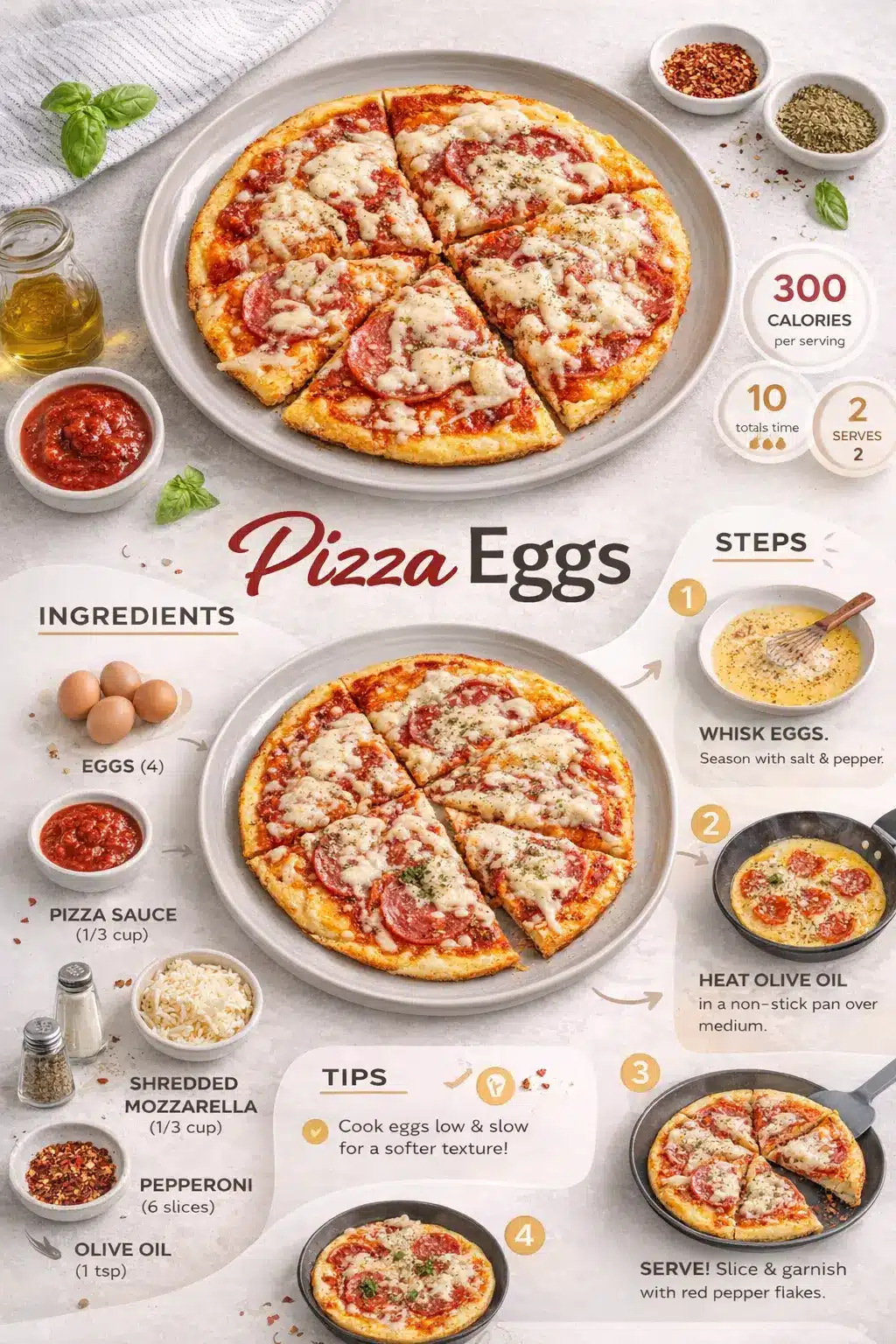
Pizza Eggs are a skillet breakfast that tastes like a tiny pizza. It’s a quick fix on busy mornings and a good way to use a few pantry items. Kids can help and learn while mixing.
I learned this trick after years of cooking for kids and late breakfasts. I’m Chef Thomas, and I keep it simple. If you like quick and cozy ideas, check out my list of 26 Comfort Food Recipes You Can Make Right Now for more easy options.
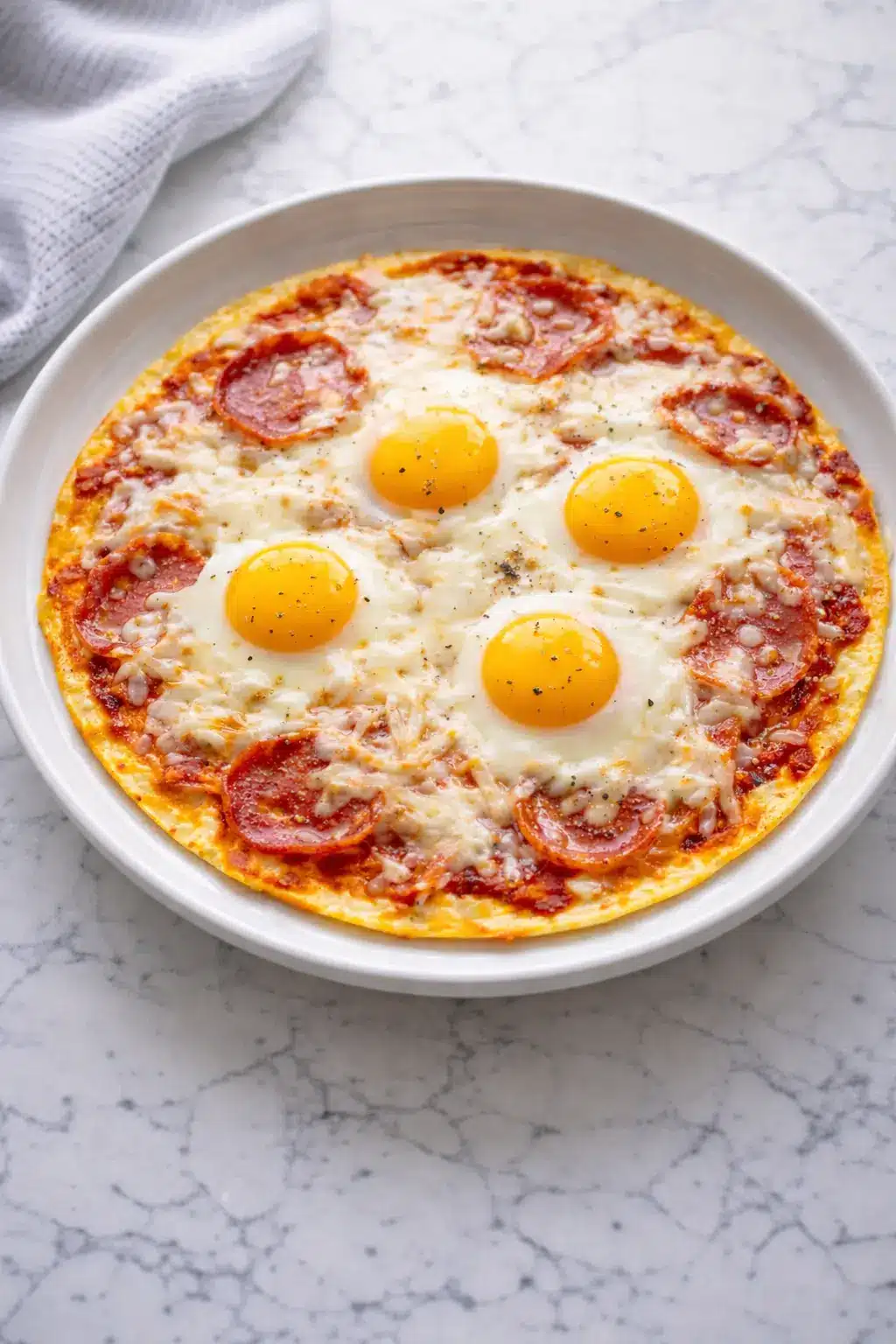
- Uses basic pantry and fridge staples
- Flexible with toppings based on what you have
- Comes together quickly in one pan
- Can turn watery if the sauce is too thin
- Best served right away, not ideal for leftovers
Table of Contents
Why You’ll Love Pizza Eggs
Pizza Eggs are the kind of small, reliable recipe I reach for when time is short and taste still matters. I favor methods that teach a little technique and still leave room for shortcuts. If you care about getting the egg texture right, timing is everything a quick look at Gordon Ramsay’s eggs Benedict shows how small seconds change texture.
Get Pizza Eggs Recipe
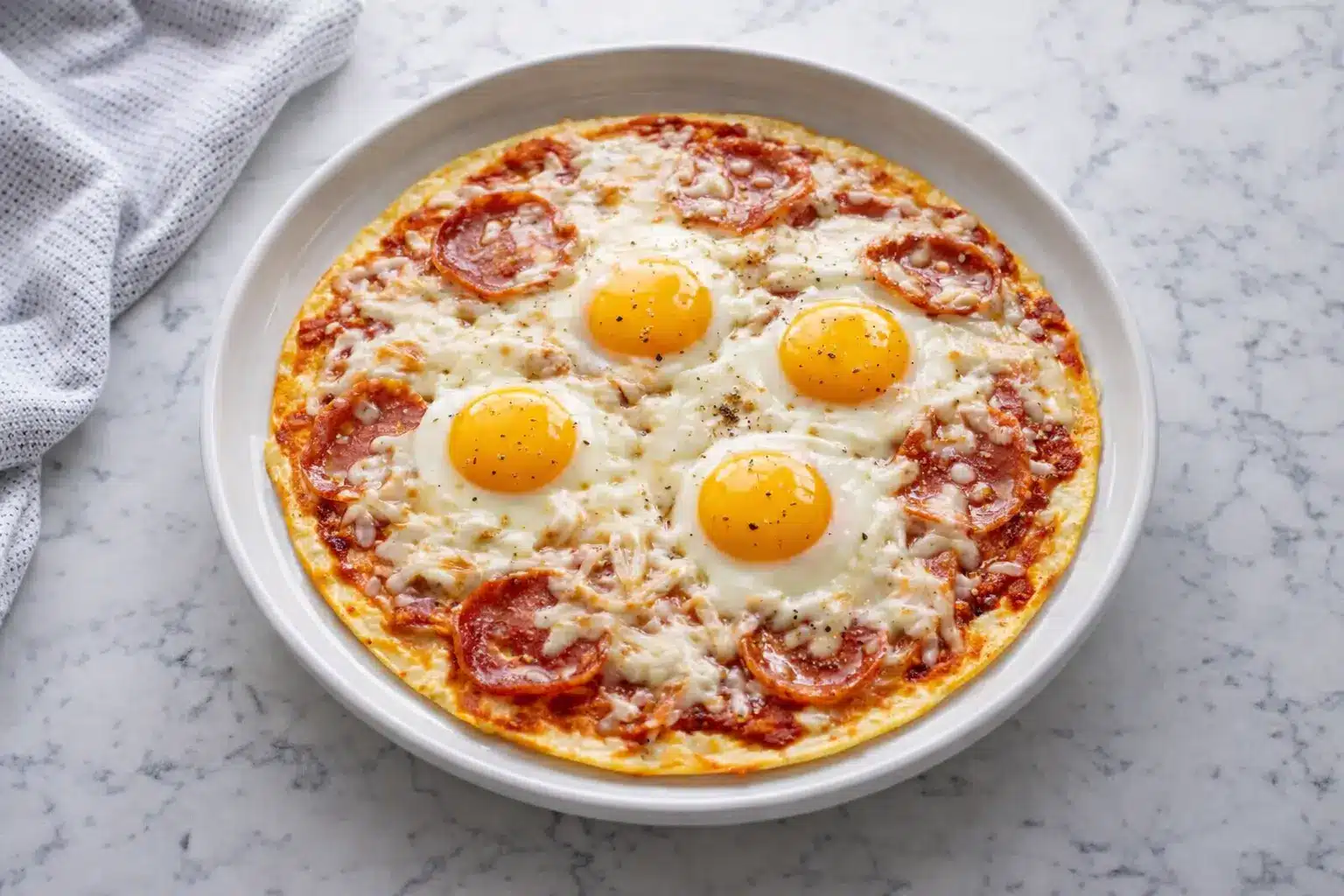

Pizza Eggs
Ingredients
Instructions
- Sprinkle half the grated cheese evenly in a non-stick frying pan over medium heat and let it melt until slightly crisp around the edges.
- While the cheese is melting, crack and whisk the eggs until smooth and lightly blended.
- Pour the whisked eggs over the melted cheese, cover with a lid, and cook until the bottom is set and a light golden color.
- Slide a spatula under the egg-cheese base and flip it gently to cook the other side for a moment.
- Spread the passata on the cooked side, arrange salami slices, and sprinkle the remaining cheese over the top.
- Cover again until the cheese melts and the toppings are warmed through, then remove from the pan and sprinkle with mixed herbs.
Notes
Ingredients for Pizza Eggs
| Ingredient | Amount |
|---|---|
| 3 eggs | 3 eggs |
| reduced-fat cheese, grated | 60g (approx. 2 oz) |
| passata | 1 tbsp (about 15g) |
| A few slices of salami | approx. 20g |
| Mixed herbs, to top | Mixed herbs, to top |
These ingredients work together the way a simple pizza does. The eggs set the base, the passata brings a mild tomato acidity, and the cheese melts into a smooth layer that ties everything together.
The salami adds salt and depth, while the herbs round out the top. If you are not familiar with passata, it is simply strained tomatoes, which you can read about here on Tomato purée. In Chef Thomas’s kitchen, that balance is what makes this dish steady and reliable.


How to Make Pizza Eggs
Chef Thomas’s Tip:
If the cheese starts browning too fast, lower the heat and give it a few extra seconds to melt evenly.
Visual: Pale yellow eggs with no big streaks of white.
Chef Thomas’s Tip:
If the top is still loose but the bottom is set, keep the heat steady and give it another minute with the lid on.
Chef Thomas’s Tip:
If your passata is cold from the fridge, warm it for a few seconds in a spoon or small bowl so it spreads easily.
Tools I Used for Pizza Eggs
You don’t need much to make these Pizza Eggs come together. Just a good pan, something sharp for prep, and one or two simple helpers. I like tools that feel solid in your hand and clean up without a fight.

- Premium Design: Effortlessly prepare a wide range of recipes and enjoy the benefits of easy cleaning, perfect preheating…
- Durable Construction: The hard anodized exterior and forged design is built to stand the test of time. Titanium Non-stic…
- Thermo-Spot Technology: Unique heat indicator turns solid red when pans are properly preheated so you’ll know exactly wh…

- Ergonomic handle- a combination of Santoprene for comfort and polypropylene for durability
- Textured finger points provide slip resistance, grip, and safety. Protective finger guard.
- Hand wash knives for blade edge and surface care

- Flexible head easily slides beneath delicate food
- Safe for non-stick cookware and bakeware
- Perfect for flipping burgers and eggs or transferring cookies

- Flexible head slides easily beneath delicate food
- Safe for non-stick cookware and bakeware
- Perfect for flipping burgers and eggs or transferring cookies
If you like keeping your kitchen simple and practical, I keep a full list of tools I trust and use at home.
Browse my complete list of recommended cooking essentials.
How I Serve Pizza Eggs
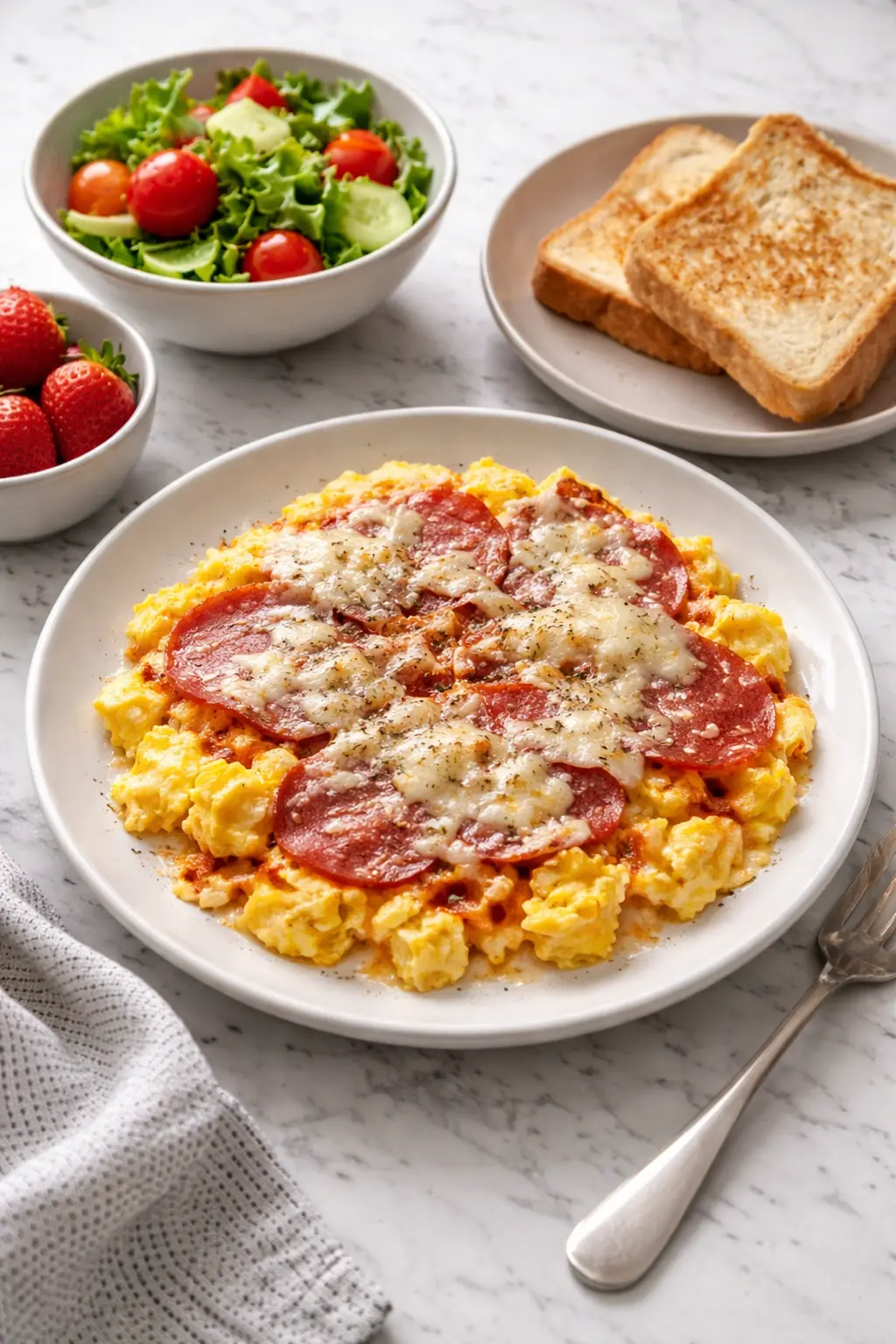
I like to keep the plating simple and practical. I slide the whole piece onto a plate and slice it like a small pizza so kids can grab a wedge. Sometimes I serve it with a handful of raw greens or a slice of buttered toast if someone wants more bulk. As Chef Thomas, I look for little touches that make it feel like a meal, not a rushed snack.
- Serve warm, right from the pan.
- Add a spoonful of extra passata if you want it saucier.
- Let kids choose herbs to sprinkle on top.
Variations and Adjustments for Pizza Eggs
Swap the meat
Use chopped cooked bacon, leftover ham, or sliced pepperoni instead of salami. Each change shifts the flavor a little and keeps things interesting.
Try other cheeses
A mix of mozzarella and a sharper cheese gives a classic pizza stretch with more flavor. Reduced-fat cheese works fine here if you prefer it.
Add vegetables
Fold in quick-cooking veg like thinly sliced bell peppers, baby spinach, or mushrooms. Saute them briefly before starting the cheese base if they’re watery.
I aim for flexibility rather than perfection. As Chef Thomas, I encourage cooks to make small changes that fit their pantry and taste. Keep the same process and adjust amounts rather than changing technique.
Storing and Making Pizza Eggs Ahead
Leftovers keep for a day or two in the fridge and reheat well in a skillet or under a low oven to refresh the cheese. If you want to make ahead, cook the base and toppings separately, then assemble and warm together to avoid a soggy finish. For packed lunches, cool completely before wrapping so steam doesn’t soften the crisp edges. I recommend reheating gently to preserve texture; a quick pan warm-up brings back some of the original crispness. As Chef Thomas, I plan for quick reheats rather than long storage.
The Small Detail That Makes Pizza Eggs Work
What most cooks miss is the cheese-first base. Letting half the cheese melt and slightly crisp gives the whole dish a backbone a technique for building flavor I also use for my Copycat Subway Italian Herb Cheese Bread.
It creates a surface that holds the egg and toppings while adding a contrasting texture to the soft egg. That crisp edge is where flavor concentrates, so don’t rush it. This focus on texture and layering is similar to the approach in my Fleming’s Potatoes Recipe.
A light, even heat and patience for that first melt are all you need. Small timing choices change the result more than ingredient swaps. That crispy edge is the takeaway.
FAQ About Pizza Eggs
Can I use regular cheese instead of reduced-fat cheese?
Yes, you can. Regular cheese will melt a bit richer and may brown faster in the pan. I just watch the heat closely so it does not crisp too much before the eggs go in.
What if my eggs turn out watery?
This usually happens if the passata is too thickly spread or the heat is too low. Use a thin layer of sauce and make sure the eggs are mostly set before adding toppings. A steady medium heat helps the base stay firm.
Can I make this ahead of time?
It is best fresh from the pan, but you can cook it fully and reheat gently in a covered skillet. I avoid the microwave if possible since it can make the eggs rubbery. A few minutes over low heat keeps the texture more even.
How do I keep the bottom from burning?
Keep the heat at medium and listen for a gentle sizzle, not a harsh crackling sound. If the cheese smells too toasted too quickly, lower the heat slightly. In my kitchen, patience with the pan makes all the difference.
Can I skip the salami or change the topping?
You can leave it out or swap it for something mild and thinly sliced. Just avoid very wet toppings that release too much moisture. Chef Thomas always reminds home cooks that balance matters more than quantity.
Why does the egg stick when I try to flip it?
That usually means the bottom has not set enough. I wait until the edges lift easily with a spatula before turning. A good non-stick pan also makes Pizza Eggs much easier to handle.
Final Thoughts on Pizza Eggs
Pizza Eggs are the kind of recipe I trust because they work the same way every time without asking much from the cook. I’ve made them on rushed mornings and slower weekends a consistency I also aim for in my Calabrian Steak and Shrimp Bucatini Recipe.
As Chef Thomas, I’ve learned through repetition that simple dishes earn their place by being dependable, not clever. That same reliability is why I often turn to my Newk’s Loaded Potato Soup Recipe when I need a guaranteed crowd-pleaser.