
Truffle Bites are something I often turn to when I want a small, refined treat without complicating my time in the kitchen, especially on days when I prefer simple, steady cooking. As Chef Thomas, I have come to appreciate how they offer warmth and balance in just a few bites, with a flavor that feels thoughtful yet approachable. They also pair naturally with other small savory dishes, and I sometimes serve them alongside ideas like Texas Roadhouse Steak Bites when putting together a relaxed spread at home.
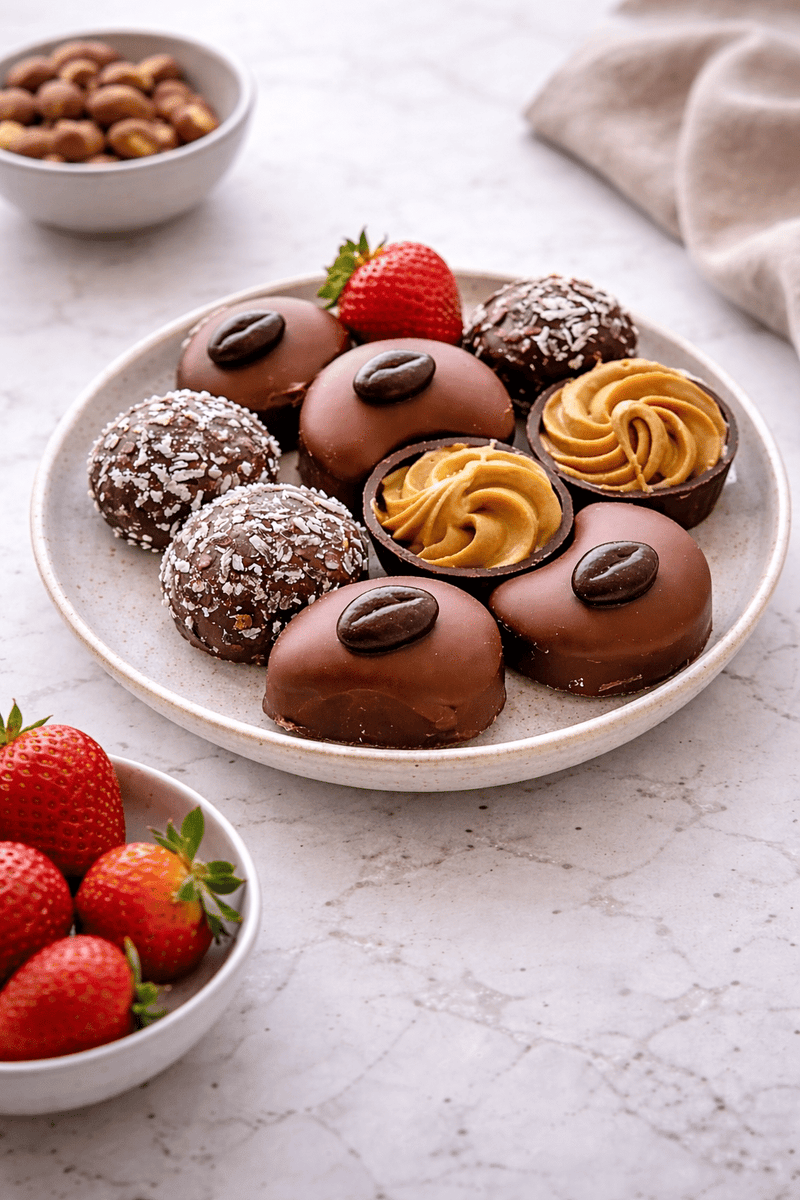
- Done in 30 minutes
- Only one pan to wash
- Restaurant-quality flavor at home
- Easy to adjust (dairy-free, low-carb, etc.)
- Kid-approved and picky-eater friendly
- Sauce is rich (not ideal if watching fat)
- Not dairy-free without substitutes
- Red pepper flakes may be too spicy for sensitive palates (adjust to taste)
Table of Contents
Why You’ll Love Truffle Bites
Truffle Bites are one of those small recipes I’ve come to trust over the years, the kind I return to when I want something simple that still feels thoughtful. As Chef Thomas, I’ve made them enough times to know they hold up well in real kitchens, not just on paper.
What makes them work is how balanced they feel. The richness stays gentle rather than heavy, and the steps are straightforward enough to follow even on a busy day. There is no fussing or complicated timing, just a steady process that makes sense from start to finish.
I tend to make these most often when I need something reliable without much planning. They fit easily into a normal week, which is usually the best sign that a recipe truly earns its place in my kitchen.


Truffle Bites
Ingredients
Instructions
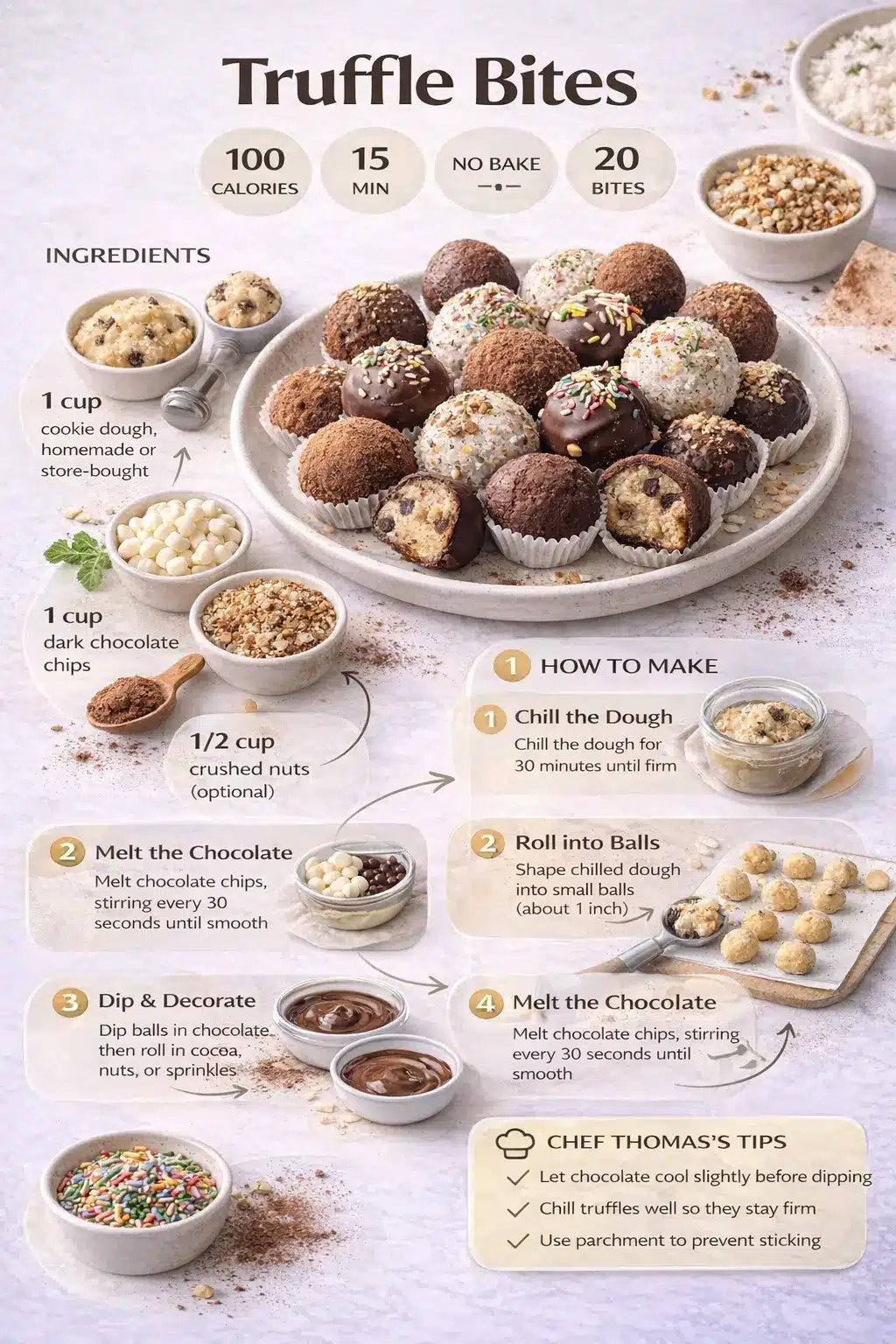
- Chill the dough: If using homemade cookie dough, prepare the dough and chill it in the refrigerator for at least 30 minutes.
- Roll into balls: Roll the chilled cookie dough into small balls (about 1 inch in diameter).
- Melt the white chocolate: Melt the white chocolate chips in a microwave-safe bowl, stirring every 30 seconds until smooth.
- Dip in chocolate: Dip each cookie dough ball into the white chocolate, allowing excess chocolate to drip off.
- Place on parchment: Place the truffles on a baking sheet lined with parchment paper.
- Add coatings: If desired, roll some truffles in crushed nuts or sprinkle with sprinkles before the chocolate sets.
- Chill again: Chill again until the chocolate is firm.
- Serve: Serve and enjoy your delicious truffle bites!
Notes
Ingredients for Truffle Bites
| Ingredient | Amount |
|---|---|
| dark chocolate, finely chopped | 200g (7 oz) |
| heavy cream | ½ cup |
| vanilla extract | 1 teaspoon |
| unsalted butter (optional, for extra smoothness) | 1 tablespoon |
| Pinch of salt | Pinch |
| Cocoa powder | choose any |
| Powdered sugar | choose any |
| Crushed nuts (almonds, hazelnuts, or pistachios) | choose any |
| Sprinkles | choose any |
| Melted chocolate (for dipping) | choose any |
| Coconut flakes | choose any |
From my experience as Chef Thomas, this combination creates a stable ganache base where the cream softens the chocolate and the butter adds a smoother finish. The salt quietly rounds out the richness while the coating options provide contrast in texture and flavor, which helps keep the Truffle Bites balanced and pleasant to eat, much like traditional ganache preparations explained in this Ganache.
How to Make Truffle Bites
Chef Thomas Tip:
I remove the cream as soon as it steams lightly, since overheated cream can dull the chocolate’s texture.
Chef Thomas Tip:
I check the mixture halfway through chilling to ensure it firms evenly rather than becoming too hard at the edges.
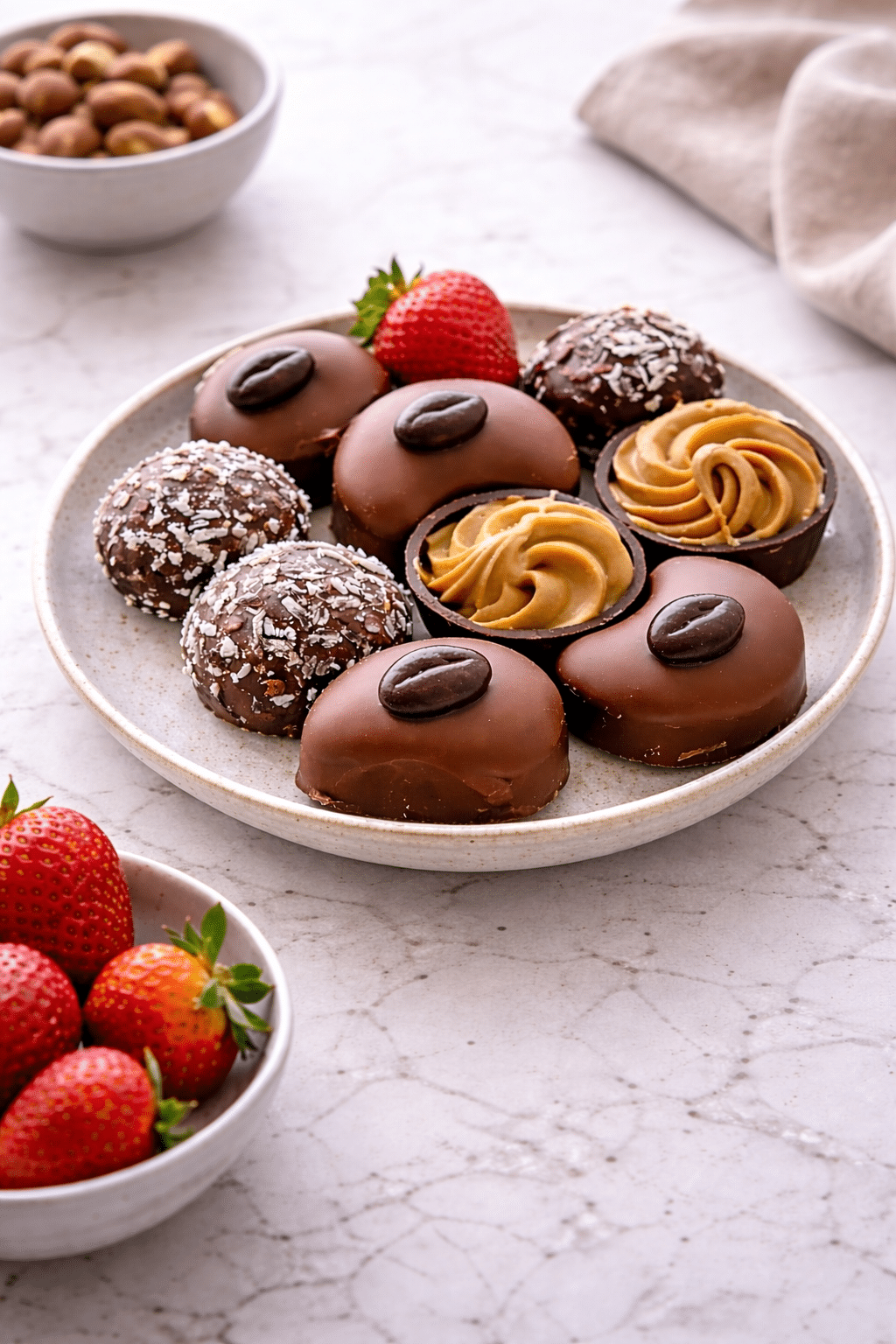
How I Serve Truffle Bites
Truffle Bites are what I usually bring to the table at the end of a quiet dinner or when guests stop by unexpectedly, and as Chef Thomas, I prefer serving them in a simple bowl or on a small plate rather than arranging them too formally.
Most often, I serve them slightly chilled so the texture stays firm with a smooth center, which makes each bite feel balanced and satisfying. I place them out after the main meal as a small sweet finish, allowing people to take one or two at their own pace.
When I want a more relaxed dessert spread, I set them alongside other simple treats, and on evenings where the meal is hearty, such as a dish like Magic Cookie Bars, the truffles provide a calm, sweet contrast without feeling heavy.
Variations and Adjustments for Truffle Bites
Truffle Bites are something I have adjusted many times over the years depending on what I had in the kitchen, and as Chef Thomas, I have found that small, steady changes can improve texture and balance without altering the core method.
Texture Adjustments
If the mixture feels too soft to shape, I chill it a bit longer so it firms into a smoother, more workable consistency. When it becomes too firm, I let it sit at room temperature briefly, which restores a softer texture that rolls more evenly.
Flavor Balance
For a milder taste, I use chocolate with a slightly lower cocoa intensity, which creates a smoother and less sharp finish. If I want a deeper flavor, I add a small pinch of extra salt, which helps round out the richness without changing the structure.
Coating Variations
I sometimes switch between cocoa powder, crushed nuts, or coconut depending on the occasion, as each coating changes the outer texture and overall feel. Cocoa gives a dry, classic finish, while nuts add a gentle crunch and contrast to the soft center.
I always remind myself that the base ganache is what defines Truffle Bites, so small adjustments work best when the original proportions and chilling time remain consistent.late them casually because that feels more inviting. Chef Thomas has learned that tidy isn’t always better.
Storing and Making Truffle Bites Ahead
Truffle Bites are something I often prepare in advance, and as Chef Thomas, this approach comes from making them repeatedly for small gatherings and everyday desserts where timing needs to stay flexible.
Refrigeration
I keep them in a covered airtight container in the refrigerator for about 4 to 5 days, which helps them hold their shape and texture. Over time, the coating may absorb a little moisture and the surface can soften slightly, but the flavor remains steady and well balanced.
Freezing
They freeze reasonably well if stored in a single layer first, then transferred to a sealed container. I let them thaw slowly in the refrigerator so the texture stays smooth rather than grainy.
Make-Ahead Tips
I usually prepare the ganache and chill it a day ahead, then shape and coat the truffles closer to serving. This keeps the outer coating neat and the interior texture consistent without feeling rushed.
Reheating Advice
I do not reheat Truffle Bites directly, as heat can cause them to lose their structure and become overly soft. Instead, I let them sit at room temperature for a short time until the center feels slightly softer and the aroma becomes more pronounced, avoiding warm environments that could make them melt unevenly.
The Small Detail That Makes Truffle Bites Work
A common mistake I notice is that many people stir the ganache too quickly or start rolling the mixture before it has properly set. It usually comes from impatience, but it leads to a softer texture and truffles that lose their shape.
Over time, I realized the texture improved greatly when I slowed down both the mixing and the chilling process. As Chef Thomas, I have seen that allowing the ganache to rest undisturbed creates a smoother, more stable base that is easier to portion consistently.
The small adjustment is to let the hot cream and chocolate sit briefly before stirring, then mix slowly and chill until the ganache is firm but still pliable. This works because gentle mixing preserves the emulsion and prevents separation, a principle commonly noted in basic Ganache.
It’s a small change, but it makes the texture far more consistent.
As Chef Thomas writing for Tomatillo Recipes, I approach even delicate sweets with the same steady mindset I use when working with tomatillos in savory dishes.
FAQ About Truffle Bites
Why is my ganache too soft to roll into truffles?
This usually happens when the mixture has not chilled long enough or the cream was slightly too warm. I simply return it to the refrigerator until it firms to a scoopable texture that still feels smooth rather than hard.
Can I use milk chocolate instead of dark chocolate?
Yes, but the result will be sweeter and slightly softer in texture. I reduce the cream a little when using milk chocolate so the ganache sets more reliably.
How do I keep the truffles from melting while shaping them?
I work in small batches and keep the rest of the mixture chilled. Warm hands and room temperature can soften the ganache quickly, so steady, quick shaping helps maintain a clean form.
Do Truffle Bites need to stay refrigerated before serving?
I usually keep them chilled and then let them sit at room temperature for a short time before serving. This gives the center a smoother texture while keeping the shape intact.
Can I make them a day or two ahead for guests?
Yes, and I often do this myself. As Chef Thomas, I find the flavor settles nicely after a day in the refrigerator, and the texture becomes more stable for serving.
Why does my ganache look grainy instead of smooth?
Graininess often comes from stirring too quickly or overheating the cream. I stir slowly and gently to keep the mixture glossy and evenly emulsified.
What coating works best for a balanced texture?
Cocoa powder gives a classic dry finish, while nuts add a slight crunch that contrasts with the soft center. I choose based on the texture I want rather than appearance alone.
Final Thoughts on Truffle Bites
Truffle Bites are one of those small recipes I return to because they stay reliable, simple, and quietly satisfying each time I make them. As Chef Thomas, I appreciate how repetition has shown me that careful timing and steady handling are all they really require to turn out well. They also fit naturally alongside other small dishes, and when I plan a relaxed spread, I often look through Desserts for similar uncomplicated ideas that keep the table balanced and easy to manage.