
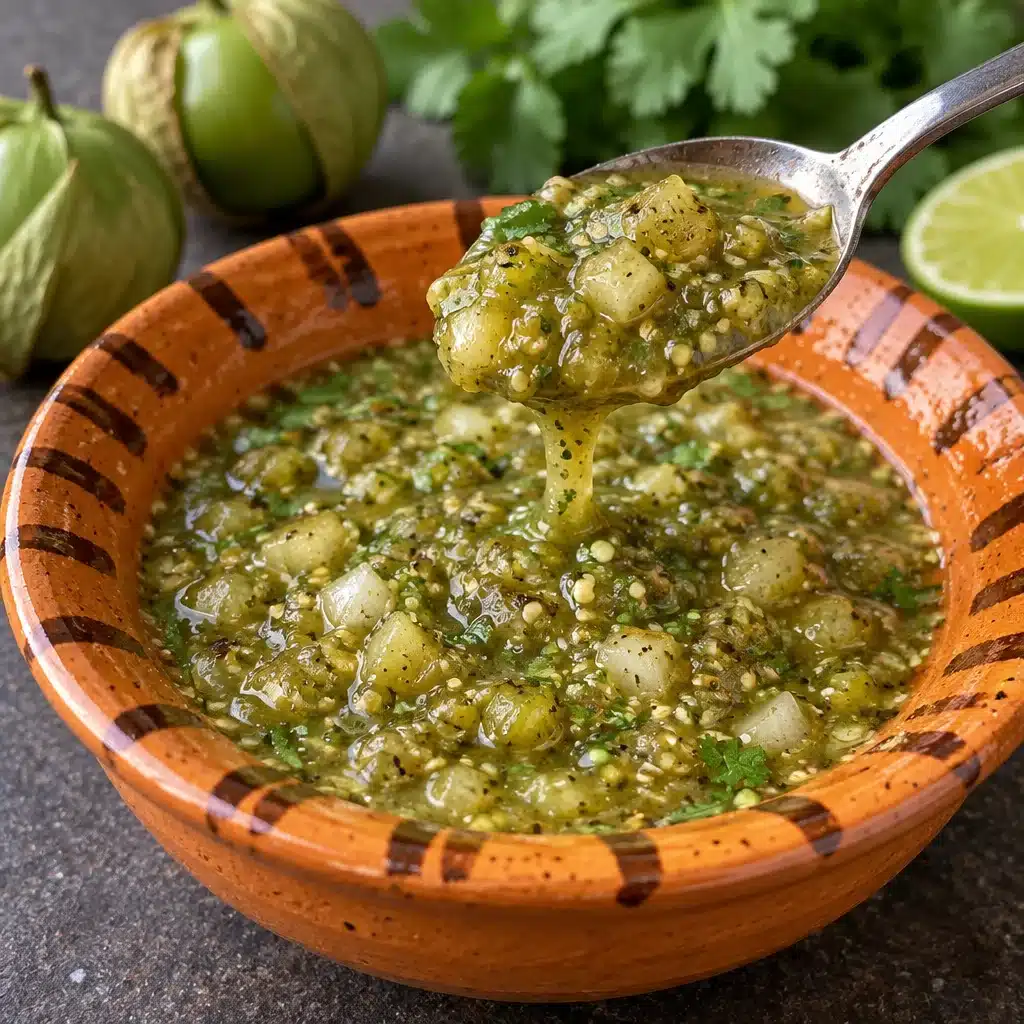
Tomatillo Salsa Verde is the thing I make when I want something fresh and bold, but I do not want to babysit a complicated recipe. Maybe you have a bag of tortilla chips open on the counter, tacos planned for tonight, or you are just bored of store bought salsa that tastes kind of flat. This salsa fixes that fast. It is tangy, a little spicy, and it wakes up almost anything you spoon it on. The best part is that you can tweak it to match your mood, from mild and citrusy to fire breathing. 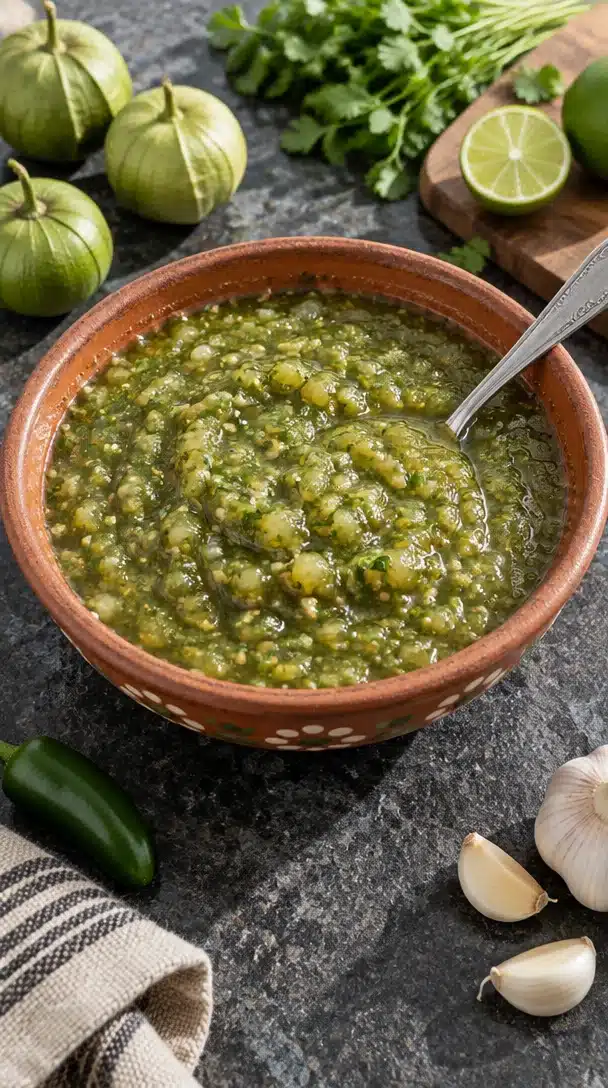
Table of Contents
Understanding the Key Concepts
Let us clear up the basics, because tomatillos confuse a lot of people at first. They look like green tomatoes wearing a paper jacket, but they are not green tomatoes. Tomatillos are naturally tart, which is exactly why Tomatillo Salsa Verde tastes so bright and punchy.
When you peel off the husk, you will notice the tomatillo feels kind of sticky. That is normal. You just rinse it under warm water and rub it a little with your hands until the tacky feeling is gone. After that, you are ready.
Raw vs roasted flavor, and why it matters
You have two main paths: raw or roasted. Raw gives you a sharper, greener taste. Roasted gives you a deeper flavor and a little sweetness with some smoky edges. I lean roasted most of the time because it tastes like you put in more effort than you actually did.
Also, do not stress about being perfect with heat levels. Jalapenos vary wildly. Sometimes they are gentle, sometimes they are rude. The trick is to start with less, blend, taste, then add more.
Here is what gives the salsa its signature personality:
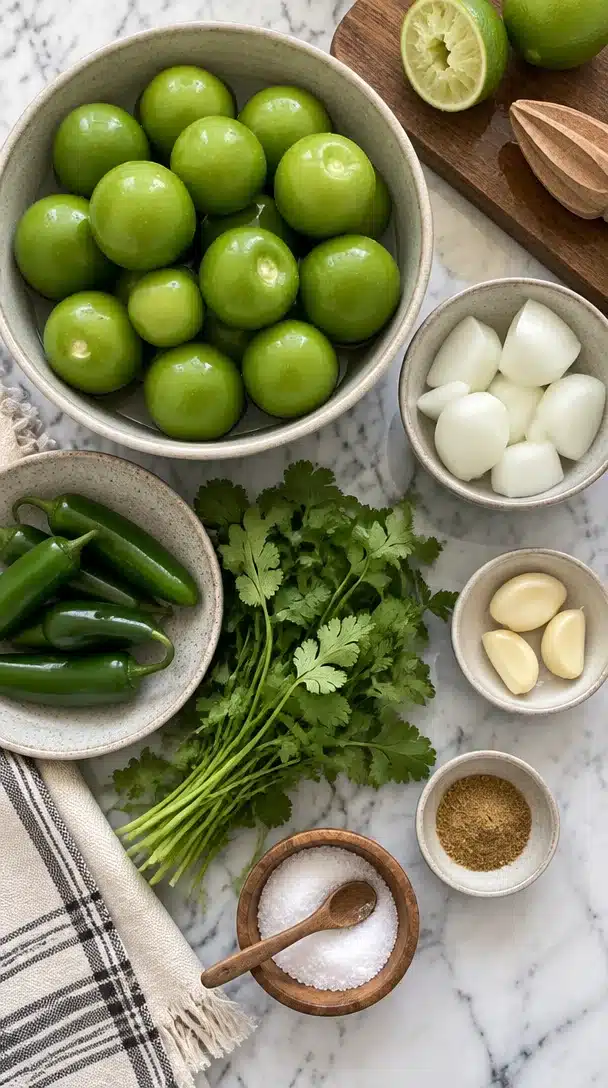
Tomatillos for tang and body, cilantro for that fresh herbal pop, onion and garlic for backbone, lime for sparkle, and chiles for the kick.
;
Practical Applications and Examples
This is the part where I walk you through how I actually make it at home, on a regular weeknight, with minimal drama. This Tomatillo Salsa Verde recipe is flexible, so do not worry if your cilantro bunch is small or your limes are a little dry. We will make it work.
Ingredients and what you will need
- 1 pound tomatillos, husked and rinsed
- 1 small white onion, peeled and cut into big chunks
- 2 garlic cloves, peeled
- 1 to 2 jalapenos or serranos, stems removed
- 1 handful cilantro, stems and all if they are tender
- 1 lime, juiced
- 1 half teaspoon salt, plus more to taste
- Optional: a splash of water to thin it out
- Optional: a small pinch of cumin for a warm note
You will need a sheet pan or skillet for roasting, and a blender or food processor. If you only have a small blender, blend in batches. No big deal.
Step by step, my usual method:
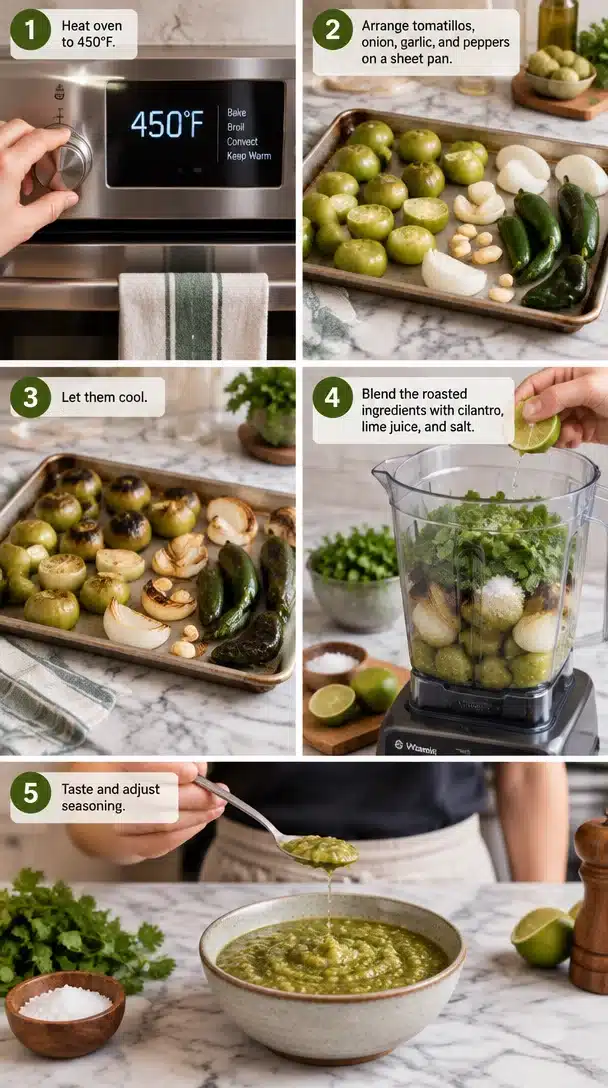
- Heat your oven to 450 F.
- Put the tomatillos, onion, garlic, and peppers on a sheet pan. Roast about 12 to 15 minutes until things look softened and a bit blistered.
- Let it cool for a few minutes so you do not blast yourself with hot steam when blending.
- Blend roasted veggies with cilantro, lime juice, and salt.
- Taste. Add more salt if it feels dull. Add more lime if it needs brightness. Add a splash of water if it is too thick.
That is it. You just made a salsa that instantly upgrades your dinner.
Now for some real life ways I use it. Tomatillo Salsa Verde is not just for chips, though I fully support the chips situation.
My favorite uses:
Taco night, especially with chicken, shrimp, or roasted veggies. Eggs, like scrambled eggs or a breakfast burrito. Rice bowls, spooned over beans and rice with avocado. Soup helper, stirred into chicken soup for a tangy twist. Quick marinade, mixed with a little oil for chicken thighs.
If you want a creamy version, blend in a small piece of avocado or a spoonful of plain Greek yogurt. It turns silky and dip worthy in a whole new way.
Common Mistakes to Avoid
I have made every mistake on this list, usually when I was hungry and trying to rush. Learn from my pain.
Mistake 1: Not washing the tomatillos well. That sticky coating can make the salsa taste slightly bitter or just off. Rinse and rub them. It takes 20 seconds.
Mistake 2: Overdoing the garlic. Raw garlic can take over fast. Roasting helps, but still, start with two cloves for a pound of tomatillos. You can always add more next time.
Mistake 3: Blending it into green water. If you blend forever, it can get too thin and foamy. Pulse it, then blend just until it looks saucy. If it is too thick, thin it on purpose with a little water. That way you stay in control.
Mistake 4: Forgetting the salt. I know, boring, but salt is what makes the flavors pop. If your Tomatillo Salsa Verde tastes flat, it almost always needs more salt or more lime, sometimes both.
Mistake 5: Expecting the spice level to be predictable. One jalapeno might be mild, the next might light you up. Taste your pepper if you are unsure, or start with half and build up.
Expert Tips and Best Practices
I am not a fancy chef, but I have made this enough times to have opinions. These little tricks make it more consistent and more delicious.
How to control heat, texture, and tang
For mild salsa: Use one jalapeno and remove the seeds and white ribs. You still get the pepper flavor without the full burn.
For spicy salsa: Use serranos, and leave the ribs in. You can also roast an extra pepper on the side and blend it in little by little.
For extra tang: Add more lime, but do it slowly. Too much lime can make it sour in a harsh way. Sometimes the better move is a touch more salt plus a small extra squeeze of lime.
For a thicker dip: Roast a little longer to evaporate moisture, and do not add water. You can also blend in a few tablespoons of diced onion at the end for more body.
For a smoother restaurant style salsa: Blend a bit longer and strain it if you really want that silky texture. I rarely strain because I like it more rustic, but it is your salsa.
Storage is simple. Keep it in a covered container in the fridge and try to use it within 4 to 5 days. The top can darken a bit because of air. Stir it and it is fine. If you want to freeze it, you can, but the texture can loosen after thawing. Still tasty though, especially for cooking.
One more thing I always do: I taste it again after it chills for 30 minutes. Flavors settle down in the fridge, and sometimes it needs one last pinch of salt to bring it back to life.
Resources for Further Learning
If you end up loving Tomatillo Salsa Verde and want to go a little deeper, there is a whole world of green salsa styles out there. Here are a few easy directions to explore without getting overwhelmed.
Try different cooking methods: Broil your tomatillos for more char, or cook them in a dry skillet for a toasty flavor. You can also simmer them in water for a softer, more mellow salsa, though it is less punchy than roasted.
Learn the pepper options: Jalapeno and serrano are the most common, but poblano makes it mild and earthy. If you ever find hatch chiles in season, that is a fun swap too.
Look for trustworthy sources: I like reading recipes from well tested cookbooks and established cooking sites, then adjusting based on what I like. Pay attention to techniques, not just ingredient lists. The method is what teaches you.
Practice tasting as you go: This is the skill that makes your salsa better every single time. Taste for salt, then acid, then heat. Small changes make a big difference.
A little pep talk before you make a batch
If you have been stuck eating bland jar salsa or you are nervous about working with tomatillos, this is your sign. Make one batch, taste it, and tweak it until it feels like yours. Once you get the hang of it, you will start putting Tomatillo Salsa Verde on everything, and honestly, you will not be wrong. Invite a friend over, put out chips, and watch how fast it disappears. 

Tomatillo Salsa Verde
Ingredients
Instructions
- Heat your oven to 450°F.
- Put the tomatillos, onion, garlic, and peppers on a sheet pan.
- Roast for about 12 to 15 minutes until softened and a bit blistered.
- Let it cool for a few minutes before blending to avoid steam burns.
- Blend the roasted veggies with cilantro, lime juice, and salt.
- Taste and add more salt or lime if necessary, or thin with water if too thick.