
Chef Thomas is the creator and sole author of Tomatillo Recipes. He has been cooking seriously for more than 40 years first in professional kitchens, then as a home cook who treats the home kitchen as seriously as any professional environment. Every recipe published on this site is developed, tested, and written by him.
His area of specific expertise is acid-forward cooking: preparations where an acidic ingredient tomatillo, citrus, vinegar, tamarind performs structural work in the dish rather than acting only as a finishing note. Tomatillo cooking sits entirely within this domain, which is why the site exists.
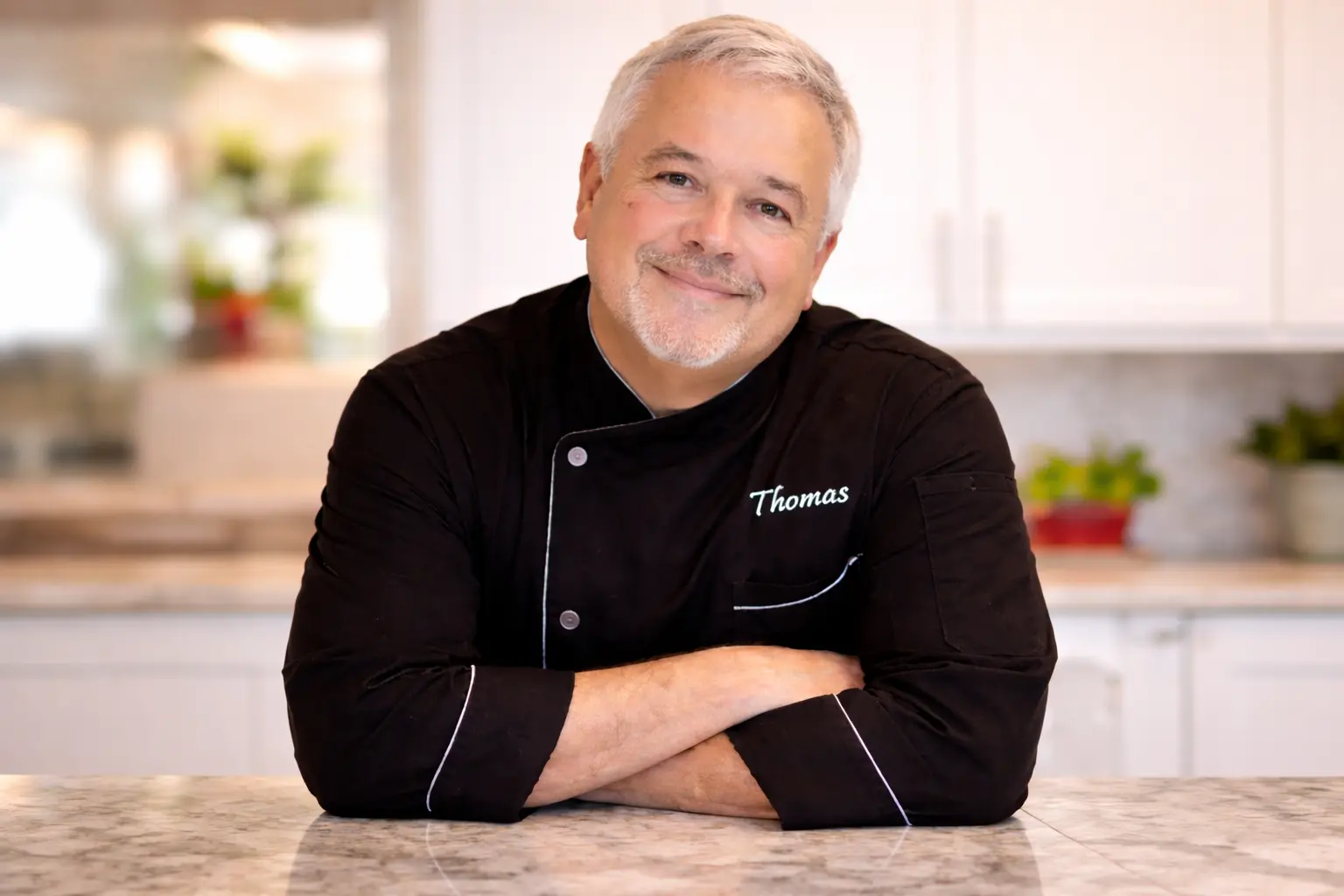
How Tomatillos Became the Focus
The first time Chef Thomas cooked seriously with tomatillos, he was making a simple braised chicken for family. He had cooked the same dish dozens of times with tomatoes. That evening, the only thing in the kitchen was a bag of tomatillos small, husked, unfamiliar bought on impulse at a Latin market he had stopped at on the way home.
He roasted them the way he would have roasted tomatoes, blended them with garlic and a single dried chile, and used the sauce as the braising liquid. After forty-five minutes on low heat, the result was unlike anything he had made with tomatoes. The sauce was bright, slightly smoky, and sharp in a way that did not fade during cooking. It held its character through the full braise.
He made the same dish the following weekend, and the weekend after that. He started changing variables roasting longer, broiling instead, using raw tomatillos in a cold salsa, simmering them in water for a milder result. Within a month, tomatillos had become the most-used ingredient in his kitchen.
What he discovered through that process is what this entire site is built around: tomatillos are not a specialty ingredient that requires special knowledge. They are a practical, available, underused ingredient with a flavor profile that is genuinely different from anything else in the produce aisle and once you understand what they do, they become indispensable.
That first braised chicken recipe became the tomatillo chicken recipe that is now one of the most-used recipes on this site. The method has not changed much from that first evening. It did not need to.
Chef Thomas – Professional Background
Chef Thomas spent the early part of his cooking life in professional kitchen environments high-volume settings where speed, consistency, and mise en place are not techniques but survival requirements. That foundation shaped how he thinks about recipe structure: every step has to earn its place, every instruction has to be specific enough to follow under pressure, and the result has to be repeatable by someone who is also answering the phone and helping with homework.
Later, his focus shifted to recipe development the discipline of turning a dish that works in one kitchen into instructions that work in every kitchen. This is a different skill from cooking well. It requires understanding not just how to make something, but why each step matters, what goes wrong when it is skipped, and how to communicate the difference between a visual cue that is critical and one that is approximate.
Forty years of that work across professional environments, home kitchens, and the specific challenge of tomatillo cooking is what every recipe on this site reflects.
Expertise: What Chef Thomas Knows About Tomatillos
The following represents the specific working knowledge that informs every recipe and guide published on Tomatillo Recipes.
Flavor chemistry and pH structure A raw tomatillo runs at approximately pH 3.8 similar to a ripe orange which places it in the high-acid range for a savory ingredient. The USDA nutrient database lists tomatillos at 32 kcal per 100g with a naturally high acid composition consistent with Physalis philadelphica.That acidity is not background flavor. It is the structural reason tomatillo sauce holds its brightness through an hour of braising where tomato-based sauce goes flat. Understanding this is the difference between using tomatillos correctly and using them as a tomato substitute that never quite works.
Roasting at 400°F shifts the pH from approximately 3.8 toward 4.4, concentrates natural sugars through caramelization, and drives off volatile acids the compounds responsible for the raw fruit’s sharp one-note sourness. The result is a sauce that is still tart but layered, with a sweetness and depth the raw fruit does not have. This is why roasting is the default method for salsa verde and enchilada sauce, and why boiling which leaches the volatile acids into water rather than concentrating them produces a noticeably flatter result.
Cooking methods and their specific outputs Each cooking method produces a different tomatillo. Oven roasting at 400°F for 15 to 20 minutes: flavor concentration, acid reduction, caramelization at the surface, excellent sauce body. Broiling 4 to 6 inches from the element for 5 to 7 minutes: faster char, more smoke, firmer interior, better for salsas where smokiness is the point.
Boiling or simmering 8 to 10 minutes: milder, softer, suited to pozole verde base or large-batch enchilada sauce where other strong flavors carry the dish. Slow cooking over 6 to 8 hours: full integration into braising liquid, complete protein tenderization, flavor that is mellow and integrated rather than bright. Knowing which method to use for which dish, and why, is the core of tomatillo cooking competence.
Protein applications and braising mechanics Tomatillo acidity tenderizes protein during a braise through the same mechanism as any acid marinade, but with sustained effect over the full cooking time. Bone-in chicken thighs braise better than boneless in tomatillo sauce because the collagen in the bone renders into the liquid, thickening the sauce naturally and adding depth the tomatillo alone does not provide.
Lamb shoulder absorbs tomatillo flavor over 6 to 8 hours of low heat more completely than chicken because the higher fat content carries fat-soluble flavor compounds differently the result is a braised sauce with more depth and body than chicken produces on its own. Shrimp must be added at the end of tomatillo cooking two minutes maximum because the acid accelerates protein coagulation and overcooks shrimp faster than a neutral liquid would.
Selection, freshness, and storage A fresh tomatillo in good condition has a tight papery husk that fits the fruit snugly, bright green skin underneath, and firm resistance to gentle pressure. The sticky coating on the husked skin is tomatine a natural alkaloid that contributes bitterness if not rinsed off. Fifteen seconds under running water removes it completely.
In the husk at room temperature, tomatillos keep 2 to 3 weeks. Refrigerated in the husk in a paper bag, 3 to 4 weeks. Husked and sealed, use within 5 to 7 days. Frozen whole in the husk or pre-roasted, up to 6 months with no meaningful quality loss for cooked applications. These are not approximations they come from tracking actual deterioration across multiple batches over multiple seasons.
Fresh versus canned Canned tomatillos arrive pre-cooked at pH approximately 4.0 to 4.5 with soft texture and reduced flavor complexity. They work adequately in long-cooked dishes where the tomatillo is one of several strong flavors a complex braise, a chili base, an enchilada sauce that will bake under substantial cheese.
They fail in any dish where tomatillo flavor is the lead: fresh salsa verde, a delicate roasted sauce for fish, anything served raw or minimally cooked. The flavor difference is real and audible in the finished dish. The fresh vs canned guide covers this decision in full detail.
Varieties Standard green tomatillos are what most US grocery stores carry and what all recipes on this site are calibrated to. Yellow tomatillos are milder and slightly sweeter with less of the grassy edge suited to dishes where a gentler acid contribution is wanted. Purple tomatillos carry a deeper, slightly earthier flavor profile and produce a visually striking grey-purple sauce.
Miltomates smaller wild relatives used in Oaxacan and Chiapas cooking are rarely available in US markets. All varieties share the same fundamental cooking behavior; the differences are in flavor intensity and visual presentation.
Chef Thomas – Recipe Testing Methodology
Every recipe on Tomatillo Recipes goes through three rounds of testing.
Round one — baseline. The recipe is made as written, with standard grocery store ingredients and home kitchen equipment. No professional tools. No pre-prepped mise en place. The goal is to understand what a first-time cook encounters.
Round two — failure mapping. The recipe is made again with deliberate attention to every step where a home cook is likely to make a mistake rushing the roux, using cold milk, not draining the spinach, waiting for the wrong visual cue before pulling food from the oven. These failure points are identified and the instructions are rewritten to address them explicitly.
Round three — repeatability. The recipe is made a third time to confirm the result is consistent. A recipe that works once but not reliably is not a tested recipe. It is a lucky outcome written down.
The published instructions reflect all three rounds. When a recipe says something specific “the tomatillos are ready when the skin wrinkles and turns olive green; pulling them earlier leaves the sauce sharp and thin, waiting until they fully collapse loses the sauce body” that specific guidance is there because the failure happened in testing and the instruction was written to prevent it in your kitchen.
About the Site
Tomatillo Recipes by Chef Thomas publishes in two content areas.
Core tomatillo content — the foundational guides and recipes that make up the site’s primary purpose. What a tomatillo is. How to roast one. How flavor changes across cooking methods. Salsa verde in its various forms. Tomatillo chicken across braising, slow cooking, and soup applications. Tomatillo applications with lamb, shrimp, beef, and vegetarian proteins. Condiments, sides, and the informational content that makes the recipes make sense.
Supporting content — main dishes, appetizers, desserts, and drinks for the full range of search intent from readers who arrive via the tomatillo content and stay for practical everyday cooking. Tested to the same standard as the core content.
The primary audience is home cooks in the United States, Canada, and Australia cooking with mainstream grocery store ingredients. Every recipe is calibrated for that context no specialty equipment, no hard-to-source ingredients, no professional technique required.
Chef Thomas – Foundational Reading
If you are new to tomatillos, these five posts cover the essential knowledge before any recipe:
→ What Is a Tomatillo? — botanical classification, flavor profile, how it differs from a green tomato, varieties, and cultural context
→ What Do Tomatillos Taste Like? — flavor across raw, roasted, broiled, boiled, and canned states, with the specific differences that affect your sauce
→ How to Roast Tomatillos — oven, broiler, and stovetop methods with visual cues, timing, and common mistakes
→ Fresh vs Canned Tomatillos — when the substitution works, when it does not, and how to adjust for canned in recipes that call for fresh
→ How to Store Tomatillos — counter, refrigerator, and freezer methods with realistic timelines from actual tracking
The first recipe to make: Tomatillo Salsa Verde The first braise to make: Tomatillo Chicken Recipe