
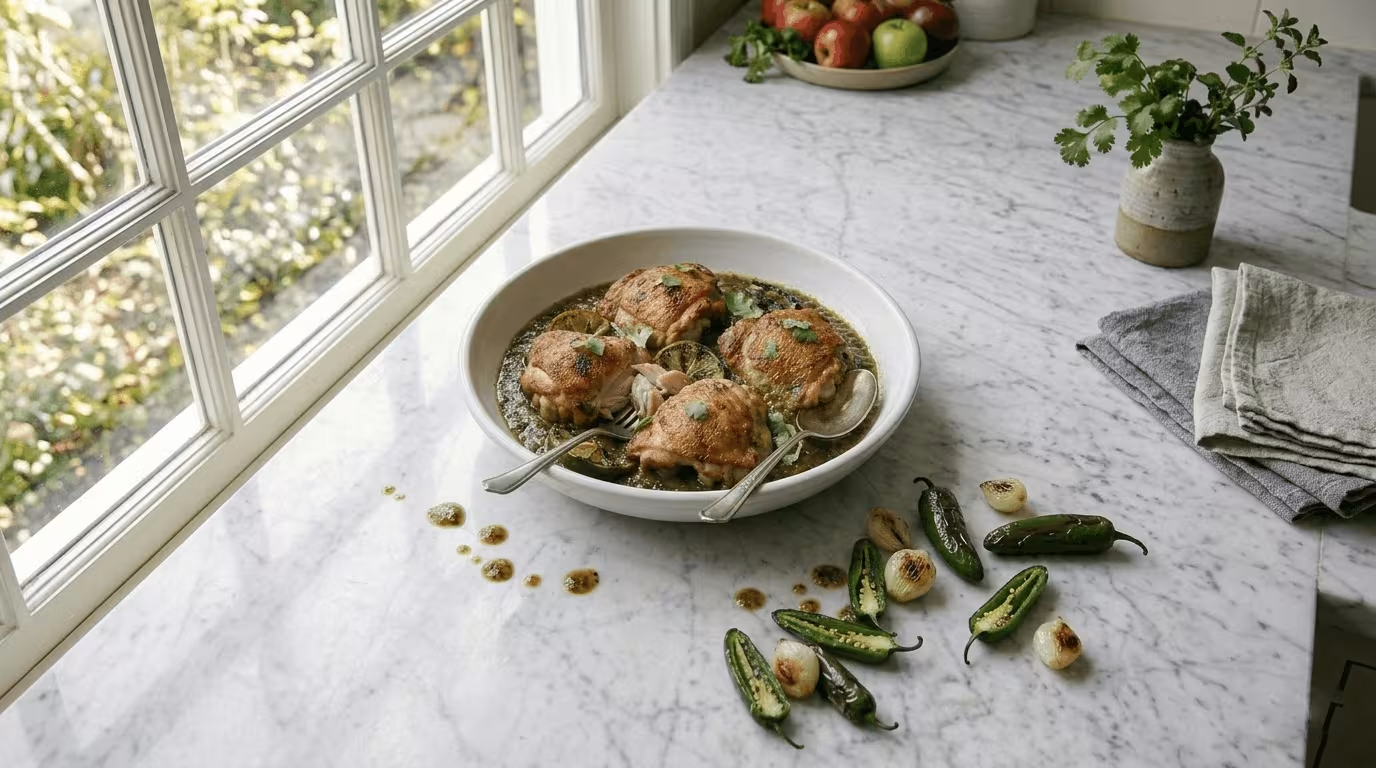
Tomatillo chicken is bone-in chicken thighs braised until fall-apart tender in a sauce built from roasted tomatillos, jalapeño, garlic, and onion. The tomatillos are the engine of this dish roasted first until they collapse and char slightly, then blended into a sauce that is tart, slightly smoky, and thick enough to coat the back of a spoon.
What the tomatillo does here specifically is two things: its acid gently tenderizes the chicken surface during the braise while the natural pectin in the fruit thickens the sauce without any flour or starch. No other green ingredient does both.
This is a straightforward dish. You will need one oven-safe skillet, about 15 minutes of active work, and 25 to 30 minutes of simmering. Whether you are looking for a chicken in tomatillo sauce that works over rice on a Tuesday, or a green tomatillo chicken that holds up for company, this method delivers both. I have made versions of this for years and the tomatillo sauce is the part people always ask about.
If you are new to this ingredient, What Is a Tomatillo covers everything you need to know before you start.
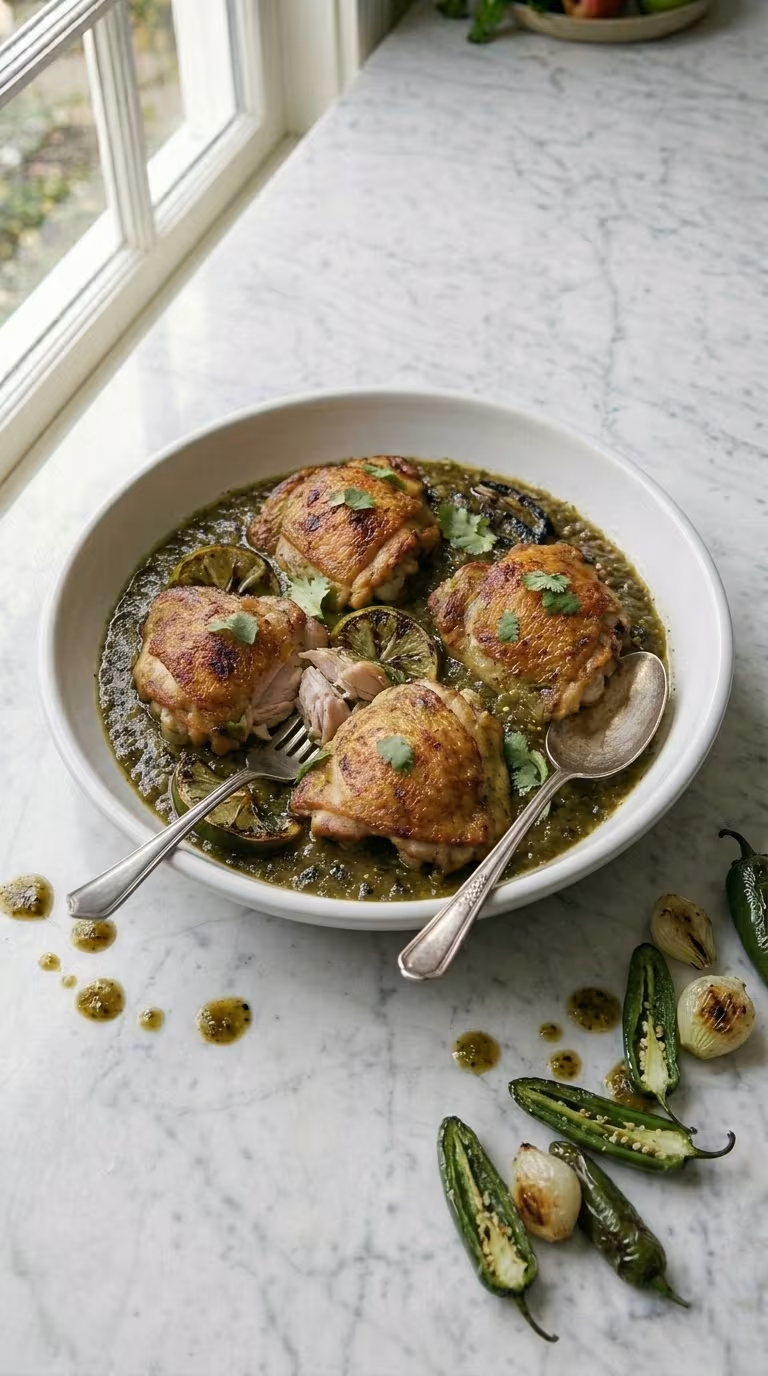
Table of Contents
At a Glance
| Serves | 4 |
| Prep time | 15 minutes |
| Cook time | 35 minutes |
| Total time | 50 minutes |
| Skill | Easy |
| Cost | Budget |
What Is Tomatillo Chicken?
Tomatillo chicken known in Mexican home cooking as pollo en salsa verde is one of the foundational dishes of Mexican cuisine. It is not a restaurant invention or a modern fusion recipe. Versions of chicken simmered in tomatillo-based sauces appear across central and southern Mexico, each region adjusting the chiles, herbs, and technique.
The common thread is the tomatillo: roasted, blended, and used as the sauce base for whatever protein goes in the pot. In home kitchens across Mexico City, Oaxaca, and Jalisco, this is weeknight cooking practical, fast, and deeply satisfying.
What sets tomatillo chicken apart from other braised chicken dishes is the specific flavor the tomatillo sauce produces. Tomato-based braises are sweet and acidic in a familiar, round way.
Tomatillo braises are sharper, greener, and more complex the combination of malic acid, herbaceous volatile compounds, and the slight bitterness of roasted tomatillo skin creates a sauce that cuts through the richness of the chicken fat rather than sitting alongside it. The protein and the sauce are in an active relationship in this dish, not just coexisting.
This is not salsa chicken, which uses jarred salsa as the braising liquid. It is not green enchiladas, which involves tortillas and cheese. It is not chile verde, which is typically made with pork and green chiles and has a different sauce structure entirely. Tomatillo chicken is a clean, focused braise built around one ingredient doing most of the work.
Dishes like this one belong to the same technique family as chile verde, pozole verde, and any number of green braised proteins across Mexican regional cooking. The method roast the tomatillos, build the sauce, braise the protein in it transfers cleanly to pork shoulder, turkey thighs, or shrimp. Master the tomatillo sauce once and the rest follows naturally.
Tomatillo Chicken Recipe
Ingredients
Equipment
Instructions
- Roast the tomatillos, jalapeño, onion, and garlic. Set your oven broiler to high. Arrange the husked, rinsed tomatillos, whole jalapeño, quartered onion, and unpeeled garlic cloves on a foil-lined baking sheet in a single layer. Place the sheet about 4 inches below the broiler element. Broil for 8 to 10 minutes, flipping the tomatillos and jalapeño halfway through if charring is uneven. The tomatillos should be wrinkled, collapsed slightly, and olive to army green in color with dark blistered patches. The kitchen will smell faintly smoky with a sweet undertone that is the right moment.
- Build the tomatillo sauce. Let the roasted vegetables cool for 5 minutes. Peel the garlic from its skin. Stem the jalapeño and remove seeds now if you want less heat. Transfer the tomatillos, jalapeño, peeled garlic, and roasted onion to a blender. Add the cumin, oregano, 1 teaspoon of salt, and ½ cup of the chicken stock. Blend on high for 45 seconds until completely smooth. The sauce should be thick closer to a loose purée than a thin liquid. Taste and adjust salt before it goes into the pan.
- Sear the chicken thighs. Pat the chicken thighs completely dry with paper towels. Season both sides with ½ teaspoon of salt and the black pepper. Heat the olive oil in a large oven-safe skillet or Dutch oven over medium-high heat until the oil shimmers. Place the chicken thighs skin-side down and do not move them for 6 to 8 minutes the skin will release cleanly from the pan when the surface color is built. It should be deep golden to light amber. Flip and sear the flesh side for 2 minutes. Remove the chicken and set aside.
- Braise the chicken in the tomatillo sauce. Pour the blended tomatillo sauce into the same hot skillet it will splatter, so pour carefully. Scrape up the browned bits from the pan bottom with a wooden spoon. Add the remaining ½ cup of chicken stock and stir to combine. Return the chicken thighs to the pan skin-side up the skin should sit above the sauce line, not submerged. Bring to a simmer, then reduce to medium-low. Braise uncovered for 25 to 30 minutes until the chicken reaches an internal temperature of 175°F / 80°C at the thickest point away from the bone. The sauce should coat the back of a spoon and have reduced by roughly a third.
- Finish and serve. Remove the pan from the heat. Taste the sauce and adjust salt. Scatter fresh cilantro over the top. Serve directly from the pan with lime wedges alongside.
Notes
The Tomatillo’s Role in This Dish
Raw tomatillos carry a pH of approximately 3.8 the same range as lemon juice which makes the raw fruit too aggressively tart to use directly as a braising base. Roasting changes this. At 425°F, the malic acid in the tomatillo begins to break down as the volatile compounds drive off with the moisture.
The result is a measured reduction in acidity pH rises toward 4.3 to 4.5 while the natural sugars that were masked by that acid begin to caramelize at the surface. The color shifts from bright green to army green, and the Maillard reaction at any charred edges adds a faint smokiness. This is the flavor the dish is built on, and it cannot be replicated with raw tomatillos or with canned ones.
When the blended roasted tomatillo sauce makes contact with the chicken during the braise, two things happen simultaneously. The residual acidity in the sauce acts on the protein surface, beginning a mild denaturation process that helps the meat release its collagen more readily into the liquid this is why the sauce thickens as the braise progresses without any added starch.
At the same time, the gelatin from the bone-in thighs dissolves into the tomatillo liquid, giving the sauce a body and richness that boneless chicken simply cannot produce. The fat from the chicken skin renders upward and floats above the sauce, which is why the chicken rests skin-side up throughout the braise the skin stays above the liquid, the fat renders off cleanly, and the sauce below develops depth from the collagen without becoming greasy.
I stick with fresh tomatillos for this dish because the roasting step is the foundation of the sauce’s flavor, and canned tomatillos have already been heat-processed in liquid they cannot produce the char and caramelization that roasting over dry heat creates. Canned tomatillos will give you a braise that is mild, slightly flat, and noticeably thinner in the finished sauce.
If fresh tomatillos are genuinely unavailable, canned are acceptable, but skip the roasting step entirely and blend them directly there is nothing to gain from roasting a pre-cooked canned tomatillo and you will only concentrate a faint metallic flavor from the processing liquid.
Ingredients
| Ingredient | Amount |
|---|---|
| Bone-in, skin-on chicken thighs | 4 pieces (approx. 2.5 lbs / 1.1 kg) |
| Fresh tomatillos, husked and rinsed | 1 lb / 450g (8 to 10 medium) |
| Jalapeño | 1 large |
| White onion, quartered | 1 medium |
| Garlic cloves, unpeeled | 4 cloves |
| Olive oil | 2 tablespoons |
| Chicken stock | 1 cup / 240ml |
| Cumin, ground | 1 teaspoon |
| Dried oregano | ½ teaspoon |
| Salt | 1½ teaspoons, divided |
| Black pepper | ½ teaspoon |
| Fresh cilantro | Small bunch, for finishing |
| Lime | 1, cut into wedges for serving |
Ingredient Notes
Tomatillos — the most important call you will make in this recipe: Fresh tomatillos are non-negotiable if you want the sauce to have depth. Look for firm, bright green fruit with tight papery husks that have not dried out or split the husk should fit snugly around the fruit, not hang loose. Loose husks mean the tomatillo is past its peak and the flavor will be muted.
After husking, the fruit will feel slightly sticky rinse under cool water and rub lightly to remove the tomatine coating, which carries a mild bitterness that will carry into the sauce if left on. Skipping the rinse is the most common mistake with tomatillos, and it is a noticeable one in the finished dish.
Chicken thighs — bone-in, skin-on is the correct cut for this method: I always use bone-in thighs here because the collagen in the joint and bone dissolves into the tomatillo sauce during the braise and gives the liquid a body and silkiness that boneless cuts simply cannot produce.
Skin-on matters too the fat renders off during the initial sear and again during the braise, enriching the sauce without making it greasy as long as the skin stays above the liquid surface. Boneless thighs will work in a pinch, but the sauce will be thinner and you will lose about 10 minutes of cook time before they overcook.
Jalapeño — heat is adjustable: One whole jalapeño with seeds gives this dish a mild to medium heat level. For a milder version, remove the seeds and membrane before roasting. For more heat, add a second jalapeño or substitute one serrano, which carries sharper heat than a jalapeño at the same volume.
Chicken stock — homemade or low-sodium store-bought: The stock is the braising liquid that combines with the tomatillo sauce, so its quality affects the final dish. If using store-bought, use low-sodium and taste for salt before adding any extra the tomatillos already carry acidity and the salt balance tips quickly in a reduced braise.
How to Make Tomatillo Chicken
The method has a sequence and the sequence is the reason the dish works roast the tomatillos first to build the sauce’s flavor base, sear the chicken second to develop surface color and start the fat rendering, then braise the chicken in the sauce so the two finish together and the collagen from the bones enriches what the tomatillos started.
Step 1: Roast the Tomatillos, Jalapeño, Onion, and Garlic
Set your oven broiler to high. Arrange the husked, rinsed tomatillos, whole jalapeño, quartered onion, and unpeeled garlic cloves on a foil-lined baking sheet in a single layer. Place the sheet about 4 inches below the broiler element.
Broil for 8 to 10 minutes, watching closely. You want the tomatillos to char and blister on top patches of black are correct, fully black and collapsed to mush means they have gone too far. Flip the tomatillos and jalapeño halfway through if the charring is uneven. The onion will soften and take on some color. The garlic skins will begin to blister.
Why this step matters: the dry high heat drives off the moisture from the tomatillo surface while simultaneously triggering the Maillard reaction at the charred edges this is where the smokiness in the sauce comes from.
Moisture evaporation concentrates the tomatillo’s natural sugars, which reduces the raw tartness and develops sweetness that does not exist in the raw fruit. Skipping this step and using raw tomatillos produces a sauce that is sharp and one-dimensional technically edible but not the dish this recipe is building toward.
What to look for: the tomatillos should be wrinkled, collapsed slightly, olive to army green in color, with dark blistered patches on the skin. The kitchen will smell faintly smoky with a sweet undertone. That is the right moment.
Step 2: Build the Tomatillo Sauce Base — Blending
Let the roasted vegetables cool for 5 minutes. Peel the garlic from its skin. Stem the jalapeño if you want less heat, remove the seeds now. Transfer the tomatillos, jalapeño, peeled garlic, and roasted onion to a blender. Add the cumin, oregano, 1 teaspoon of salt, and ½ cup of the chicken stock. Blend on high for 45 seconds until completely smooth.
The sauce should be thick closer to a loose purée than a thin liquid. If it looks watery, the tomatillos may have released too much liquid during roasting. That is fine; it will reduce during the braise.
Why blending matters: breaking down the tomatillo cell structure fully releases the pectin from the fruit walls into the sauce liquid. This pectin is what gives a properly made tomatillo sauce its body the slightly gel-like thickness that coats the back of a spoon and clings to the chicken rather than pooling beneath it. Under-blending leaves the pectin trapped in fibrous chunks and the sauce will be thin regardless of how long you simmer it.
What to look for: a smooth, deep olive-green sauce with a consistency slightly thicker than heavy cream. Taste it now it should be tart, slightly smoky, and well-seasoned. Adjust salt here before it goes into the pan.
Step 3: Sear the Chicken Thighs — Building Surface Color
Pat the chicken thighs completely dry with paper towels. Season both sides with the remaining ½ teaspoon of salt and the black pepper. Heat the olive oil in a large oven-safe skillet or Dutch oven over medium-high heat until the oil shimmers.
Place the chicken thighs skin-side down in the hot pan. Do not move them for 6 to 8 minutes. The skin will stick initially and release naturally when it is ready forcing it off the pan early tears the skin and removes the surface color you are building.
Why this step matters: the Maillard reaction on the chicken skin surface produces hundreds of flavor compounds that the braising liquid will absorb during the next stage this is the difference between a sauce that tastes flat and one that tastes complex.
The rendered chicken fat that accumulates in the pan also becomes part of the sauce base, contributing richness without heaviness because most of it will be absorbed into the tomatillo liquid during the braise.
What to look for: the skin should release from the pan cleanly and be deep golden to light amber — not blonde, not dark brown. Flip the thighs and sear the flesh side for 2 minutes. Remove the chicken and set aside briefly.
Step 4: Braise the Chicken in the Tomatillo Sauce
Pour the blended tomatillo sauce into the same hot skillet. It will splatter hold the blender lid or pour carefully from the side. Use a wooden spoon to scrape up any browned bits from the pan bottom. Add the remaining ½ cup of chicken stock and stir to combine.
Return the chicken thighs to the pan, skin-side up. They will sit partially above the sauce that is correct. The skin should not be submerged or it will soften and become unpleasant. Bring the sauce to a simmer, then reduce the heat to medium-low.
Braise uncovered for 25 to 30 minutes, until the chicken reaches an internal temperature of 165°F / 74°C at the thickest point, measured away from the bone. For thighs, I prefer to pull them at 175°F / 80°C at this temperature the collagen has fully dissolved and the meat pulls away from the bone without drying out. This is a meaningful difference from breast meat, which dries beyond 165°F.
Why braising uncovered matters: leaving the pan uncovered allows the sauce to reduce and concentrate while the chicken cooks. A covered braise traps steam and produces a thinner, more watered-down sauce by the time the chicken is done. If the sauce reduces too fast and looks dry before the chicken is cooked through, add a splash of stock 2 to 3 tablespoons and continue.
What to look for: the sauce should coat the back of a spoon and have reduced by roughly a third from when you poured it in. The chicken skin will be soft rather than crispy this is expected in a braise. The surface of the sauce will have a light shimmer from the rendered chicken fat. Meat pulls cleanly from the bone.
Step 5: Finish and Serve
Remove the pan from the heat. Taste the sauce and adjust salt. Scatter fresh cilantro over the top. Serve directly from the pan with lime wedges alongside the lime lifts the finished sauce in a way that the tomatillo alone cannot replicate once it has been through the heat.
The core of this recipe and every other tomatillo-based braise is the same: roast the tomatillos before they touch anything else. That single step is where the sauce’s character is built. T
he chicken, the herbs, the stock they all come later and contribute to what the tomatillo sauce started. Once you understand the roasting step, every other tomatillo dish on this site follows the same logic.
Slow Cooker Variation
This dish adapts cleanly to a slow cooker with one important adjustment: complete Steps 1, 2, and 3 (roasting, blending, searing) on the stovetop before anything goes into the slow cooker. The roasting and searing steps cannot be skipped or replaced the slow cooker cannot produce the dry heat and surface caramelization that gives the tomatillo sauce its depth.
Once the sauce is blended and the chicken is seared, transfer both to the slow cooker. Cook on LOW for 4 to 5 hours or HIGH for 2.5 to 3 hours. Do not cook on HIGH for longer bone-in thighs become stringy and the tomatillo sauce thins significantly after the 3-hour mark at high temperature.
What the slow cooker gains: even more collagen extraction from the bones, a slightly richer sauce body, and fully hands-off cooking after the first 20 minutes of stovetop work. What it loses: sauce concentration the slow cooker traps all moisture, so the finished sauce will be thinner than the stovetop version. Remove the chicken when done and reduce the sauce in a skillet over medium heat for 5 to 8 minutes before serving if you want a thicker result. For a similar tomatillo braise approach with less prep, the roasted tomatillo chickpea curry uses the same sauce method.
Chef Thomas Tips for the Best Tomatillo Chicken
- Do not skip rinsing the tomatillos. The sticky coating under the husk is a natural compound called tomatine, which carries bitterness. It is not water-soluble on its own you need to rub lightly under running water to remove it. Skipping this step is something you will taste in the finished sauce, especially in a dish where the tomatillo is the primary flavor.
- Dry the chicken completely before searing. Wet chicken does not sear it steams. The water on the surface must evaporate before the Maillard reaction can begin, and by the time that happens in a home skillet, the chicken has been sitting in its own steam long enough to start cooking unevenly. Pat dry with paper towels right before the pan.
- Let the skin stick. The single most common mistake at Step 3 is moving the chicken too early. If the skin is tearing when you try to lift it, it is not ready. Wait another minute. It will release cleanly when the surface color is built.
- Taste the sauce before it goes into the pan. Once the chicken is in and the braise starts, adjusting salt becomes harder as the sauce reduces. Season the blended tomatillo sauce properly at Step 2 and you will not need to chase it at the end.
- For a richer sauce, use chicken thigh bones separately. If you have the time, roast a few extra chicken bones alongside the tomatillos in Step 1 and add them to the braise liquid. Remove before serving. The additional collagen pushes the sauce texture noticeably closer to restaurant quality.
- The internal temperature matters more than the clock. Timing in a braise varies with the thickness of the thighs, the actual temperature of your simmer, and whether you are using a heavy Dutch oven or a thinner skillet. A thermometer is more reliable than the timer. Pull at 175°F / 80°C for thighs.
- Serve with something that absorbs the sauce. Rice, warm corn tortillas, or crusty bread the tomatillo sauce is the point, and you want something on the plate that can hold it. If you want the same tomatillo flavor in a different format, how to roast tomatillos shows the base technique that works across every dish in this family.
Tomatillo-based braises like this one sit at the center of a much wider recipe family on this site. The roasted tomatillo sauce built in Steps 1 and 2 is the same foundation used in enchilada sauces, green chile, and pozole verde once you make it here, you will recognize it everywhere.
Variations and Substitutions
Tomatillo Substitutions
Canned tomatillos: Acceptable for weeknight cooking when fresh are unavailable. Skip the broiling step entirely canned tomatillos are already heat-processed and will not char. Drain the liquid from the can, blend directly with the garlic, jalapeño, cumin, oregano, and stock. The sauce will be noticeably milder, slightly thinner, and will lack the smoky dimension that broiling produces. The dish is still good. Just different.
Jarred salsa verde: A usable shortcut. Use 1½ cups in place of the tomatillo sauce from Steps 1 and 2 skip both those steps and go straight to searing the chicken. The flavor will be brighter and saltier than a from-scratch sauce. Taste for salt carefully before the braise begins since jarred salsa verde is often already well-seasoned.
Green enchilada sauce (canned): Works as a straight substitution at the same volume. Thinner than a roasted tomatillo sauce and more chile-forward than tomatillo-forward, but functional. For a complete comparison of fresh versus canned tomatillo flavor, what do tomatillos taste like covers the specific trade-offs in detail.
Protein Substitutions
Boneless skinless chicken thighs: Reduce the braise time to 18 to 22 minutes. The sauce will be thinner since there is no collagen from the bone. Works well but is a different dish.
Chicken drumsticks: Same method as bone-in thighs. Braise time is similar 25 to 30 minutes. The sauce will be slightly richer from the extra collagen in the drumstick joint.
Pork shoulder, cut into 2-inch pieces: Brown in batches first, then braise in the tomatillo sauce for 45 to 55 minutes covered, then 15 minutes uncovered to reduce the sauce. The dish becomes closer to chile verde in character.
Turkey thighs: Increase braise time to 40 to 45 minutes. Larger mass needs longer low heat to reach 175°F / 80°C at the bone. Excellent with this sauce the turkey fat enriches the tomatillo base even more than chicken does.
Spice Level Adjustments
Mild: Remove all seeds and membrane from the jalapeño before roasting. The tomatillo’s natural tartness can read as sharp, but there will be very little heat in the finished dish.
Medium (as written): One whole jalapeño with seeds. This is the default most people in a range of heat tolerances find this comfortable.
Hot: Add a second jalapeño, or substitute one serrano for sharper heat, or add one chipotle chile in adobo sauce to the blender in Step 2 for smoky heat alongside the char of the tomatillos.
Dietary Adaptations
Gluten-free: This recipe is naturally gluten-free. Verify your chicken stock label some commercial stocks contain wheat-based thickeners.
Dairy-free: Already dairy-free. The finishing element some versions use (sour cream or crema) is optional and easily skipped.
Low-carb / keto: As written, this dish is low-carb. Serve over cauliflower rice instead of white rice to keep it in keto range. The tomatillo sauce itself is low in carbohydrates.
Troubleshooting
The tomatillo sauce is too thin and watery
Problem: The finished sauce pools under the chicken rather than coating it and the consistency is closer to a light soup than a braise.
Cause: Either the chicken was braised covered (which traps steam and prevents reduction), the sauce was not reduced enough in Step 2 before the chicken was added, or the tomatillos released unusually high moisture during roasting.
Fix: Remove the chicken from the pan and keep warm. Increase the heat to medium-high and reduce the sauce, stirring occasionally, until it coats the back of a spoon 5 to 8 minutes. Return the chicken and serve.
Prevention: Braise uncovered. If the tomatillos look very wet after roasting, drain any excess liquid from the baking sheet before blending.
The sauce is too tart and sour
Problem: The tomatillo sauce has an aggressive sharpness that dominates everything else in the dish.
Cause: The tomatillos were not roasted long enough and the malic acid was not broken down sufficiently. Or canned tomatillos were used without the pH adjustment that broiling provides.
Fix: Add a pinch of sugar half a teaspoon and stir it into the sauce. Taste after one minute. Alternatively, a small spoonful of crema or sour cream stirred in at serving will round the acidity immediately.
Prevention: Roast until the tomatillos are genuinely charred and collapsed pale green and soft is not enough. You want visible dark patches and an olive-green color throughout.
The sauce is too thick and paste-like
Problem: The sauce has become dense and sticky, coating the pan rather than flowing around the chicken.
Cause: Too much moisture evaporated during the braise, either because the heat was too high or the braise ran longer than needed.
Fix: Add chicken stock two tablespoons at a time, stirring over low heat, until the sauce loosens to your preferred consistency.
Prevention: Keep the braise at a gentle simmer small bubbles occasionally breaking the surface, not a rolling boil. Check the sauce at the 20-minute mark and add stock if it is already looking thick.
The chicken is dry and overcooked
Problem: The meat is stringy and pulls apart into dry shreds rather than coming off the bone cleanly with some resistance.
Cause: The internal temperature exceeded 185°F / 85°C, or the braise ran at too high a heat for too long.
Fix: Nothing restores overcooked chicken. Pull the meat from the bone, shred it, and stir it back into the sauce shredded tomatillo chicken over rice is an excellent recovery dish and nobody needs to know.
Prevention: Use a thermometer. Pull bone-in thighs at 175°F / 80°C. At this temperature the collagen is dissolved and the meat is tender but not yet stringy.
The sauce separated and looks greasy
Problem: A visible layer of orange fat has separated to the top of the sauce and the liquid below looks thin.
Cause: The fat from the chicken skin rendered faster than the sauce could absorb it, or the braise temperature was too high and caused the emulsion to break.
Fix: Remove the chicken temporarily. Skim the excess fat from the surface with a large spoon. Return the pan to low heat and stir the sauce gently it will come back together. Return the chicken and serve.
Prevention: Keep the braise at a true low simmer. A sauce that separates is almost always a heat problem, not an ingredient problem.
The skin is soft and rubbery instead of at least slightly rendered
Problem: The chicken skin has a wet, unpleasant texture in the finished dish.
Cause: The skin was not seared long enough in Step 3, or the skin became submerged in the sauce during the braise.
Fix: In a separate hot skillet with a small amount of oil, sear the chicken thighs skin-side down for 3 to 4 minutes after the braise to crisp the skin before serving.
Prevention: Make sure the skin faces up throughout the braise and stays above the sauce line. Never pour sauce over the top of the skin.
Storage, Make-Ahead, and Reheating
Refrigerator
Store the chicken and sauce together in an airtight container for up to 4 days. The tomatillo sauce will thicken as it cools this is normal. It loosens again with gentle heat.
Freezer
This dish freezes well for up to 3 months. For best results, freeze the sauce and chicken separately the sauce in a freezer-safe container and the chicken wrapped tightly. Thaw overnight in the refrigerator. The sauce may look separated after thawing stir over low heat and it will come back together. The chicken texture softens slightly after freezing but remains good for shredding over rice or into tacos.
Reheating
Oven: Place the chicken and sauce in an oven-safe dish, covered with foil, at 325°F / 165°C for 20 to 25 minutes until heated through. Add 2 to 3 tablespoons of stock before covering to prevent the sauce from thickening too much against the dry heat.
Microwave: Transfer to a microwave-safe bowl, cover loosely, and heat in 90-second intervals at 70% power, stirring between each interval. Add a splash of water or stock after the first interval if the sauce looks tight.
Make-Ahead
The tomatillo sauce (Steps 1 and 2) can be made up to 3 days ahead and refrigerated, or up to 1 month ahead and frozen. Sear the chicken and braise it fresh the day you want to serve the braise itself is only 25 to 30 minutes. This is the most practical make-ahead approach: the labor-intensive part is done, the finishing is fast.
The entire assembled dish can also be refrigerated up to 24 hours before the braise store the seared chicken and blended sauce separately in the refrigerator, then combine and braise when you are ready.
The acid in the tomatillo sauce is part of why this dish keeps so well the low pH environment slows bacterial development and helps the sauce maintain its color and character over several days in the refrigerator, better than most tomato-based braises at the same storage time.
Estimated Nutrition Per Serving
| Nutrient | Amount per serving |
|---|---|
| Calories | 390 |
| Protein | 38g |
| Carbohydrates | 9g |
| Fat | 22g |
| Saturated fat | 5g |
| Sodium | 680mg |
| Fiber | 2g |
Estimates only. Values vary with tomatillo preparation method, chicken cut size, skin-on vs skinless, and stock sodium content.
Frequently Asked Questions
Can I use canned tomatillos instead of fresh?
Yes, but skip the broiling step entirely. Canned tomatillos are already cooked and will not produce char or caramelization roasting them again only concentrates a faint metallic flavor from the canning liquid. Drain the can, blend directly with the aromatics, and proceed from Step 3. The sauce will be milder and thinner than the fresh version, but the dish is still good.
Can I make this with chicken breasts instead of thighs?
You can, but the result is a noticeably different dish. Breasts overcook quickly in a braise and do not contribute the collagen that thickens the tomatillo sauce. If you use breasts, reduce the braise time to 15 to 18 minutes, pull at 160°F / 71°C, and expect a thinner sauce. Bone-in thighs are the correct cut for this method.
What does tomatillo chicken taste like when it is finished?
The sauce is tangy and slightly smoky from the roasting, with a savory depth that comes from the chicken fat and collagen dissolving into it during the braise. It is not spicy on its own the jalapeño adds a background warmth rather than a sharp heat. The flavor is green and complex in a way that is unlike any tomato-based dish, brighter and more acidic but rounded by the cooking process.
How spicy is this recipe?
Mild to medium as written. The single jalapeño with seeds gives a gentle warmth that most people find comfortable. For mild, remove the jalapeño seeds before roasting. For hot, add a second jalapeño or one chipotle chile in adobo to the blender.
Can I make this ahead of time?
Yes. The tomatillo sauce can be made up to 3 days ahead and refrigerated. The full dish reheats well for up to 4 days. The flavor is actually better the next day the sauce mellows and the tomatillo becomes more integrated with the chicken.
What should I serve with tomatillo chicken?
White rice or Mexican rice absorbs the tomatillo sauce well and is the most traditional pairing. Warm corn tortillas alongside let you scoop the sauce directly. A simple black bean side, sliced avocado, or a few radishes add contrast. For a complete tomatillo dinner, what do tomatillos taste like explains the flavor profile so you can plan pairings that complement the sauce rather than compete with it.
Why did my tomatillo sauce turn brown instead of green?
High heat for too long is the usual cause above a rolling boil the chlorophyll in the tomatillos breaks down and the sauce turns from olive green to brown. Keep the braise at a low simmer. A small amount of color shift from bright to army green is normal and correct. Full browning means the heat was too high or the braise ran too long.
Can I make this in a Dutch oven instead of a skillet?
A Dutch oven is actually preferable the heavier walls distribute heat more evenly and the sauce is less likely to reduce too fast. Follow the same method. The only adjustment is that a Dutch oven retains heat longer, so you may need to reduce the simmer temperature by one notch to keep it gentle.
A Few Final Notes
Roast first. Every other step follows from that one decision.
The tomatillo sauce in this dish is the reason to make it the chicken is the vehicle. If the sauce is right, the dish is right. Get the roasting step correct, season the sauce before the chicken goes in, and keep the braise at a true low simmer. Those three things account for almost every variable in the outcome. I usually make this on a Sunday when I have 15 minutes to put it together and then leave it mostly alone.
When you want something in the same flavor direction but with less prep time, what do tomatillos taste like is worth reading before you branch out into the rest of the tomatillo recipe family. And when you want the roasting technique dialed in before you cook again, how to roast tomatillos covers every step.