
A guide to tomatillo flavor raw sharpness, roasted sweetness, and everything in between so you know exactly what to expect before you cook with them.
Tomatillos taste tart. Not sour-candy tart, but the kind of clean, citrus-forward acidity that makes a sauce come alive. Raw, they hit your palate the way a green apple does firm, bright, and a little grassy. Cooked, especially when roasted, they soften into something sweeter and more complex.
Understanding the tomatillo flavor profile and how heat changes it is what separates a flat green sauce from one that people ask about. I have cooked with tomatillos for forty years and the first question anyone asks is still the same: what do they actually taste like?
For a complete introduction to this ingredient varieties, how to pick them, how to store them, and what to make with them What Is a Tomatillo covers the full picture.
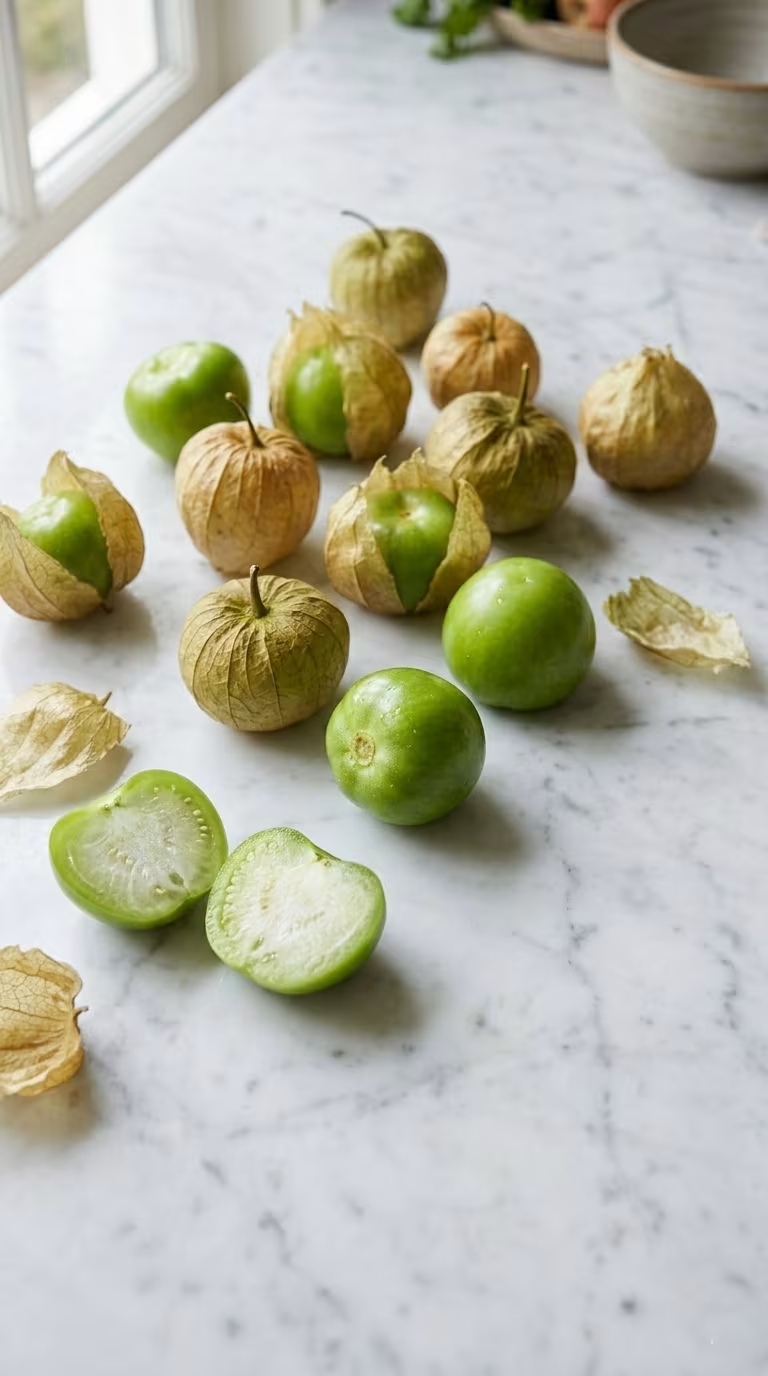
Table of Contents
The Tomatillo Flavor Profile: What the Acidity Is Actually Doing
Tomatillos belong to the genus Physalis philadelphica and sit closer to a gooseberry than a tomato on the flavor spectrum. That distinction matters because it explains why the tartness in a tomatillo is structural not a background note.
The dominant acid in a raw tomatillo is malic acid, the same compound that makes green apples taste sharp. Combined with citric acid, it produces a pH of approximately 3.8 in a fresh, uncooked fruit. That level of acidity puts tomatillo in the same range as lemon juice, which is why a raw tomatillo sauce has a cutting brightness that no other green vegetable can replicate.
The flavor is not one-dimensional, though. Alongside the malic acid, there are volatile organic compounds that produce herbaceous, grassy undertones faintly similar to fresh tomato leaf, but milder. The interior flesh is denser than a tomato and white rather than red, which accounts for the firmer bite and the fact that tomatillos do not collapse the way a tomato does when cut.
All of this the acidity, the herbal notes, the firm texture belongs specifically to the tomatillo’s botanical identity as a husked fruit in the nightshade family. It behaves differently from any other produce in the Mexican cooking tradition because its chemistry is different.
Tomatillos occupy the same botanical family as tomatoes and peppers the Solanaceae but their culinary behavior has more in common with acidic stone fruits. The tartness is not background flavor. In a salsa verde or a braised green sauce, it is the reason the dish works.
What Raw Tomatillos Taste Like
Raw tomatillo flavor is the most aggressive expression of the ingredient. At pH 3.8, the acidity registers immediately and clearly bright, sharp, citrusy, with a slightly grassy finish. The texture is apple-like: firm enough to slice cleanly, with a satisfying crunch and almost no juice released on the cut surface.
When you eat a raw tomatillo, you get three distinct flavor moments: the initial tart hit from the malic acid, a brief herbal middle note that reads as slightly green or vegetal, and then a clean finish without lingering bitterness. That clean finish is what makes raw tomatillos work in fresh salsas. They have intensity but they do not linger unpleasantly.
The best application for raw tomatillos is a fresh salsa verde where you want maximum brightness finely diced tomatillo with onion, serrano, lime, and cilantro. The raw flavor holds without cooking, and the texture adds body to the salsa without the chunkiness of a tomato-based pico de gallo. You can also use raw tomatillo sliced thin as a garnish on tacos or grain bowls where a sharp counterpoint to rich protein is what the dish needs.
Observable cue: a raw tomatillo ready to use is bright green, very firm under light pressure, and should feel slightly tacky after rinsing. If it gives softly, the flavor will be milder and less tart.
How Roasting Changes Tomatillo Flavor and Acid Level
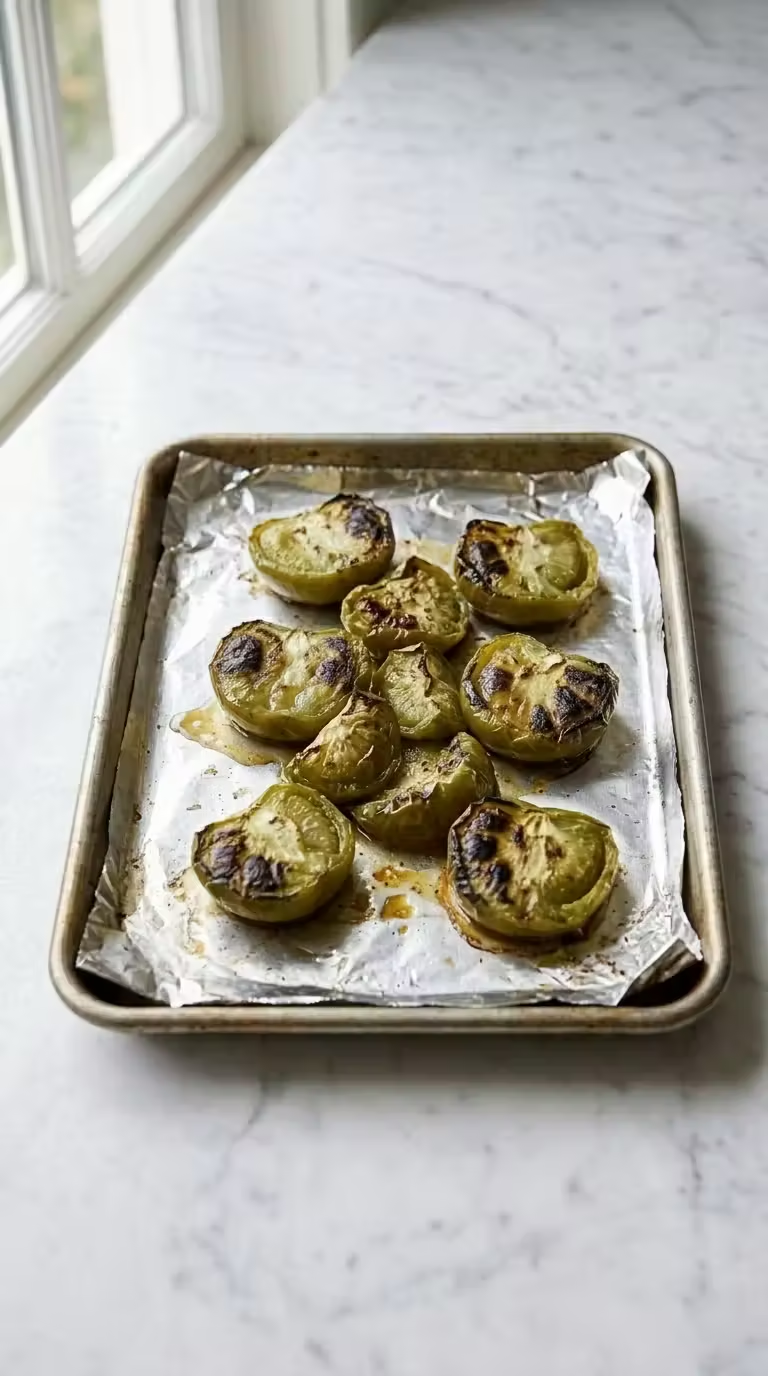
Roasting is where tomatillo flavor gets interesting. At oven temperatures of 400 to 425°F, two things happen simultaneously: the volatile malic acid begins to break down as it reaches sustained heat, and the surface sugars which were masked by that acid in the raw fruit start to caramelize. The result is a measurable softening of the tartness and the emergence of a sweetness that is not present in the raw fruit at all.
The Maillard reaction at the charred edges produces a faint smokiness that adds a third flavor dimension tart, sweet, and lightly smoky. This is why roasted tomatillo sauce tastes round and complex where boiled tomatillo sauce tastes flat. The acid has not disappeared in the roasted version it still carries the sauce but it has dropped from dominant to structural, holding everything together without overwhelming the sweetness that has come forward.
I always roast tomatillos for sauces rather than boiling them because the dry heat drives off the excess moisture and concentrates both the sweetness and the acid into a more balanced ratio. Boiled tomatillo sauce always tastes thin to me no matter what else I add to it. The water dilutes the flavor before the sauce even gets to the blender.
Method: Arrange husked, rinsed tomatillos on a foil-lined baking sheet. Roast at 400°F for 20 to 25 minutes, flipping once halfway through.
Observable cues: Skin will wrinkle and the tomatillos will collapse slightly. Color shifts from bright green to olive or army green. Light charring on the underside and edges is correct this is where the smokiness comes from. If they are fully blackened and mushy, they have gone too far and the sauce body will be loose and slightly bitter.
Risk: Over-roasting past the collapse stage breaks down the pectin that gives a blended tomatillo sauce its body. The sauce turns thin and watery even before liquid is added.
How Boiling and Simmering Affect Tomatillo Taste and When That Is What You Want
Boiling produces the mildest expression of tomatillo flavor. Submerging the fruit in water dilutes the volatile acids rather than concentrating them, so the resulting flavor is softer, more neutral, and closer to a cooked green vegetable than to the bright tart fruit you started with. The texture also becomes very soft after 8 to 10 minutes in boiling water, breaking down easily in a blender.
Boiled tomatillos are a legitimate choice when you want a lighter sauce body pozole verde, for example, benefits from a less assertive tomatillo flavor so the pork and hominy are not overpowered.
They work well whenever you are going to add a large quantity of fresh herbs that will provide the brightness the reduced tomatillo acid no longer contributes. But for a standalone salsa verde or enchilada sauce where the tomatillo is the lead flavor, boiling undersells the ingredient.
Observable cue: Tomatillos are ready when they turn from bright green to an olive or yellow-green and feel soft when pressed with the back of a spoon. At that point, drain immediately continuing to cook concentrates bitterness rather than sweetness.
Risk: Leaving boiled tomatillos in hot water after they soften draws out an astringent aftertaste from the skin. Drain as soon as they yield to pressure. The window is narrow two minutes past done and the flavor turns.
Canned Tomatillos: What Changes in Flavor and When They Work
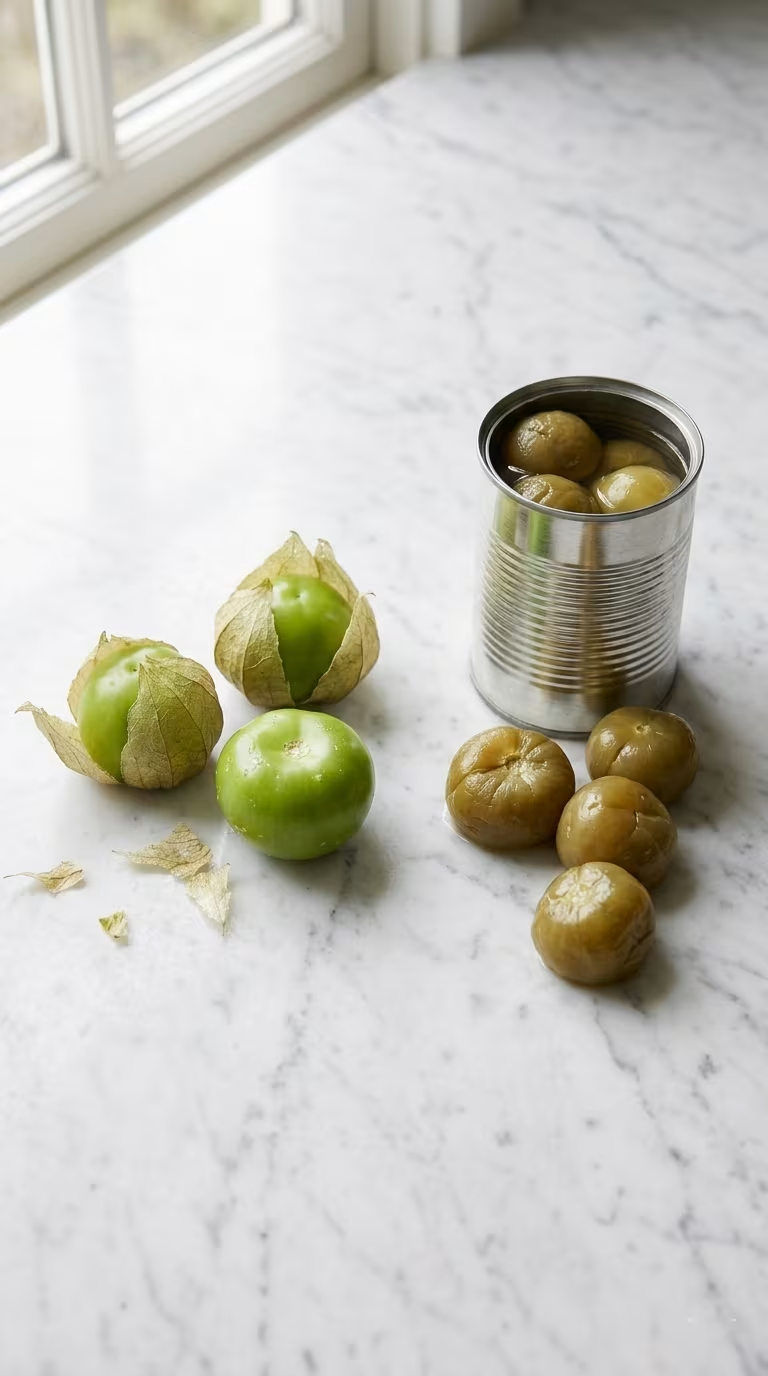
Canned tomatillos have been processed at high heat and packed in liquid, which means two things have already happened to the flavor by the time you open the can: the acid level has dropped (pH closer to 4.2 to 4.5 after processing), and the texture has softened significantly. What you get is a milder, slightly metallic version of the cooked tomatillo serviceable but not the same.
The fresh tartness is largely gone. The roasted depth is not there either, because the processing happens in liquid rather than dry heat. What remains is the basic tomatillo flavor green, mild, faintly tangy without the brightness of raw or the complexity of roasted.
Canned tomatillos are entirely acceptable in long braises and slow-cooked dishes a five-hour pork shoulder in green sauce, a weeknight chicken stew where the can liquid becomes part of the braising liquid and the flavors have time to develop. They are also fine in a quick weeknight sauce when fresh tomatillos are not available. Where canned will not give you what fresh does: fresh salsas, restaurant-quality enchilada sauce, or any dish where the tomatillo flavor is the primary thing you are tasting.
Where Tomatillo Flavor Comes From: Origin, Varieties, and Why the Acid Was Always the Point
Tomatillos have been cultivated in Mexico and Central America for more than 3,000 years, long before the tomato was domesticated or carried to Europe. Physalis philadelphica was a staple of Aztec and Mayan cooking not as a background ingredient but as the primary souring agent in sauces and stews.
The cuisines that developed around tomatillo were built specifically to use its acid the way European cooking uses wine: as a structural flavor that balances fat, cuts through richness, and keeps long-cooked dishes from becoming flat. That is why the tomatillo flavor profile behaves the way it does in Mexican cooking. The tartness was never incidental. It was the purpose.
The standard green tomatillo sold in US grocery stores is the most acidic variety pH approximately 3.8 when fresh, firm, and bright green. Yellow tomatillos ripen further and lose some of that edge; their sugar content rises as the malic acid declines, producing a milder, slightly sweeter flavor that reads as less sharp in a raw salsa but blends smoothly in cooked sauces.
Purple tomatillos, less common in US markets, are the sweetest and mildest of the three their flavor is closest to a ripe gooseberry, with the acid present but not dominant, and they contribute a faint earthy note that green and yellow varieties lack. In practice, green tomatillos are what most US home cooks will find year-round, and they are the correct choice for any dish where you want the characteristic tomatillo tartness to register clearly, whether raw or cooked.
Tomatillo flavor cannot be separated from where the plant comes from. It belongs to the same green sauce tradition as Mexican salsa verde, Guatemalan pipian verde, and the braised green sauces of the American Southwest all of which are built on this specific combination of malic acid and herbaceous volatile compounds.
No other ingredient in that produce aisle carries this precise flavor signature, which is why there is no clean substitute for tomatillos in the dishes that were designed around them.
Tomatillo Taste Raw vs Cooked: Choosing the Right Preparation for Your Dish
The preparation decision with tomatillos is more consequential than it is with most produce because the flavor genuinely changes not just in intensity but in kind. Raw, you are working with a sharp, citrus-forward acid that cuts and brightens. Roasted, you are working with something mellower, slightly sweet, and more complex. Boiled sits in between, useful but flat. Knowing which version your dish needs is the whole game.
If a dish needs maximum brightness a fresh salsa verde, a cold table salsa, a crudo-style sauce for grilled fish or shrimp raw tomatillos are what you want. The malic acid is at full strength, the grassy herbal note is present, and the crunch holds up in a way no cooked tomatillo can. Anywhere you want a sharp counterpoint to fat or richness, raw is the right call.
When the tomatillo is the backbone of the sauce rather than a supporting ingredient, roasting is what I reach for. The acid softens into something rounder, the sweetness that was hidden behind it comes forward, and the light smokiness from the charred edges adds a dimension that changes the whole character of the sauce.
Enchilada sauce, salsa verde for braised meats, green chile for huevos rancheros all of these are better roasted. The roasted tomatillo chickpea curry on this site shows exactly how roasted tomatillo holds its flavor in a sauce with a lot of competing ingredients.
Boiled tomatillos are right when you want the tomatillo in the background adding mild green acidity to a pozole verde or long-simmered chicken soup without dominating the other flavors. Think of boiling as turning the volume down. It is not the wrong choice for those dishes. It is the wrong choice when you want tomatillo to be what people notice.
Canned is a pantry backup. Long braises and slow-cooked dishes can absorb the processing trade-off the muted acid, the softer texture, the liquid from the can becoming part of the braising liquid. For anything where the tomatillo flavor is what makes the dish, use fresh. The ten extra minutes are worth it. At least in my experience, there is no recipe where canned tomatillo produces a better result than fresh. Just a faster one.
The place I always start with anyone new to tomatillos is a simple roasted salsa verde it takes 25 minutes and makes the flavor range of this ingredient completely clear. For detailed technique on getting the roast right, How to Roast Tomatillos walks through every step.
The same principle that guides green sauce cooking in Mexican tradition applies to any cuisine that uses acid as a structural flavor Italian salsa verde, Argentine chimichurri, Persian herb sauces.
The tomatillo version sits in this broader family of cooking techniques where the sourness is not decoration but architecture. Understanding how tomatillo flavor changes with heat is the foundation for understanding the whole category.
Common Questions About Tomatillo Flavor
What do tomatillos taste like?
Tart, citrusy, and slightly grassy when raw think green apple with an herbal edge. Roasted, the tartness softens and a mild sweetness develops. The flavor is unlike anything else in the produce section.
Are tomatillos sour or bitter?
Sour, not bitter. The sourness comes from malic and citric acid. A mild bitterness can appear if the sticky coating under the husk (tomatine) is not rinsed off before cooking which is why rinsing is not optional.
What is the sticky coating on tomatillos, and does it affect flavor?
The sticky residue is a natural compound called tomatine. It has a bitter edge that will carry into your sauce if you skip rinsing. Takes ten seconds under running water to remove. Do not skip it.
Do tomatillos taste like green tomatoes?
No. Green tomatoes are unripe red tomatoes they have higher sugar content and a different acid profile. Tomatillos have more complex acidity and herbal notes. They are not interchangeable in recipes, and substituting green tomatoes in a salsa verde will produce a noticeably different and generally less interesting result.
Are tomatillos spicy?
Tomatillos themselves have no heat. The tart, acidic flavor can register as sharp on the palate, but there is no capsaicin. Any heat in a tomatillo-based dish comes from added chiles, not the tomatillo itself.
Can you eat tomatillos raw?
Yes. Raw tomatillos are firmer and more tart than cooked ones. They work well in fresh salsas and as a garnish. If the tartness is too aggressive raw, a brief roast will smooth it considerably.
Why does my tomatillo sauce taste flat?
Almost always one of three causes: the tomatillos were boiled rather than roasted, the sauce was diluted with too much water or stock, or the tomatillos were canned rather than fresh. Start with roasted fresh tomatillos and the sauce will have the depth and brightness that flat versions lack.
How do you know if a tomatillo is ripe and at peak flavor?
Look for bright green skin, a tight papery husk that has not dried out or split, and a fruit that is firm but not hard. A slightly loosened husk is fine it just means the fruit is mature. Soft, yellowed, or blemished skin means the flavor will be muted.
The tartness is the point. That acid is not a flaw to cook away it is the structural element that makes tomatillo sauce work against rich proteins, fatty cheeses, and starchy dishes. Treat it as a flavor tool, not a liability.
For a complete picture of this ingredient varieties, storage, buying guide, and the full culinary history start with What Is a Tomatillo. When you are ready to cook, How to Roast Tomatillos is the technique that makes the most of what the ingredient has to offer.