
A tomatillo is a small, husked fruit from the nightshade family the same family as tomatoes, peppers, and eggplant with a tart, citrusy flavor that is the structural foundation of salsa verde and every Mexican green sauce. It is not a green tomato, not an unripe tomato, and not interchangeable with either. Once you understand what it actually is, the confusion disappears.
The thing that surprises most first-time tomatillo cooks is the acidity. A raw tomatillo runs at approximately pH 3.8 similar to a ripe orange which is why a roasted tomatillo sauce holds its brightness through an hour of braising where a tomato-based sauce would go flat. That structural acidity is what makes tomatillos useful, not just flavorful.
I have been cooking with tomatillos for forty years, in professional kitchens and at home, and the most common mistake I see is treating them like a vegetable with a sharp edge. They behave more like a high-acid fruit used as a sauce base closer in function to tamarind or green mango than to any tomato. Once that distinction is clear, every recipe that calls for tomatillos makes immediate sense.
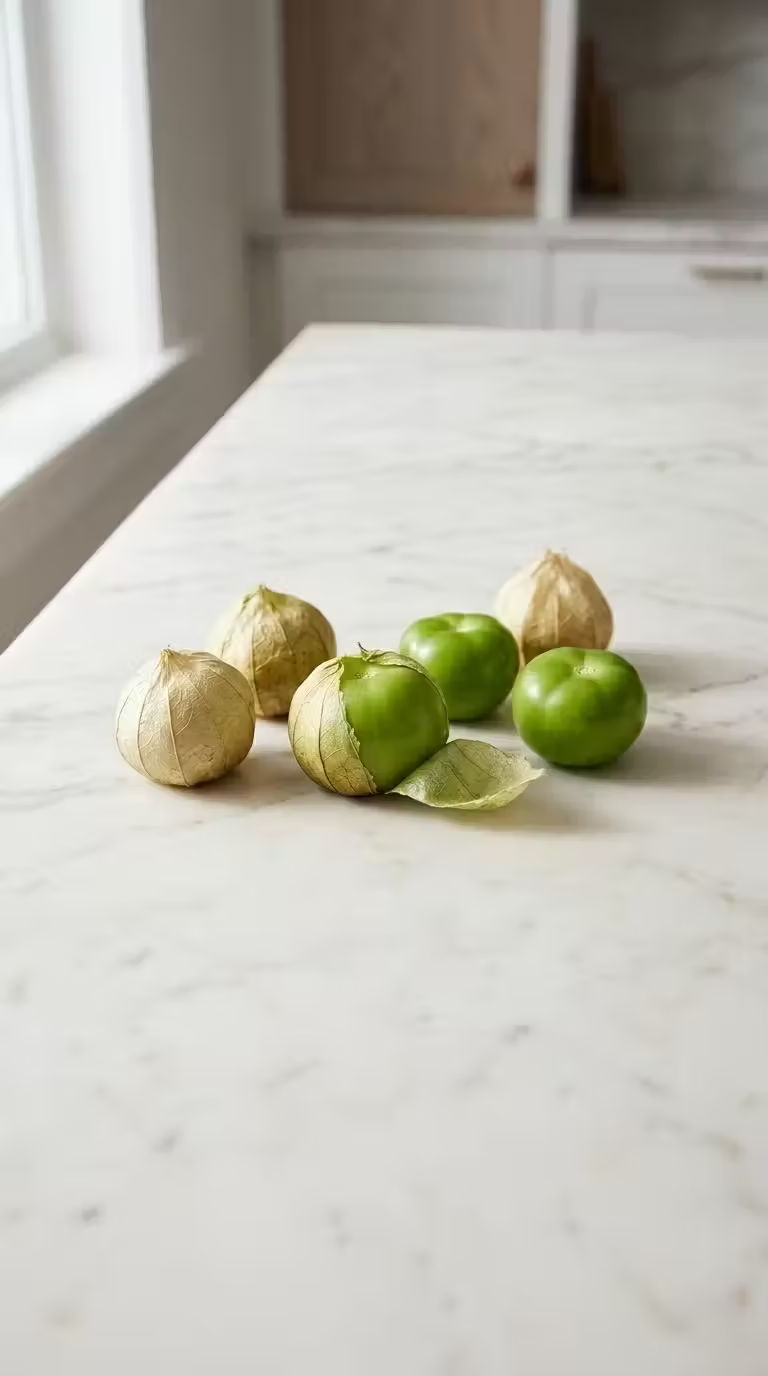
Table of Contents
What Is a Tomatillo?
Botanical Classification: Physalis philadelphica and the Nightshade Family
A tomatillo is the fruit of Physalis philadelphica, a member of the nightshade family (Solanaceae) that includes tomatoes, peppers, eggplant, and potatoes. That family connection is real but it is not the most useful way to understand how tomatillos behave in cooking.
In practice, the tomatillo’s culinary character is closer to an acidic, firm stone fruit than to any of its nightshade relatives.
What makes this classification matter for flavor is the tomatillo’s natural acid structure. Unlike the soft, water-rich flesh of a ripe tomato, the tomatillo carries a dense, firm cell structure and high volatile acid content that does not soften or sweeten without applied heat.
The pH of a raw tomatillo runs approximately 3.8 similar to a ripe orange which places it firmly in the high-acid range for a savory ingredient. That acidity is not background noise. It is the structural reason tomatillos function as a sauce base rather than a sauce garnish.
The tomatillo is not a green tomato. This is worth stating plainly because the confusion is persistent. Green tomatoes are unripe tomatoes low in acid, starchy, and mild in flavor.
Tomatillos are fully ripe when you pick them and are botanically closer to a cape gooseberry than to any tomato variety. Their closest relatives in the kitchen are tamarind and green mango: fruity, sharp, and deliberately sour when raw.
The papery husk that surrounds each tomatillo is a modified calyx the same structure that becomes the green star on a tomato or the spiky cap on a strawberry, but expanded and closed around the fruit as it develops.
It is not edible, and it does not affect flavor once removed. What it does signal is ripeness: a tight, papery husk that fits the fruit snugly means the tomatillo is at or near peak maturity. A husk that has dried out, split, or pulled away from the fruit is a sign of age.
Origin and Cultural Context: 3,000 Years of Mexican Cooking
Tomatillos originate in Mesoamerica specifically in what is now Mexico and Guatemala and have been cultivated and eaten for more than 3,000 years. They appear in pre-Columbian records as a foundational food crop, and they remain central to Mexican cuisine in a way that has not changed.
Salsa verde, enchiladas verdes, pozole verde, Chile Verde the word verde in every one of these dish names refers specifically to the color and flavor contribution of tomatillos, not to general greenness.
In the United States, tomatillos appear most prominently in Mexican, Mexican-American, Southwestern, and Tex-Mex cooking. Their penetration into mainstream American grocery stores has grown steadily over the past two decades, which is why most people reading this can find them in the produce section of a standard supermarket rather than needing to visit a specialty store.
Physical Description: What You Are Actually Looking At
A mature tomatillo fits comfortably in the palm of your hand roughly the size of a golf ball, though smaller marble-sized ones and slightly larger ones all exist within the normal range. Peel back the husk and the fruit underneath is bright green, smooth, and firm.
There is a sticky, slightly waxy coating on the skin. That is not dirt and it is not a problem with the fruit. It is a natural residue from the husk, connected to the compound tomatine, and it comes off easily with a rinse under running water.
When buying, firmness is your primary guide. A tomatillo should feel solid under gentle pressure not hard like a stone, but with no give. Any soft spots mean the cell structure has broken down and the fruit is past its best use window.
The skin should be bright green for standard varieties, uniform in color, and free of yellowing, cracking, or visible sliminess.
Tomatillos belong to the same botanical family as tomatoes, peppers, and eggplant but their culinary behavior is closer to an acidic fruit than a vegetable. The tartness that makes them essential in Mexican green sauces is not a background flavor.
It is the structural backbone of every dish they appear in, the thing that keeps a braised chicken sauce from going flat over two hours on the stove.
What Do Tomatillos Taste Like?
Raw Tomatillo: High Acid, Firm Texture, Sharp Flavor
Eaten raw, a tomatillo is assertively tart. The flavor carries citrus notes specifically lemon and green apple layered with a grassy, slightly herbaceous quality that has no real equivalent in the produce aisle.
The texture is firm and slightly crunchy, close to biting into an underripe apple. That firmness is the result of dense pectin networks in the cell walls, which hold their structure at room temperature.
The acidity at this stage is high pH approximately 3.8 and the flavor intensity is at its peak. Raw tomatillos work best in applications where you want that sharp edge front and center: fresh salsa cruda, finely diced as a garnish on tacos, or thinly sliced into a ceviche.
The observable cue for a tomatillo at its raw best is a bright, even green color and resistance when squeezed gently.
Roasted Tomatillo: Acid Reduction, Sweetness Development, and Sauce Depth
Roasting at 400°F changes what tomatillos are capable of. The high dry heat drives off volatile acids the compounds responsible for the sharp, one-note sourness of the raw fruit while concentrated natural sugars in the flesh undergo caramelization at the surface.
What you get is a flavor that is still recognizably tart but layered with sweetness and, if any charring occurs, a light smokiness that adds complexity without overpowering.
The acid level drops measurably during roasting, shifting from approximately pH 3.8 toward pH 4.4 to 4.5 depending on roasting time and temperature. That shift is exactly why roasted tomatillo sauce tastes rounded and why raw tomatillo sauce tastes sharp.
The texture changes completely: the skin wrinkles, the flesh softens and collapses, and the whole fruit blends to a smooth, cohesive sauce body without needing much additional liquid.
The observable cue is the color shift. Bright green goes to army green or olive green, the skin wrinkles visibly, and the edges may show light char. That is the target. Over-roasting until the fruit turns fully dark and starts losing liquid to the pan produces a mushy tomatillo that loses sauce body and contributes a slightly bitter edge.
I always roast tomatillos for any sauce that needs to hold up under heat or time, specifically because the dry heat concentrates flavor and drives out excess moisture. Boiled tomatillo sauce always tastes thin to me no matter what else goes into it.
Boiled or Simmered Tomatillo: Milder, Softer, More Neutral
Boiling or simmering tomatillos produces a noticeably milder result than roasting. The volatile acids reduce in the hot water rather than concentrating, which lowers the tartness but also softens the overall flavor profile. You lose some of the brightness. What you gain is a very soft texture that blends with almost no effort.
This method makes sense when you are working with a large batch and moving directly to a blender, or when you want a lighter, less assertive sauce body green pozole broth being the clearest example.
The observable cue is when the tomatillo turns olive green and yields to gentle pressure from a spoon. At that point the internal temperature has been sufficient to break down the cell structure and the fruit is fully cooked through.
Canned Tomatillos: What Changes and What Remains
Canned tomatillos have been cooked during the canning process, which means they arrive at pH closer to 4.0 to 4.5 and with a texture that is already soft. The roasted depth is absent. The fresh tartness is reduced.
What remains is a functional tomatillo flavor that works adequately in dishes with other strong flavors a slow-cooked chicken braise, a chili base, an enchilada sauce that will bake under cheese. For a quick weeknight dinner where fresh tomatillos are not available, canned is a completely reasonable choice.
Where canned falls short is in any dish where the tomatillo flavor is the point. Fresh salsa verde, a delicate roasted sauce for fish, or any dish where the tomatillo sauce sits on top rather than cooks into the protein these need fresh.
The texture difference matters too: canned tomatillos blend into a slightly thinner sauce body because the pectin structure has been broken down twice by heat.
Tomatillo Varieties
Green Tomatillos
The standard tomatillo sold in most US grocery stores. Flavor runs from sharp and citrusy when small to slightly mellower and fuller when closer to golf-ball size. Bright green skin, firm flesh, and a tight papery husk are the marks of a good specimen. These are the default for salsa verde, enchilada sauce, and any Mexican green sauce where balance between tartness and body matters most.
Yellow Tomatillos
Less common but occasionally available at farmers markets and Latin grocery stores, especially during peak season. Yellow tomatillos are milder and slightly sweeter than green the acid level is lower and the flavor carries more fruit-forward notes with less of the grassy edge.
The color change matters in the finished dish: yellow tomatillo sauce runs golden rather than green, which affects presentation but not the fundamental cooking behavior. Best use is in dishes where you want a gentler acid contribution.
Purple Tomatillos
Purple tomatillos carry a deeper, slightly earthier flavor than green still tart, but with a richness that the standard variety does not have. The color in sauce is striking: a purple-grey that darkens further with heat.
These are a specialty item in the US, most likely found at farmers markets in summer. For a home cook, the culinary difference from green tomatillos is modest but the visual effect in a sauce is genuinely distinct.
Miltomate (Wild Tomatillo)
The miltomate is a smaller, wilder relative of the cultivated tomatillo botanically distinct but from the same genus. In Mexico, particularly in Oaxaca and Chiapas, miltomates appear in sauces where their intensely tart and more complex flavor is valued.
They are rarely available in the United States outside of specialty Mexican markets. For most home cooks, the information is useful context rather than practical shopping guidance.
How to Select and Buy Tomatillos
Reading Freshness Before You Buy
The husk tells most of the story. It should be papery and tight around the fruit not dried out, cracked, or pulling away from the skin. Lift a couple and feel for firmness through the husk. A tomatillo that feels soft or gives too easily has already started to deteriorate.
Peel the husk partway at the stem end if you want to confirm: the skin underneath should be bright green, smooth, and free of soft spots, yellowing, or sliminess.
Uniformity in size matters when you are roasting a batch because even-sized tomatillos cook at the same rate. Irregular sizes are fine for boiling or for a slow-cooker application.
Where to Find Tomatillos
Most national grocery chains in the US carry fresh tomatillos in the produce section year-round, usually near the peppers or specialty produce. The selection at Latin or Mexican grocery stores is typically better in terms of freshness and size variety.
Farmers markets during peak season late summer through early fall often have the best quality, including occasional access to yellow or purple varieties.
Canned tomatillos are available at most mainstream grocery stores in the Latin foods aisle, and via online retailers if your local store does not stock them.
Seasonal Availability and Timing
Peak season for fresh tomatillos runs from August through October in most US growing regions. During this window, they are at their best: firmest, most flavorful, and least expensive. Outside of peak season, tomatillos are still widely available they store and ship well due to the protective husk but prices are higher and the selection can be uneven.
How Much to Buy
For salsa verde: approximately 1 lb (450g), which is roughly 8 to 10 medium tomatillos. For enchilada sauce: approximately 1.5 lbs (680g). For a soup base or braise with significant liquid: approximately 2 lbs (900g).
How to Prepare Tomatillos
Removing the Husk: What to Do and Why
Pull the husk off by hand it comes away cleanly from a fresh tomatillo and leaves a small stem nub at the top. The husk is papery and not edible. Once removed, check the skin underneath for any soft spots or discoloration before proceeding.
The Sticky Coating: What Tomatine Is and Why You Must Rinse It Off
The sticky film on the skin of a husked tomatillo is a natural residue connected to the compound tomatine the same alkaloid present at low levels throughout the nightshade family.
In the concentrations found on tomatillo skin, tomatine is not a health concern, but it contributes a noticeable bitterness and a slightly soapy quality that affects sauce flavor if it stays on the fruit.
Rinse under running water, rubbing gently, until the skin feels clean and smooth rather than tacky. This step takes fifteen seconds and it is not optional if you want a clean-tasting sauce.
Using Raw: When the Sharpness Is the Point
Raw tomatillos work best when the acid is an asset rather than something to soften. Finely diced for a fresh pico-style salsa, thinly sliced as a garnish on tacos or grain bowls, or blended cold with chiles and herbs for an immediate table salsa these are the raw applications.
The flavor is assertive and bright. Do not use raw tomatillos in a dish where they will sit for hours before serving; the texture softens unevenly and the flavor gets muddy.
Roasting in the Oven: The Preferred Method for Sauce
What to do: Place husked, rinsed tomatillos on a rimmed baking sheet. Roast at 400°F for 15 to 20 minutes, until the skin wrinkles and the color shifts from bright green to olive or army green.
Why this method: Dry heat drives off volatile acids and concentrates the natural sugars. The caramelization at the surface adds a depth that no other cooking method produces. Sauce made from oven-roasted tomatillos holds a better body because the moisture has reduced before blending, not after.
Risk: Over-roasting past the olive-green wrinkled stage into full collapse and liquid loss produces a mushy, slightly bitter result that blends into a flat, thin sauce.
Cue: Wrinkled skin, olive green color, light char on edges. Pull them when you see that do not wait for uniform browning.
Broiling and Charring: Smokier, Faster, Different Character
What to do: Place tomatillos cut-side down (if halved) or whole on a foil-lined baking sheet 4 to 6 inches from the broiler. Broil 5 to 7 minutes, checking at 4 minutes, flipping or rotating as needed.
Why broiling differs from oven roasting: The higher surface heat produces faster Maillard browning at the skin, which means more char, more smoke, and a more intense caramelized edge. The interior stays firmer than with longer oven roasting. Broiled tomatillos are the right choice when you want a sauce with a defined smoky note specifically for salsas where smokiness is the whole point.
Cue: Charred black patches on the skin mean you are in the right zone. Fully blackened throughout means you have gone too far and the bitterness of carbonized skin will show up in the sauce.
Boiling and Simmering: Milder Result, Easy Blending
What to do: Place husked, rinsed tomatillos in a saucepan and cover with cold water. Bring to a simmer over medium heat. Cook 8 to 10 minutes, until the tomatillos turn olive green and yield to gentle pressure from a spoon.
Why this produces a milder result: The volatile acids leach into the cooking water rather than concentrating through evaporation. The flavor is softer and less complex than roasted. If you want to preserve some sharpness, use minimal water just enough to cover and add the cooking liquid to the blender along with the fruit.
Best uses: Pozole verde base, large-batch enchilada sauce where you are adding significant other flavors, or any dish where the tomatillo is a supporting flavor rather than the lead.
Using in a Slow Cooker: Long Heat, Integrated Flavor
Tomatillos hold together well in a slow cooker over 6 to 8 hours at low heat. The acid they release during cooking tenderizes proteins particularly chicken thighs and pork shoulder more effectively than a neutral braising liquid would.
By hour 6, the tomatillo essentially dissolves into the braising liquid, which thickens slightly from the released pectin. The flavor is mellow, integrated, and sweet rather than sharp. This is not the method to preserve any brightness from the tomatillo it is the method to use when you want the ingredient to become part of the dish rather than stand apart from it.
Green sauce cooking traditions appear across many culinary cultures Italian salsa verde with herbs and anchovies, Peruvian ají verde with chiles and cilantro, French sauce verte with blanched herbs.
Tomatillo-based Mexican salsas verdes are distinct because the acid and body come from a single fruit, not from vinegar or lemon juice added separately. That is why tomatillo sauces can simmer for an hour without going flat: the acid is bound in the cellular structure of the fruit, not dissolved freely in liquid.
Tomatillo Nutrition
| Nutrient | Per 100g (approximately 2–3 medium tomatillos) |
|---|---|
| Calories | 32 kcal |
| Carbohydrates | 5.8g |
| Dietary Fiber | 1.9g |
| Vitamin C | 11.7mg (13% DV) |
| Vitamin K | 10.1mcg (8% DV) |
| Potassium | 268mg (6% DV) |
| Niacin (B3) | 1.85mg (12% DV) |
| Iron | 0.6mg (3% DV) |
One hundred grams of raw tomatillo provides roughly 12 to 13 percent of the daily vitamin C requirement comparable to a similar weight of raw tomato, slightly less than a raw pepper.
For a sauce base that you might use 200 to 300 grams of per serving, that is a meaningful contribution from an ingredient most people think of purely in flavor terms.
Tomatillos also contain withanolides, a class of naturally occurring antioxidants studied for anti-inflammatory properties, though the concentrations in food-use quantities are modest.
At 32 calories per 100 grams, tomatillos are among the most calorie-efficient sauce bases in the kitchen. A full pound of tomatillos enough for a generous batch of salsa verde or enough to braise four chicken thighs contributes roughly 140 calories to a dish before anything else is added.
For family cooks watching calorie density without cutting flavor, that is genuinely useful. I have served tomatillo chicken to people who assumed the sauce must be heavy, and they are always surprised when I tell them what went into it.
Fresh vs Canned Tomatillos
Fresh Tomatillos
Fresh tomatillos in good condition offer the full flavor range: bright tartness, firm texture that holds up to slicing or chunking, and the ability to roast or broil to develop complexity.
They require husking and rinsing, which takes two to three minutes. They are available year-round at most grocery stores, with best quality and lowest prices during the August to October peak season.
Fresh is essential when you want a pronounced tomatillo flavor as a primary component classic salsa verde, roasted green sauce for enchiladas, a fresh chilled garnish salsa.
The texture difference also matters for any preparation that is not blended: fresh tomatillos hold their shape in a slow-cooked dish before eventually breaking down; canned ones are already soft on arrival.
Canned Tomatillos
Canned tomatillos are pre-cooked, soft, and pH-adjusted to roughly 4.0 to 4.5. The flavor is flatter than fresh but still recognizably tomatillo. They are faster, have no prep requirements beyond draining, and cost less per ounce than fresh in most markets.
They work well in dishes where the tomatillo sauce is a component among many strong flavors a complex mole-adjacent braise, a chili with lots of aromatics, or an enchilada sauce that will bake under a substantial layer of cheese. They also work as a backup when fresh tomatillos are genuinely unavailable.
When to Use Which
Use fresh when tomatillo flavor is the lead or the dish is served raw or minimally cooked. Use canned when speed matters, the tomatillo is one of many flavors in a long-cooked dish, or fresh are not available. In a dish that braises for 90 minutes with garlic, chiles, and stock, the quality difference between canned and fresh is real but not dramatic. In a five-ingredient salsa verde, it is the whole dish.
How to Store Tomatillos
In the Husk at Room Temperature
Unhusked tomatillos keep well at room temperature for 2 to 3 weeks if stored in a single layer in a cool, dry spot with air circulation. The papery husk acts as a natural protective layer that controls moisture loss and slows deterioration. Watch for husks that start to dry out and pull away from the fruit that signals the tomatillo inside is close to its edge.
In the Husk in the Refrigerator
Refrigerated in their husks and placed in a paper bag or loosely covered bowl, tomatillos keep for 3 to 4 weeks without meaningful quality loss. Cold slows the breakdown of both the husk and the fruit. Flavor becomes very slightly mellower over a long refrigerator stay but nothing dramatic until they begin to soften.
Husked in the Refrigerator
Once husked and rinsed, tomatillos should go into an airtight container or zip-lock bag. Use within 5 to 7 days. The exposed skin dries out faster and the fruit softens more quickly without the husk’s protection.
Freezing Tomatillos: Method and Quality After Thawing
Tomatillos freeze well. You can freeze them in the husk just pack them into freezer bags and pull out what you need or husk, rinse, and freeze them whole or halved. Roasted tomatillos also freeze well and are ready to blend directly from the freezer.
Freeze in recipe-sized portions: roughly 1 lb per bag if you make salsa verde regularly. Tomatillos keep in the freezer for up to 6 months with good quality. After thawing, the texture is soft not suitable for raw applications but perfectly fine for any cooked or blended use. Thaw overnight in the refrigerator or go straight from frozen to the pan or oven.
Tomatillos keep longer than most fresh produce partly because of their natural acid content the same high acidity that makes them useful in a sauce is the chemistry that slows microbial growth on the surface.
The husk adds a second layer of protection. Together these two things explain why a bag of tomatillos can sit in your refrigerator for three weeks and still be fine while most produce has turned by then.
What Can You Make with Tomatillos?
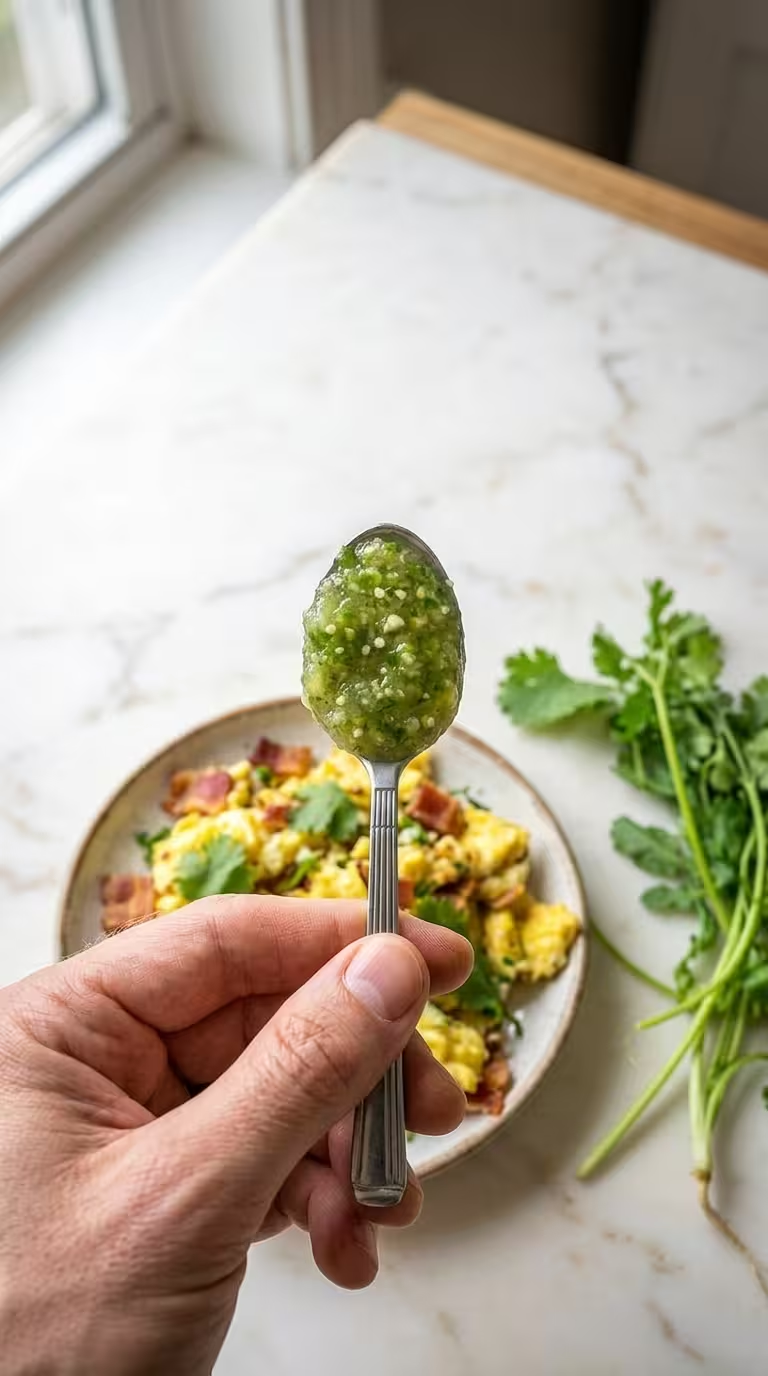
The place I always start with tomatillos is a simple salsa verde. It takes twenty minutes, it uses nothing but tomatillos and a few supporting ingredients, and it shows you exactly what the ingredient does. Once you have made it once, the rest of the tomatillo repertoire makes sense. The simplest starting point is tomatillo salsa verde twenty minutes, five ingredients, and the clearest way to understand what the fruit does with heat..
Salsas and green sauces are the core tomatillo application. Salsa verde for tacos, green enchilada sauce for a 9×13 pan of enchiladas, tomatillo hot sauce for a condiment that keeps in the refrigerator for weeks. In every case, the tomatillo provides both the acid and the sauce body it replaces both vinegar and tomato paste in a single ingredient.
Chicken dishes are where most home cooks discover how useful tomatillos are in a longer cook. The acid tenderizes the protein while contributing flavor. Enchiladas verdes, tomatillo chicken soup, a simple braise with garlic and a few chiles all of these are weeknight-practical. For the most practical weeknight application, tomatillo chicken shows how a bone-in braise works when the sauce is built entirely on roasted tomatillos.
Soups and stews built on tomatillos include Chile Verde (pork in green sauce), pozole verde, and various regional soups from Mexican cooking that use tomatillo as the base liquid rather than stock. The tomatillo provides enough body and flavor to function as the primary liquid, which is unusual for a fruit.
Other proteins take well to tomatillo. Pork shoulder braises exceptionally well with tomatillos over 6 to 8 hours the acid works through the connective tissue. Shrimp cooks quickly in a tomatillo sauce and stays bright and lively if you add the shrimp at the end and cook for two minutes only.
Condiments and sides expand the tomatillo range beyond main dishes. Pickled tomatillos halved raw tomatillos in a quick brine are a sharp, crunchy condiment for sandwiches and grain bowls. Tomatillo guacamole adds the tartness of tomatillo to the richness of avocado in a way that standard lime juice does not quite replicate.
For a slow-cooker version that requires almost no active cooking time, slow cooker tomatillo chicken demonstrates how the acid from tomatillos tenderizes chicken thighs over six hours of low heat.
Tomatillos vs Green Tomatoes: Why They Are Not Interchangeable
This comparison comes up constantly, and the short answer is that they are not the same thing in any meaningful way.
| Attribute | Tomatillo | Green Tomato |
|---|---|---|
| Botanical classification | Physalis philadelphica, nightshade family | Solanum lycopersicum, same family |
| Husk | Present papery calyx covering | Absent |
| Flavor | Tart, citrusy, grassy | Mild, starchy, faintly bitter |
| Acidity | High pH approximately 3.8 raw | Low pH approximately 4.5 |
| Raw texture | Firm, crunchy, dense | Firm but milder and more starchy |
| Culinary role | Sauce base, acid source, primary flavor | Fried, pickled, relishes, jam |
| Substitutability | Not a direct substitute for green tomatoes | Partial substitute only with adjustments |
A green tomato cannot replace a tomatillo in salsa verde or enchilada sauce. The acid level is too low, the flavor is too mild, and the texture after cooking goes soft and starchy rather than smooth and rounded. You would need to add significant citric acid or lime juice to compensate, and even then the flavor profile is off.
Where a green tomato can substitute: in a long-cooked, heavily spiced dish where the tomatillo is one of many flavors and the acid balance is adjusted.
A Chile Verde with green tomato instead of tomatillo is recognizably different milder, less sharp, less authentic but it is edible and functional if tomatillos are genuinely not available. Add the juice of two limes per pound of green tomato used.
Tomatillo Cooking: Where to Start
Understanding what a tomatillo is leads directly to the practical question of how to cook one. The method you choose — roasting, broiling, boiling, or slow-cooking changes the flavor output more dramatically than most produce ingredients allow.
For a step-by-step guide to every roasting method with visual cues and timing, how to roast tomatillos covers the oven, broiler, and stovetop approaches in detail.
For cooks who want to understand the flavor before committing to a full recipe, what do tomatillos taste like breaks down the flavor profile across raw, roasted, boiled, and canned states with the specific differences between each preparation method that affect your sauce.
The tomatillo is native to Mexico and Central America, where it has been cultivated for over 3,000 years. Its flavor profile tart, herbaceous, slightly fruity is the result of a natural acid structure that no other common produce ingredient replicates. That is why Mexican green sauces taste the way they do, and why no substitute fully captures the same quality. Once you have roasted a batch and tasted the sauce directly from the blender, that fact becomes clear immediately.
Common Questions About Tomatillos
Are tomatillos the same as green tomatoes?
No. Tomatillos are the fruit of Physalis philadelphica, enclosed in a papery husk, and have a naturally high acid content. Green tomatoes are unripe tomatoes with low acid and a starchy, mild flavor. They are in the same botanical family but behave differently in cooking and are not interchangeable in most recipes.
Can you eat tomatillos raw?
Yes. Raw tomatillos are sharp, tart, and firm closer in texture to a crunchy apple than to a ripe tomato. They work well finely diced in fresh salsa, thinly sliced as a garnish on tacos, or blended cold into a quick table salsa. The flavor is more aggressive raw than cooked, so they are best in dishes where that sharpness is welcome.
What do tomatillos taste like?
Tart and citrusy, with a grassy, herbaceous edge and a firm, crunchy texture. The tartness reads like lemon crossed with green apple, with none of the sweetness of a ripe tomato. When roasted, the sharpness softens and a mild sweetness develops that the raw fruit does not have.
Are tomatillos spicy?
No. Tomatillos have no capsaicin and no heat. What people sometimes experience as bite from a tomatillo dish is the tartness and acidity, not spice. The heat in any salsa verde or green sauce comes from the chiles added to it, not from the tomatillos themselves.
Where can I buy tomatillos?
Most national grocery chains carry fresh tomatillos in the produce section, usually near specialty peppers or Mexican produce. Latin and Mexican grocery stores typically have the best selection. Farmers markets in late summer often have multiple varieties. Canned tomatillos are available in the Latin foods aisle at most mainstream grocery stores and widely online.
Can I use canned tomatillos instead of fresh?
In most cooked dishes, yes with a flavor trade-off. Canned tomatillos are softer and milder than fresh because they have been heat-processed. For long-braised dishes, soups, and sauces with multiple strong flavors, canned works well. For fresh salsa verde or any dish where tomatillo flavor is the primary focus, fresh is noticeably better.
What is the sticky coating on tomatillos?
It is a natural resinous residue connected to the compound tomatine, which is present throughout the tomatillo and its plant. The coating is concentrated on the skin once the husk is removed. It is not harmful, but it is bitter and slightly soapy, and it affects sauce flavor if you cook it in. Rinse husked tomatillos under running water, rubbing the skin until it no longer feels tacky.
Can you freeze tomatillos?
Yes. Freeze them whole in their husks, or husk and rinse them first. Both methods work. Frozen tomatillos keep for up to 6 months and are perfectly suited for cooked and blended applications after thawing. Texture after thawing is soft not suitable for raw use, but fine for any sauce, soup, or braise.
What is the best way to cook tomatillos for salsa verde?
Roasting at 400°F for 15 to 20 minutes is the standard method for salsa verde because it reduces the sharpness and builds a sweeter, more complex flavor before blending. Broiling gives a smokier result in less time. Boiling produces a milder, less complex sauce. Most experienced cooks prefer roasted for a green salsa they will use as a table condiment, and either roasted or boiled for a larger batch enchilada or braising sauce.
The Starting Point
Tomatillos are not a difficult ingredient. They just need heat. Once you roast a batch and blend them, the whole flavor picture becomes clear in a way that no amount of description quite captures. For understanding the fresh versus canned decision in more detail, fresh vs canned tomatillos covers exactly when the substitution works and when it doesn’t. If you are working with a new bag and unsure about storage, the tomatillo storage guide covers counter, refrigerator, and freezer methods with expected timelines.