
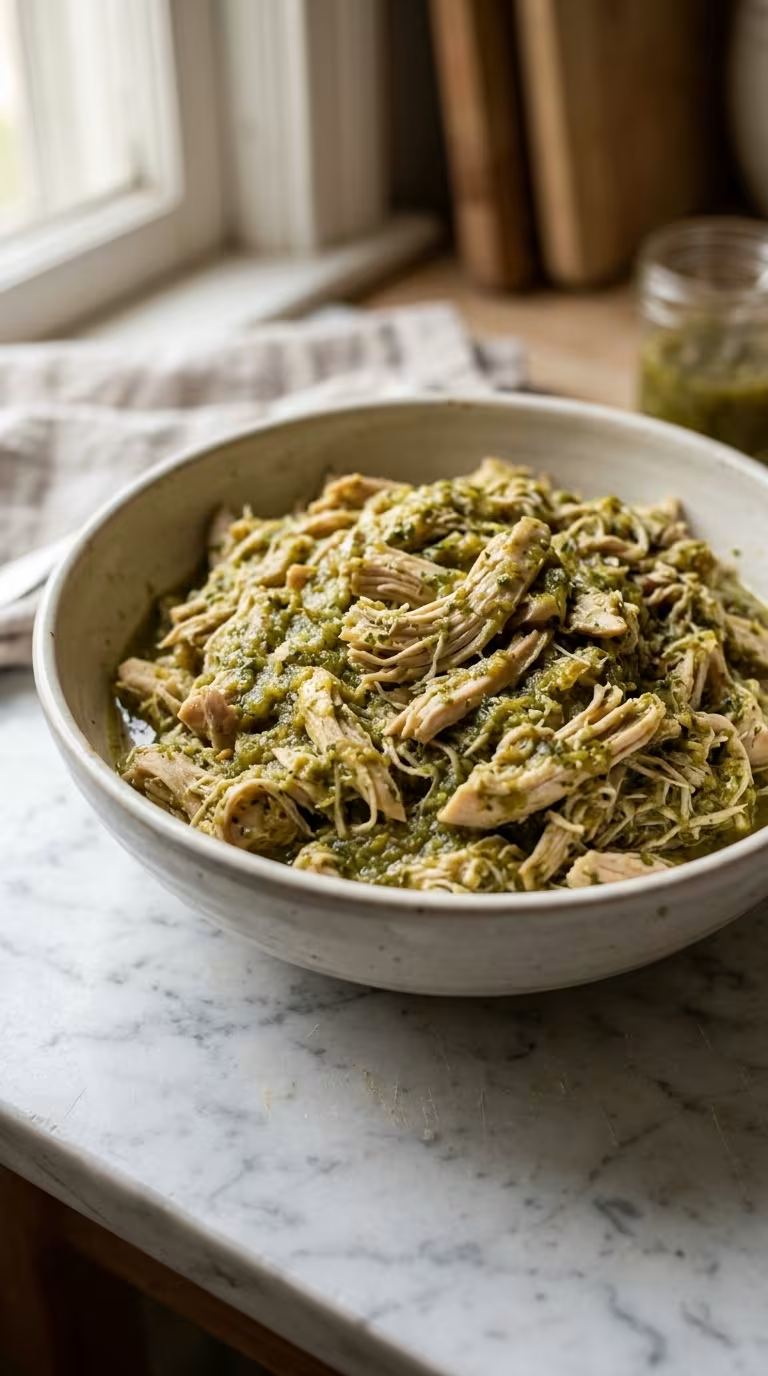
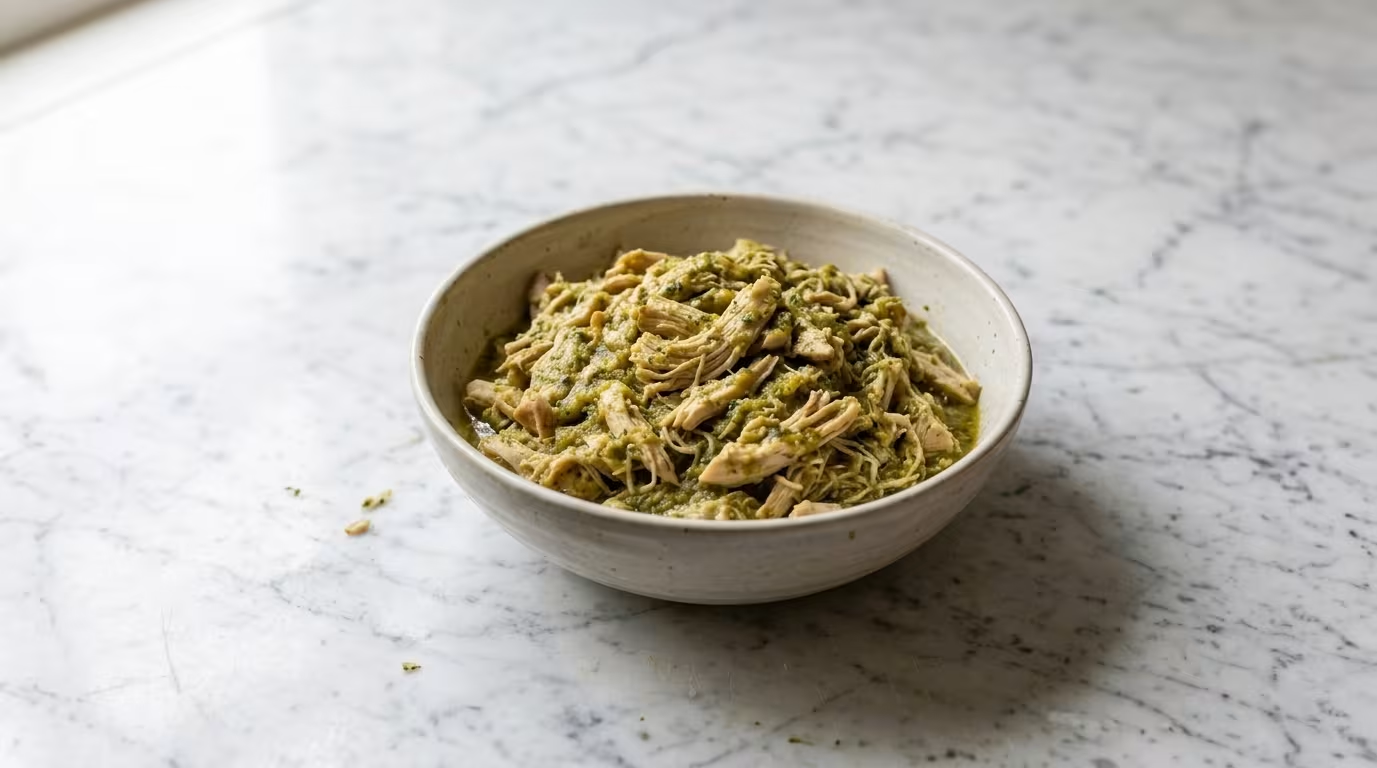
Slow cooker tomatillo chicken is bone-in chicken thighs and fresh tomatillos cooked low and slow until the sauce becomes a silky, slightly tangy braising liquid that shreds into the meat.
The tomatillos carry this dish. They supply the acid that breaks down the chicken fibers during the cook, and their natural pectin dissolves into the liquid and builds a sauce body that no jarred salsa or canned sauce can reproduce.
Prep takes 20 minutes. The crockpot runs 6 to 8 hours on low. No browning. No stovetop finishing required.
Whether you are searching for a green chicken taco filling or a crockpot tomatillo chicken dinner for the week, this recipe produces both from the same pot.
I have made versions of this for twenty years. The tomatillo sauce never fails.
If you are new to this ingredient, What Is a Tomatillo covers everything you need before you start.
| Serves | 6 |
| Prep Time | 20 minutes |
| Cook Time | 6–8 hours (low) |
| Total Time | 6 hours 20 minutes – 8 hours 20 minutes |
| Skill | Easy |
| Cost | Budget |
Table of Contents
What Is Slow Cooker Tomatillo Chicken?
Origin and Cultural Context
This dish belongs to a long lineage of Mexican green braised chicken preparations a category that appears across central and southern Mexico under different names depending on region, cut, and whether the tomatillos are roasted or raw before cooking.
Physalis philadelphica, the botanical name for the tomatillo, has been cultivated in Mexico for over 3,000 years. Long-braised green chicken dishes predate the slow cooker by centuries the appliance is the modern Western adaptation of preparations that originally cooked in earthenware pots over low heat.
The result is the same either way: chicken so tender it shreds with a fork, in a sauce with a tartness and body that no tomato-based braise produces.
Tomatillo’s Structural Role in This Dish
In a slow cooker, the tomatillo’s natural pectin concentration matters as much as its flavor. As the fruit breaks down over 6 to 8 hours of moist heat, the pectin releases from the cell walls and integrates into the cooking liquid. The result is a sauce with a coating texture thicker than broth, lighter than cream that clings to the shredded chicken fiber by fiber.
The natural acidity of raw tomatillos (pH approximately 3.8) also functions as an extended marinade throughout the cook. The hydrogen ions penetrate the outer chicken surface and weaken the cross-links in the muscle fiber bundles. By hour four, those fibers separate cleanly under fork pressure. That is why correctly cooked tomatillo chicken shreds rather than chops the acid has done structural work on the protein before the heat even finishes the job.
No other ingredient in this recipe produces that combination of acid-driven tenderizing and natural pectin-based sauce body. Not the onion. Not the poblano. Not the garlic. The tomatillo is the mechanism, not just the flavor.
How This Differs from Similar Dishes
Salsa verde chicken uses a finished sauce poured over the protein at the end. This recipe cooks the protein and the tomatillos together from the start, so the flavor exchange runs both directions.
Chile verde is typically pork-based, with tomatillo and green chiles sharing equal billing. Here, tomatillo is the dominant element the poblano is a supporting note, not a co-lead.
Green enchiladas use blended tomatillo sauce poured over rolled tortillas. This dish produces that same sauce, but as the braising liquid first and as a filling sauce second.
Dishes like this one belong to a wider family of tomatillo-based braises that run through Mexican home cooking from Oaxaca to the northern border. The sauce method acid-rich fruit plus aromatics, long moist heat, blend at the end is the same whether the protein is chicken, pork shoulder, or white fish. The slow cooker is one expression of that method. Master the tomatillo sauce once and the technique transfers to every protein in the family.

Slow Cooker Tomatillo Chicken
Ingredients
Equipment
Instructions
- Place chicken thighs in the bottom of a 6-quart slow cooker. Sprinkle with 1 tsp kosher salt and all the black pepper. Arrange in a single layer.
- Halve the tomatillos and place them cut-side down over and around the chicken. Add the onion wedges, poblano pieces, and garlic cloves. No liquid needed.
- Sprinkle the cumin and oregano evenly over the vegetable layer. Cover and cook on LOW for 6 to 8 hours. Do not lift the lid during cooking.
- Remove the chicken to a cutting board. Shred with two forks, discarding bones and skin. Chicken should reach 165°F / 74°C internal temperature at the thickest point away from the bone.
- Strain the slow cooker contents, reserving all cooking liquid. Transfer solids to a blender. Add ¼ cup reserved liquid. Blend until smooth. Add more liquid gradually until the sauce coats the back of a spoon.
- Return shredded chicken to the slow cooker. Pour in the blended tomatillo sauce. Add remaining ¾ tsp salt and 2 tsp lime juice. Stir and taste. Adjust seasoning before serving.
Notes
The Tomatillo’s Role in Slow Cooker Tomatillo Chicken
Raw tomatillos have a sharp, herbal tartness driven by high organic acid content primarily citric and malic acid, with a pH around 3.8. When those acids are exposed to 6 to 8 hours of sustained low-temperature heat (190–200°F / 88–93°C in a slow cooker), two measurable changes happen.
First, the volatile organic acids partially dissipate as they evaporate and as some are neutralized by the calcium and magnesium compounds in the chicken and onion. The tomatillo flavor shifts from aggressive-tart toward tangy-sweet with a rounded vegetal finish. The pH of the cooking liquid rises toward 4.3 to 4.5. That shift is what makes the finished sauce taste balanced rather than sour, and it is why raw tomatillos placed in a slow cooker produce a better result than roasted tomatillos in this specific application roasted tomatillos that cook for another 7 to 8 hours risk pushing past balanced into faint bitterness as the sugars from the initial Maillard reaction continue to develop under sustained heat.
Second, the chlorophyll in the tomatillo skin degrades into pheophytin as heat displaces the magnesium ion from the chlorophyll molecule. The sauce transitions from vivid green to olive or army green. That color change is not a quality problem it is a reliable visual indicator that the tomatillos have fully broken down and released their pectin into the sauce. A sauce still showing bright green after 6 hours on low has not reached full breakdown and will be thinner than it should be.
The slow cooker’s moist, sealed environment is specifically favorable to tomatillo’s contribution in this dish. Unlike open-pan braising, the sealed lid traps the water vapor released by the tomatillos and recirculates it back into the sauce. Tomatillos are approximately 91% water by weight. That moisture, fully retained rather than evaporated, is what eliminates the need for any added liquid in this recipe and what produces the concentrated sauce body at the end of the cook. In open-pan braising, you would add stock and reduce. In the slow cooker, the tomatillo provides and the sealed lid preserves.
The collagen in bone-in chicken thighs converts to gelatin at a threshold of approximately 160°F (71°C), sustained over time. At the slow cooker’s low setting (190–200°F), that conversion happens in approximately 4 to 5 hours and continues through hour 8 without the protein drying out because the temperature never crosses the 212°F (100°C) threshold where rapid moisture loss begins. The gelatin released from the bones and connective tissue joins the tomatillo pectin in the cooking liquid, and together they produce a sauce with body that boneless cuts and open-pan methods do not replicate. That is the mechanical reason bone-in thighs are correct for this dish and boneless breasts are a compromise.
For this recipe, I use fresh tomatillos and I do not pre-roast them. The long sealed cook extracts everything the tomatillo has to offer without the roasting step. I tried roasted versions in a slow cooker for a full season before settling on raw the char flavor from roasting turns acrid past the 6-hour mark in a sealed environment. Raw into the pot, every time.
Ingredients
| Ingredient | Amount |
|---|---|
| Bone-in, skin-on chicken thighs | 3 lbs (1.35 kg) |
| Fresh tomatillos, husked and rinsed | 10–12 medium (about 1 lb / 450g) |
| Red onion, cut into wedges | 1 large |
| Poblano pepper, halved and seeded | 1 large |
| Garlic cloves, peeled | 5 |
| Ground cumin | 2½ tsp |
| Dried oregano (Mexican preferred) | 2 tsp |
| Kosher salt | 1¾ tsp, divided |
| Black pepper | ½ tsp |
| Fresh lime juice | 2 tsp |
| Chicken stock (for sauce adjustment) | ¼ cup (60 ml) |
Ingredient Notes
Tomatillos fresh, firm, fully filling the husk. A tomatillo that has begun to soften or pull away from its husk has already lost moisture and acid, which reduces both the tenderizing activity and the pectin available for sauce body. Fresh tomatillos at pH 3.8 are the structural engine of this dish their acid tenderizes the protein and their pectin builds the sauce. Canned tomatillos have been heat-processed at high temperature, which denatures approximately 30% of that pectin structure before they reach your pot. The flavor difference is minor. The sauce-body difference is noticeable canned produces a thinner result. I stay with fresh.
Chicken thighs bone-in, skin-on. The periosteum (connective tissue surrounding the bone) and the collagen in the thigh joint both convert to gelatin during the 6 to 8 hour cook. That gelatin joins the tomatillo pectin in the cooking liquid and produces a coating sauce that boneless cuts cannot replicate. I switched to bone-in exclusively for this dish about fifteen years ago when I ran the two side by side the boneless version tastes correct but the sauce runs instead of clings.
Poblano pepper. Mild capsaicin content (500 to 1,000 Scoville units) and a grassy, slightly smoky flavor that supports the tomatillo without competing with it. Capsaicin distributes through the sauce during the long cook, producing an even background warmth rather than concentrated heat in any single bite. A green bell pepper substitutes cleanly if you want zero heat you trade the faint smokiness but the sauce structure is unchanged.
Mexican dried oregano. Higher in thymol and carvacrol compounds than Mediterranean oregano, producing an earthier, less floral finish that integrates with the tomatillo’s acidity without the soapy note that Mediterranean oregano can introduce in long braises. If Mediterranean is what you have, reduce by one-third.
Kosher salt divided. Half seasons the raw chicken. The other half goes in after blending, once the sauce is complete and the full liquid volume is established. Tomatillos release significant water during cooking, diluting the initial seasoning. One round of seasoning at the start is never sufficient always taste and adjust at the end.
How to Make Slow Cooker Tomatillo Chicken
The steps follow a specific sequence because tomatillo acid tenderizing is surface-contact work the chicken needs direct exposure to the tomatillo from the start of the cook, not layered on top of a vegetable bed.
Step 1: Season and Position the Chicken Slow Cooker Base Layer
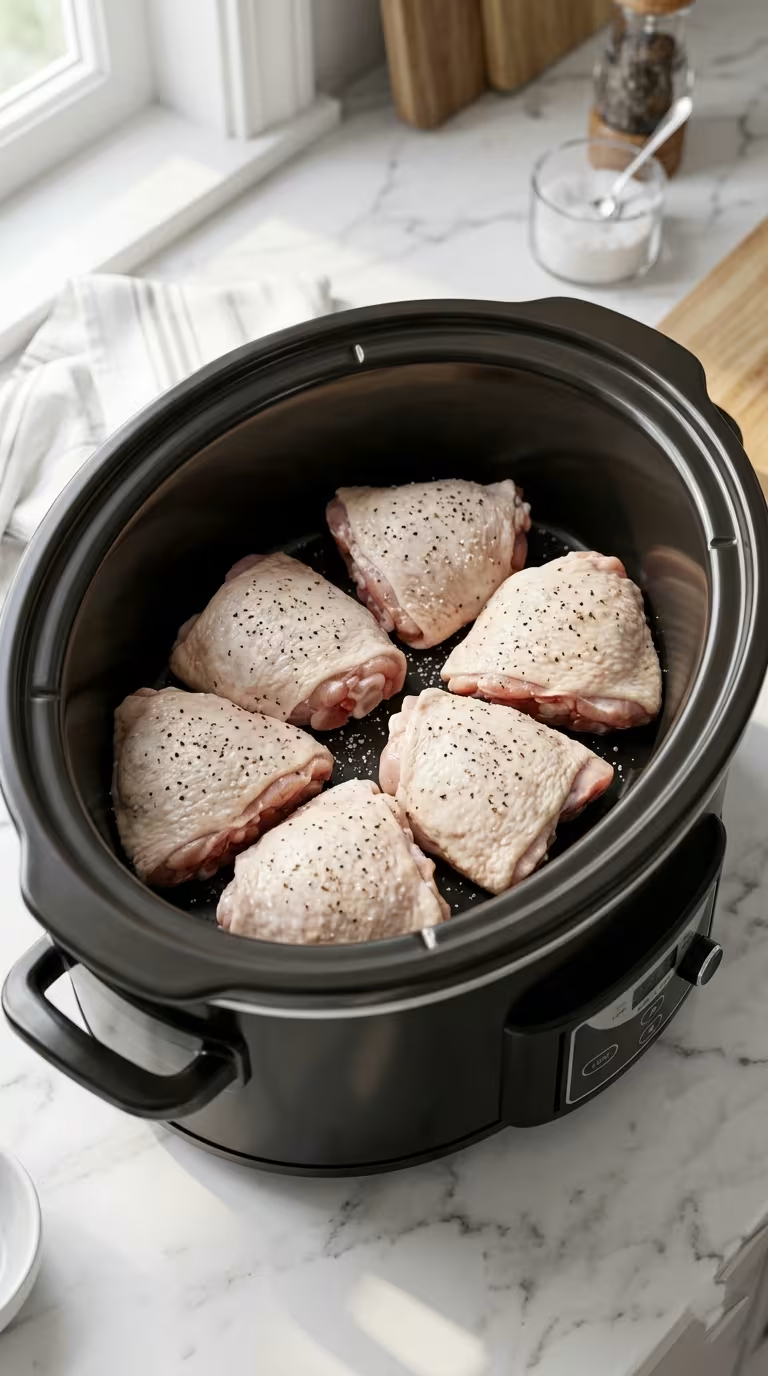
Place the chicken thighs skin-side up in the bottom of a 6-quart slow cooker. Sprinkle with 1 tsp kosher salt and all the black pepper.
Direct contact between the chicken surface and the tomatillos placed in the next step is how the acid tenderizing process begins. Chicken positioned on the bottom of the pot sits in the liquid that accumulates as the tomatillos break down. Every additional hour of that contact deepens the fiber separation that makes the final shred clean.
If the chicken sits on top of the vegetables, the acid-rich liquid drains away from the protein and pools underneath. The chicken spends the first 2 to 3 hours above the sauce that is 2 to 3 hours of tenderizing that does not happen.
The chicken should lie in a single loose layer. Stacked pieces cook unevenly bottom pieces overcook while top pieces remain firm.
Step 2: Build the Tomatillo Sauce Foundation Vegetable Layering
Halve the tomatillos and place them cut-side down over and around the chicken. Add the onion wedges, poblano pieces, and garlic cloves, filling in around the tomatillos.
Placing tomatillos cut-side down exposes the maximum flesh surface area to the slow cooker heat from the first minute of cooking. The cell walls at the cut surface rupture sooner than intact skin, releasing pectin and liquid into the pot approximately 45 to 60 minutes earlier than cut-side-up placement. Over a 6 to 8 hour cook, that early release extends the total time the pectin spends integrating into the sauce, which produces a noticeably thicker final texture.
If the tomatillos go in cut-side up and largely intact, the sauce will be thinner even after full cook time the pectin never fully releases.
No liquid needed. The tomatillos release sufficient moisture on their own adding stock at the start dilutes the sauce concentration and you end up reducing later to compensate.
Step 3: Activate the Spice Layer Fat-Soluble Aroma Bloom
Sprinkle the cumin and oregano evenly over the vegetable layer.
Cumin’s primary aromatic compounds cuminaldehyde and p-cymene are fat-soluble. They require contact with rendered fat to bloom into their full aromatic potential. Distributing the spices over the vegetable layer rather than exclusively on the chicken positions them to reach the rendered chicken fat as it rises through the liquid during the first hour of cooking. The fat-soluble compounds dissolve into that rising fat and distribute through the entire sauce rather than concentrating in the bottom layer only.
Spices applied only to the chicken skin before cooking stay trapped under the skin as it renders and never fully integrate into the sauce. The sauce will taste correctly seasoned at the surface but flat in the body.
Within 30 minutes of cooking, the cumin bloom is detectable a warm, slightly nutty aroma distinct from raw ground cumin. That is the correct signal that the fat-soluble compounds have activated.
Step 4: Low and Slow Tomatillo Acid and Collagen Conversion Phase
Cover and cook on LOW for 6 to 8 hours. Do not lift the lid during cooking.
The slow cooker on LOW maintains 190–200°F (88–93°C). This temperature band is precisely where tomatillo pectin release, collagen-to-gelatin conversion, and acid-driven fiber separation all operate simultaneously. Below 160°F (71°C), collagen does not convert. Above 212°F (100°C), rapid moisture evaporation dries the protein before the collagen finishes converting. The slow cooker’s LOW setting keeps all three processes running in parallel for the full cook window.
Cooking on HIGH raises the internal temperature faster, which causes the outer muscle fibers to tighten before the collagen and pectin have time to integrate. The chicken becomes stringy. The sauce is thinner. The flavor is flatter because the tomatillo acid did not have sufficient time to work through the full protein depth.
At 6 hours on LOW, check for doneness. The chicken should reach an internal temperature of at least 165°F (74°C) measured at the thickest point, away from the bone. The tomatillos should have completely lost their shape and blurred into the cooking liquid. The liquid should have turned olive-green the visual indicator that full pectin release and chlorophyll degradation are complete.
Step 5: Separate and Shred the Chicken Protein Fiber Release
Remove the chicken pieces to a cutting board. Shred with two forks, discarding all bones, cartilage, and skin.
Shredding while hot is mechanically easier because the protein fibers are still at peak separation the heat-weakened cross-links between fiber bundles hold almost no resistance. As the chicken cools below 140°F (60°C), those cross-links begin re-forming and the fibers become progressively harder to pull apart.
If the chicken resists shredding cleanly, it needs more time. Return it to the slow cooker for one additional hour on LOW. Correct tomatillo chicken at this stage pulls apart with virtually no force.
Step 6: Build the Tomatillo Sauce Blending, Reduction, and Final Season
Strain the slow cooker contents through a colander, reserving all cooking liquid. Transfer the solids broken-down tomatillos, onion, poblano, garlic to a blender. Add ¼ cup (60 ml) of the reserved cooking liquid.
Blend until smooth or semi-smooth, depending on your texture preference.
The reserved cooking liquid is the most concentrated element of this entire dish. It contains dissolved tomatillo pectin, released chicken gelatin, and all the fat-soluble aromatic compounds from the spice bloom. Adding it back into the blender reintegrates those compounds into the sauce. Discarding it and starting fresh with stock produces a structurally thinner, less complex sauce even if the seasoning is corrected.
Add the reserved liquid gradually ¼ cup at a time stopping when the blended sauce coats the back of a spoon. A line drawn through the coating should hold for 3 seconds. If the sauce is still too thin after the full reserved liquid is added, transfer it to a small saucepan and reduce over medium heat for 8 to 10 minutes.
Return the shredded chicken to the slow cooker. Pour in the blended tomatillo sauce. Add the remaining ¾ tsp salt and 2 tsp lime juice. Stir thoroughly and taste. Adjust salt and lime before serving.
Everything above is the complete dish. The tomatillo sauce is built, the chicken is cooked through it, and the method is done. What follows covers the variations, substitutions, troubleshooting, and storage the practical framework for getting the most out of this recipe across multiple uses.
Instant Pot Variation
The Instant Pot produces this dish in approximately 35 minutes total 5 minutes sauté, 20 minutes high pressure, 10 minutes natural release.
Use the same layering as the slow cooker method. Add ½ cup (120 ml) chicken stock pressure cooking requires a minimum liquid volume to build pressure, and the sealed environment prevents the tomatillo moisture from accumulating as it does in a slow cooker.
Cook on HIGH pressure for 20 minutes. Allow 10 minutes natural release before opening the valve.
What you gain: speed. What you lose: the extended tomatillo pectin integration time. The sauce body from a 20-minute pressure cook is noticeably thinner than from a 6-hour slow cook the pectin releases but does not have time to fully integrate. Blend slightly longer and reduce the sauce on the sauté function for 5 minutes after blending to partially compensate.
The tomatillo color change happens faster under pressure army green within the first 10 minutes of cooking rather than over 6 hours. The flavor impact is the same; the visual change is just more abrupt.
For the stovetop preparation where the tomatillos are roasted first, how to roast tomatillos covers both broiler and oven methods in detail.
Chef Thomas Tips for the Best Slow Cooker Tomatillo Chicken
This sauce belongs to the same flavor family as fresh tomatillo salsa verde, tomatillo chicken soup, and the filling for tomatillo-based chicken enchiladas. The technique in this dish tomatillo as the braising liquid, long cook time, blend the sauce from the cooked vegetables is the transferable skill. Once you have made it here, you are already most of the way to building every other tomatillo dish in that family.
Variations and Substitutions
Tomatillo Substitutions
Fresh vs. canned tomatillos: Canned tomatillos function in a slow cooker application, but the high-heat canning process denatures approximately 30% of the pectin before they reach your pot. The flavor remains correct tangy, herbal but the final sauce body is thinner and the coating quality is reduced. Acceptable for a weeknight when fresh are unavailable. For the full sauce structure this dish is built on, fresh is the correct choice.
Jarred salsa verde: Use 2 cups in place of the fresh tomatillos. The sauce will be well-seasoned but less layered the fresh aromatics you would have cooked in are already processed into the jarred product. The pectin from fresh tomatillo is not present. Expect a thinner, more uniform sauce.
Green enchilada sauce: This works as a braising liquid for a weeknight dish, though the result reads more as sauce-braised chicken than tomatillo-braised chicken. The tomatillo’s active acid work on the protein is absent. The flavor is correct. The texture of the chicken is slightly firmer.
The fresh vs. canned tomatillos guide covers the full trade-off in detail.
Protein Substitutions
Boneless chicken thighs: Same method, reduced cook time. 4 to 5 hours on LOW. The sauce will be thinner without the bone-derived gelatin.
Chicken breasts: 3.5 to 4 hours on LOW maximum. Breast muscle has no intramuscular fat or connective tissue to protect the fibers from extended heat. Past 4 hours, breast meat produces a paste rather than clean shreds.
Pork shoulder: 8 to 10 hours on LOW. The intramuscular fat in pork shoulder adds richness to the tomatillo sauce that chicken does not. A worthwhile variation when you want a heavier dish.
White fish: Not suitable for a slow cooker in this application. Fish proteins denature at 125–140°F (52–60°C) and will be overcooked within the first 45 minutes.
Spice Level Adjustments
Mild: Replace the poblano with a green bell pepper. Remove all seeds. The sauce loses the faint background warmth entirely.
Medium (as written): Poblano, seeds removed. Background warmth only most people do not register it as heat.
Hot: Add 1 to 2 seeded jalapeños alongside the tomatillos. The capsaicin distributes through the sauce during the cook, producing even heat rather than concentrated hot spots.
Very hot: Add 1 serrano with seeds. Taste before blending. The tomatillo acid amplifies perceived heat a serrano in tomatillo sauce reads hotter than a serrano in a neutral braise.
Dietary Adaptations
Gluten-free: Naturally gluten-free as written. Check spice labels for shared-facility cross-contamination if serving someone with celiac.
Dairy-free: Naturally dairy-free. Replace sour cream garnish with coconut cream or avocado.
Low-carb / keto: The dish is low-carb as written. The tomatillo sauce contains approximately 4g net carbohydrates per serving. Serve over cauliflower rice or in lettuce wraps. For more in this eating pattern, tomatillo chicken soup runs the same macros with a broth format.
Whole30: Compliant as written. Skip the sour cream at serving.
Troubleshooting
The tomatillo sauce is too thin and runs off the chicken
Problem: The blended sauce has no coating body it runs off the meat and pools in the bowl.
Cause: Too much reserved cooking liquid was added during blending, or the tomatillos were underripe and had not yet developed full pectin concentration.
Fix: Transfer the sauce to a small saucepan. Simmer uncovered over medium heat for 10 to 15 minutes. The water evaporates, the pectin concentrates, and the coating body returns.
Prevention: Add the reserved liquid to the blender in ¼ cup increments. Stop when the sauce coats a spoon and holds a line for 3 seconds. Do not add the full volume at once.
The sauce is too tart or sharp
Problem: The finished tomatillo flavor is aggressive and one-dimensional rather than tangy and balanced.
Cause: Very ripe, high-acid tomatillos common in late-season fruit or insufficient cook time to mellow the volatile acids.
Fix: Add ½ tsp sugar, or 1 tablespoon sour cream stirred in off heat. A small amount of additional stock dilutes the tartness without altering the flavor profile significantly.
Prevention: Taste a raw tomatillo before it goes in the pot. If it is extremely sharp raw, add a pinch of sugar with the aromatics at the start of the cook.
The sauce is too thick and paste-like
Problem: The blended sauce is too dense to coat the chicken evenly it clumps rather than flows.
Cause: Too little reserved cooking liquid was incorporated during blending, or the tomatillos were very low in water content.
Fix: Thin with reserved cooking liquid or chicken stock, 2 tablespoons at a time, until the sauce flows freely from a spoon.
Prevention: Always strain and reserve the cooking liquid before moving the solids to the blender. Once discarded, it cannot be recovered.
The chicken is dry, stringy, or pasty
Problem: The shredded chicken is dry and stringy rather than moist and silky, or it has broken down into paste.
Cause: Cooked on HIGH instead of LOW; cooked past 8 hours on LOW; or chicken breasts were used instead of thighs.
Fix: Stir dry chicken into the finished sauce and rest for 15 minutes. The sauce moisture will partially rehydrate the surface fibers. This partially recovers the texture but does not fully restore it prevention is the real fix.
Prevention: Use bone-in thighs. Cook on LOW only. Check at 5 hours if your model runs hot. Pull the chicken the moment it shreds cleanly.
The sauce separated and looks greasy
Problem: A layer of orange-tinted fat sits on top of the blended sauce and it looks broken.
Cause: The chicken skin rendered its fat into the cooking liquid. That fat separated from the tomatillo-water matrix during blending.
Fix: Skim the fat from the surface of the cooking liquid before blending a fat separator removes it cleanly. If already blended, whisk vigorously while warm to partially re-emulsify.
Prevention: Remove the skin from the chicken thighs before cooking. Bone-in skinless thighs provide the gelatin benefit of the bone without the excess fat load that causes separation.
The garlic flavor is sharp and raw-tasting
Problem: The finished sauce has a sharp, aggressive garlic note that cuts through the tomatillo.
Cause: Five cloves is correct for the standard slow cooker temperature band, but some models run hotter than rated, which caramelizes the garlic unevenly rather than mellowing it.
Fix: Add 1 tsp lime juice to the blended sauce and blend again briefly. Acid perception masks the sharp garlic without eliminating the garlic flavor.
Prevention: For a milder garlic result, reduce to 3 cloves. For a roasted garlic profile, wrap the cloves in foil and roast at 400°F (205°C) for 30 minutes before adding that pre-caramelizes the sugars and eliminates the sharp-raw risk entirely.
Storage, Make-Ahead, and Reheating
Refrigerator
Store the shredded chicken and sauce together in a sealed airtight container. Holds for 4 days.
The sauce will firm up in the refrigerator because the gelatin from the bone braise and the pectin from the tomatillos both gel when chilled. This is correct the dish is not spoiled. The sauce loosens fully when reheated. Flavor is noticeably better on day 2 as the tomatillo acid integrates fully with the chicken.
Freezer
Freeze the chicken and sauce together in a freezer-safe container or zip-lock bag with ½ inch of headspace. Holds for 3 months at full quality.
Thaw overnight in the refrigerator before reheating. Do not microwave from frozen the chicken surface dries before the center thaws. After thawing, the sauce will be slightly thinner than fresh because freezing ruptures the remaining pectin chains. A 5-minute simmer after thawing tightens it back to the original consistency.
Reheating
Oven: Preheat to 325°F (165°C). Place chicken and sauce in a covered baking dish. Add 2 tablespoons of chicken stock or water. Heat covered for 20 minutes, uncovered for 5 minutes to allow the sauce to tighten.
Microwave: Cover loosely to vent steam. Heat on 70% power in 90-second intervals, stirring between each. Full-power microwaving drives the surface temperature above 212°F (100°C) before the interior heats through, which dries the outer chicken fibers.
Make-Ahead
The blended tomatillo sauce can be made up to 3 days ahead and refrigerated. When ready to cook, place raw seasoned chicken in the slow cooker, pour the pre-made sauce over the top, and cook as directed. The flavor integration is slightly deeper with this method.
The fully cooked dish improves with 24 hours of refrigeration before serving. The tomatillo sauce settles, the acid integrates, and the flavor reads cleaner than freshly finished.
Tomatillo’s natural acid content citric and malic acid concentrated in the sauce acts as a mild preservative in refrigerated storage. The pH of the finished dish (approximately 4.2 to 4.4) is low enough to slow bacterial activity more effectively than a neutral chicken braise. This is part of why tomatillo-based dishes hold their flavor in storage longer than similarly prepared dishes built on a tomato or cream base, and why this recipe is particularly well-suited to weekly meal prep cycles.
Estimated Nutrition Per Serving
| Nutrient | Amount per serving |
|---|---|
| Calories | ~310 kcal |
| Protein | 34g |
| Carbohydrates | 8g |
| Fat | 15g |
| Saturated Fat | 4g |
| Sodium | 520mg |
| Fiber | 2g |
Estimates only. Values vary with tomatillo preparation method, protein cut, and additional ingredients used.
Frequently Asked Questions
Can I use canned tomatillos instead of fresh?
Yes, but expect a thinner sauce. Canned tomatillos have been heat-processed at high temperature before packaging, which denatures approximately 30% of the pectin that gives this sauce its coating body. The flavor remains correct tangy and herbal but the sauce will run rather than cling. If canned is the only option, add the reserved cooking liquid back into the blender in smaller increments than you would with fresh to partially compensate.
Can I make slow cooker tomatillo chicken for tacos?
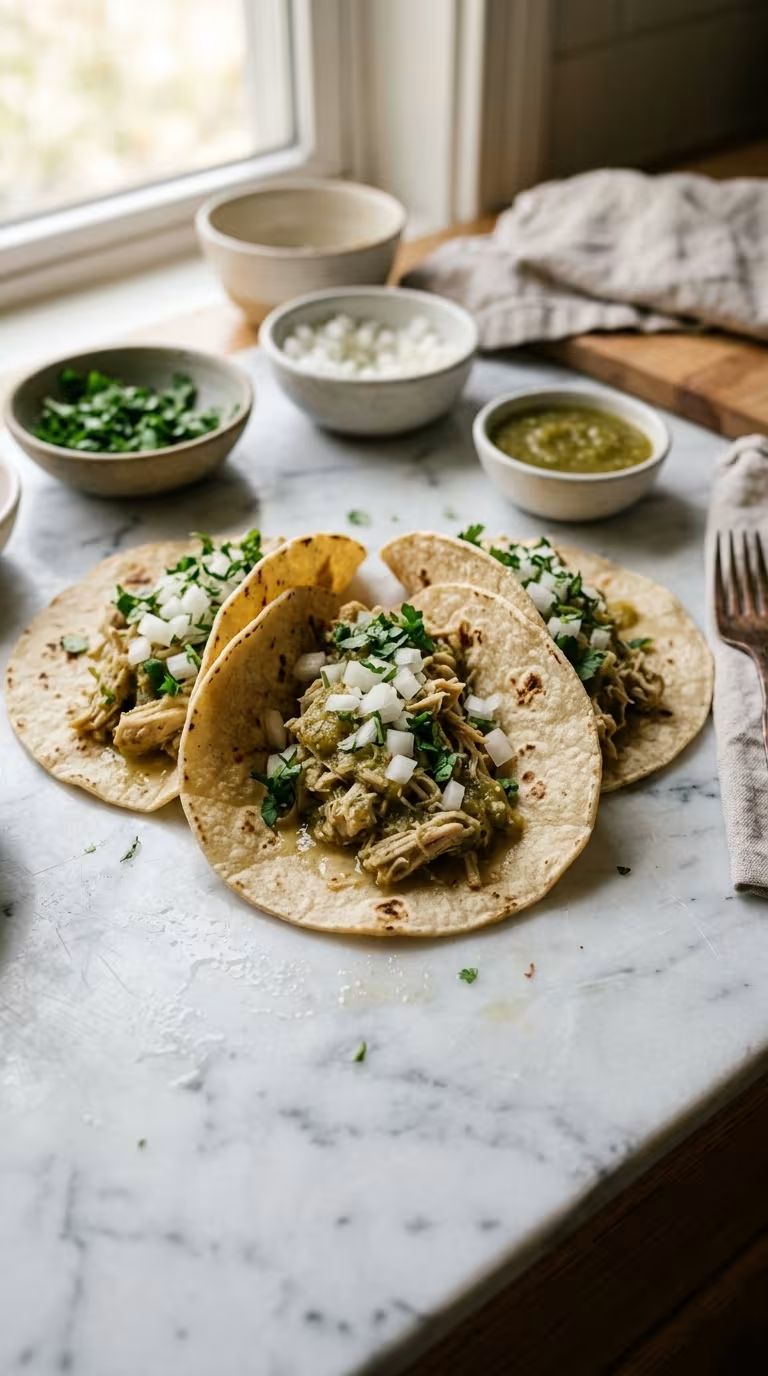
This is the best format for the dish. The shredded chicken holds together in a tortilla without being wet, and the sauce functions as both filling moisture and flavor. Set the finished chicken on the KEEP WARM setting and the filling stays taco-ready for up to 2 hours without drying out. Serve with diced white onion, fresh cilantro, avocado, and a squeeze of lime.
How do I keep crockpot tomatillo chicken from getting watery?
Two things prevent it. First, add no liquid to the slow cooker at the start the tomatillos provide all the moisture. Second, incorporate the reserved cooking liquid back into the blender gradually, stopping when the sauce coats a spoon. If the sauce is still thin after blending, simmer it for 10 minutes in a small saucepan before combining with the chicken. Do not skip the reduction step if you want a coating sauce.
What does tomatillo taste like in slow cooker chicken?
After 6 to 8 hours on LOW, the raw sharpness is fully gone. What remains is a tangy, slightly herbal background note with a faint sweetness acidic but not sour. The closest comparison is a green tomato sauce with less sweetness and more brightness. It reads as distinctly Mexican in character without tasting like salsa. The sauce carries the chicken rather than sitting on top of it.
Is this tomatillo chicken recipe good for meal prep?
It is one of the better slow cooker dishes for that purpose. The flavor improves on day 2, it holds in the refrigerator for 4 days, and the sauce stays at correct consistency through reheating as long as you reheat covered with a small splash of stock. The tomatillo’s natural acid concentration also helps the dish maintain its flavor longer in storage than a neutral braise. Batch-cook on Sunday and use through the week in tacos, rice bowls, or lettuce wraps.
How spicy is this dish?
Mild to medium as written. The poblano pepper contributes a very gentle background warmth most people do not register it as noticeable heat. For mild with no heat, substitute a green bell pepper. For noticeable heat, add one seeded jalapeño. For significant heat, add one serrano with seeds.
Can I make this tomatillo chicken recipe ahead of time?
Yes, and it is worth doing. The fully cooked dish tastes noticeably better after 24 hours of refrigeration the tomatillo acid integrates, the sauce settles, and the flavor reads cleaner. The sauce can also be made up to 3 days ahead separately, then used as the braising liquid when you are ready to cook.
What should I serve with slow cooker tomatillo chicken?
Warm corn or flour tortillas for tacos. Cilantro-lime rice to absorb the sauce. Roasted sweet potato or charred corn on the side. For a lower-carb plate, cauliflower rice or butter lettuce wraps. Sour cream, sliced avocado, cotija cheese, and lime wedges at the table regardless of the base. For a tomatillo dinner that works in the same weekly rotation, tomatillo chicken recipe is the stovetop version that finishes in under 40 minutes.
Can I freeze tomatillo chicken with the sauce?
Yes. Freeze them together rather than separately the sauce protects the chicken fibers from freezer burn and keeps the shredded meat from drying out during the freeze-thaw cycle. Freeze in flat zip-lock bags for faster thawing. The sauce will be slightly thinner after thawing due to pectin chain rupture during freezing, but a 5-minute stovetop simmer restores the body.
A Few Final Notes
The tomatillo does most of the work here.
Your job is correct layering, the right temperature setting, and seasoning twice. The slow cooker and the tomatillo handle the rest.
This one holds up well on any weekly rotation consistent results, leftovers that improve overnight, and a sauce base flexible enough to use across multiple meals. Tacos on day one, rice bowls on day three, a quick enchilada fill on day four.
When I want the same flavor direction faster, tomatillo salsa verde is ready in under 20 minutes and pours directly over grilled or roasted chicken. For a full tomatillo chicken dinner with more texture layers, chicken enchiladas with tomatillo sauce takes the filling from this recipe almost directly.