
The short answer is that fresh and canned tomatillos are not the same thing, and the difference matters more in some dishes than others. Fresh tomatillos carry a brightness and structural integrity that the canning process cannot fully preserve. Canned tomatillos are pre-cooked, softer, and more neutral which makes them genuinely useful in the right context, and a noticeable step down in the wrong one.
If you have been wondering whether canned tomatillos make a good substitute, or what you actually lose when you skip the fresh ones, this article answers both questions directly. And if you are looking for the full picture on what tomatillos are, how they behave, and what to make with them, the What Is a Tomatillo guide covers all of it.
I have been cooking with tomatillos for over forty years and the canned vs fresh question comes up every single time someone new picks them up.
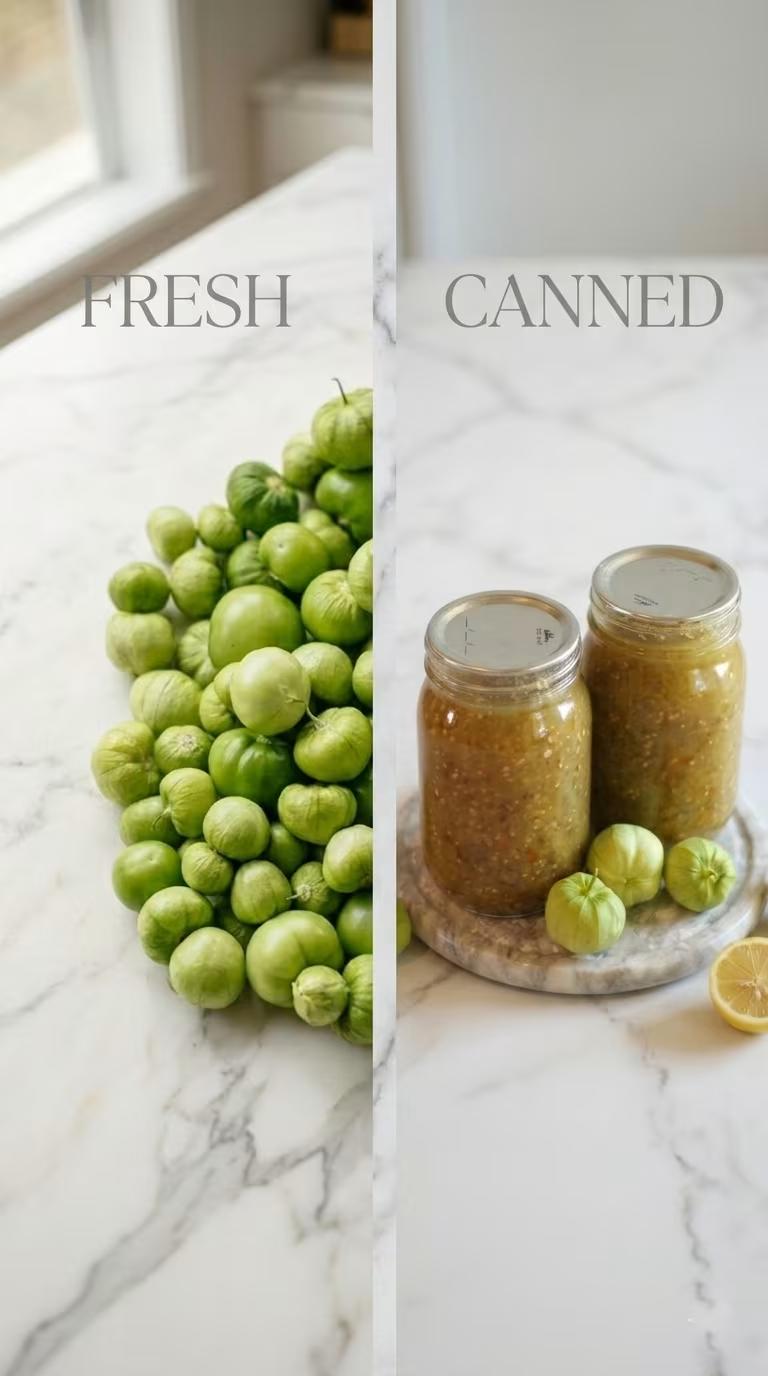
Table of Contents
How the Canning Process Changes Tomatillo Flavor and Texture
Fresh tomatillos have a pH of approximately 3.8 when raw which is why they taste sharply tart and almost citrusy when you bite into one. That acid level is not incidental. It is the structural backbone of what tomatillos do in a sauce. It cuts through fat in braised pork, brightens the base of a chicken dish, and gives salsa verde the edge that makes it taste alive.
When tomatillos are canned, they go through a heat-processing step typically a high-temperature sterilization — that drives off a significant portion of those volatile acids. The pH shifts upward, toward 4.2 to 4.5.
The result tastes noticeably flatter. Less tart. Less citrus. You can compensate with a squeeze of lime juice, and it helps, but it is not the same acid coming from the same source. Tomatine the natural resinous compound that gives raw tomatillos their slightly bitter, herbal edge also breaks down under heat, so that layer of complexity disappears too.
Texture follows the same pattern. Fresh tomatillos are firm. When you roast them, they collapse slowly, concentrating their flavor and releasing sugars that caramelize at the surface. The collapse is gradual and gives you control over sauce body.
Canned tomatillos arrive already soft fully cooked through which means they blend immediately but offer no caramelization, no Maillard development, and very little sauce body unless you reduce the liquid significantly.
Chef Thomas Note:
Tomatillos belong to a family of solanaceous fruits including tomatoes, peppers, and ground cherries where acid structure is the primary flavor driver. Among them, tomatillos have the most forward acid profile of any common cooking variety.
That acid is exactly what distinguishes a tomatillo sauce from a generic green sauce, and it is what you are partially trading away when you open a can.
Why Fresh Tomatillos Produce a Better Sauce Body Than Canned
The moisture content in fresh and canned tomatillos differs in a way that directly affects how a sauce behaves.
Fresh tomatillos, when roasted, lose moisture through evaporation before and during blending. The result is a concentrated sauce with body it coats the back of a spoon, clings to chicken, and holds its structure through a braise. The natural pectins in the fruit skin contribute to this. When you roast tomatillos in the oven at 400°F for 15 to 20 minutes, the skin slightly dehydrates and the pectin concentrates, which gives roasted tomatillo sauce a texture that thickens without flour or cornstarch.
Canned tomatillos come packed in liquid either water, tomatillo juice, or brine and that liquid has already leached into the fruit flesh. When you drain them and blend, you get a looser, wetter sauce that often needs additional reduction time on the stovetop to reach the same body as a roasted fresh sauce. If you skip the reduction step, the sauce can taste watery even if the flavor is acceptable.
I always roast fresh tomatillos for sauces rather than boiling them because the dry heat drives off excess moisture and concentrates the sweetness. Boiled tomatillo sauce always tastes thin to me no matter what else goes into it. With canned tomatillos, the problem is similar you are starting from a pre-boiled product and working uphill from there.
For recipes like tomatillo salsa verde or enchilada sauce where the tomatillo flavor IS the dish, fresh is worth the extra ten minutes of prep. For dishes where tomatillos play a supporting role in a long braise a stew, a slow-cooker dish canned holds up better because the longer cook time compensates for the lost acid and the texture difference disappears.
The Flavor Trade-Off: What You Keep and What You Lose with Canned
What canned tomatillos preserve reasonably well: Tomatillos are naturally acidic enough that even after processing, canned tomatillos retain a detectable tartness. In dishes with strong competing flavors cumin-heavy spice blends, rich braised meats, heavy chili bases that residual tartness reads as tomatillo and does its job. Nutritionally, the core profile is similar. Vitamin C reduces somewhat through heat processing, but the fiber, potassium, and overall low-calorie profile remain largely intact.
What canned tomatillos lose: The fresh, almost citrus-green top note that you get from raw or lightly roasted tomatillos disappears entirely. The slight bitterness and herbal quality (from tomatine, before it cooks off) is gone. The texture goes from firm and controllable to soft and somewhat uniform which is fine in a blended sauce but limiting if you want tomatillo chunks in a dish.
And the ability to char them to get those black edges that produce the smoky backbone in a proper salsa verde is not possible with canned tomatillos. They are already cooked. You cannot roast something that has already been processed.
Chef Thomas Tip:
Fresh tomatillos connect to the same culinary tradition as other acidic salsa bases across Mexican regional cooking the charred green sauce from Oaxaca, the raw salsa verde from the Yucatan, the slow-cooked verde of northern Mexico.
Each technique extracts something different from the same fruit. Canned tomatillos represent only one point on that range the boiled, neutral version which is why using them as a universal substitute flattens the difference between those techniques.
When to Use Fresh Tomatillos vs Canned: A Practical Decision Guide
Dishes Where Fresh Tomatillos Make a Clear Difference
Salsa verde: This is the highest-stakes use case. A roasted salsa verde made with fresh tomatillos has brightness, char, and a concentrated tartness that a canned version cannot match. The texture is thicker and the flavor is more layered. If you are making salsa verde to serve with tortilla chips, as a taco topping, or as a primary condiment, fresh is worth it. The tomatillo salsa verde recipe on this site is built around roasted fresh tomatillos specifically because the char is part of the flavor.
Roasted tomatillo dishes: Any recipe that asks you to roast the tomatillos under a broiler, in the oven, or directly on a comal requires fresh. You cannot meaningfully roast a canned tomatillo. The process is the preparation, and canned skips it entirely.
Raw preparations: If a recipe calls for raw or barely-cooked tomatillosa fresh salsa, a pico-style preparation, thinly sliced as a garnish only fresh works. The texture and sharp acid of raw tomatillos is specific and irreplaceable.
Dishes where the sauce IS the point: Chicken in tomatillo sauce, tomatillo-braised short ribs, enchiladas verdes in these dishes, the tomatillo sauce is the primary flavor vehicle. Fresh produces a deeper, more complex result. The tomatillo chicken recipe works best with fresh for exactly this reason.
Dishes Where Canned Tomatillos Are Acceptable
Long braises and slow-cooker dishes: When tomatillos cook for three or more hours with other ingredients, the flavor difference between fresh and canned compresses significantly. The sauce absorbs other flavors from the aromatics, spices, and protein. In a slow-cooker chile verde or a weekend pork braise, canned works.
Weeknight soups: In a tomatillo soup base that also contains garlic, onion, cumin, and chiles, canned tomatillos blend into the base acceptably. Add extra lime juice at the end to restore some brightness.
When fresh are not available or out of season: Simple. If the store does not have them, canned keeps a dish in the tomatillo family rather than abandoning it entirely. Drain the can well, reduce the sauce a little longer than the recipe suggests, and add a tablespoon of fresh lime juice per pound equivalent.
Budget cooking: One pound of fresh tomatillos equals one 11-ounce can of tomatillos What’s Cooking America, and canned tends to run cheaper outside of peak season (late summer through early fall). For everyday cooking where the tomatillo is supporting other flavors rather than leading them, the cost savings can be worth the trade-off.
How to Substitute Canned Tomatillos for Fresh (and What to Adjust)
The conversion is straightforward: one pound of fresh tomatillos equals one standard 11-ounce can. But swapping them without any adjustment usually produces a dish that tastes slightly flat and thin. Here is what to correct.
Drain well. The packing liquid in canned tomatillos adds water to your dish. Drain the can before measuring and pat the tomatillos lightly with a paper towel if you are using them in a recipe that is moisture-sensitive.
Add lime juice. One tablespoon of fresh lime juice per pound equivalent (per can) restores some of the acid brightness that processing reduces. Add it after blending, taste, and adjust.
Reduce longer. Canned tomatillo sauce needs an extra five to eight minutes on the stovetop to reach the same consistency as a roasted fresh sauce. Do not skip this step if you want the sauce to coat and cling properly.
Do not try to roast them after opening. Pre-cooked tomatillos will not caramelize in the oven. They will just dry out. If a recipe calls for roasting, and you are using canned, skip that step — your flavor will be different, but baking a pre-cooked tomatillo will not replicate what roasting does to a fresh one.
For recipes that lean heavily on tomatillos like roasted tomatillo chickpea curry fresh is worth seeking out. For something where tomatillo is one element among many, adjust and proceed.
How to Substitute Fresh Tomatillos for Canned
Going the other direction replacing canned with fresh is usually an improvement, with one thing to know.
Fresh tomatillos need to be cooked before they can stand in for canned. Husk them, rinse off the sticky coating, and either roast them at 400°F for 15 to 20 minutes until soft and lightly colored, or simmer them in water for five minutes until just tender. The how to roast tomatillos guide walks through the full oven method in detail.
Once cooked, use them in a 1:1 ratio by weight. One pound of fresh, cooked tomatillos substitutes for one 11-ounce can. Your sauce will be brighter, more complex, and thicker. That is almost always the outcome you want.
Common Questions About Fresh vs Canned Tomatillos
Can I use canned tomatillos instead of fresh in salsa verde?
You can, but the result will taste noticeably milder and less bright. Salsa verde depends on the sharp acid and charred complexity of roasted fresh tomatillos.
Canned tomatillos produce a softer, more neutral sauce. Add lime juice and a small amount of roasted chile to compensate. It works for a quick weeknight version it is not the same thing.
Are canned tomatillos already cooked?
Yes. The canning process involves heat sterilization, which fully cooks the tomatillos. This means they are softer than fresh, and you cannot meaningfully roast or char them after opening.
Do canned tomatillos need to be rinsed?
Drain them well, but you do not need to rinse them. The packing liquid is tomatillo juice or water draining is enough. Unlike canned beans, there is no starchy liquid that needs washing off.
What is the canned tomatillo substitute ratio?
One 11-ounce can equals one pound of fresh tomatillos. Most recipes that call for fresh will specify weight, so the substitution is straightforward drain the can and proceed from where the recipe’s cooking step begins.
Do fresh tomatillos taste different from canned?
Yes. Fresh tomatillos are significantly more tart and have a bright, citrusy, slightly herbal quality especially when raw or lightly roasted. Canned tomatillos taste more neutral, softer, and less complex. The difference is most obvious in preparations where tomatillo flavor is the main event, like salsa verde or a simple green sauce.
Can you taste the difference in a long-cooked dish?
In a long braise or slow-cooker recipe, the difference narrows considerably. Other ingredients spices, aromatics, protein fat absorb into the sauce over hours and the tomatillo’s role becomes structural rather than front-and-center. In those dishes, the gap between fresh and canned is smaller.
When are canned tomatillos the better choice?
When fresh tomatillos are out of season or unavailable, when you are short on time and the dish can handle a milder result, and when you are cooking a long braise where the texture difference between fresh and canned disappears. Canned tomatillos in the pantry are a practical thing to keep around.
Final Thought
The flavor of a tomatillo is its acid. Keep that in mind and you will always know which form to reach for.
If you are starting with fresh, the first thing to make is a tomatillo salsa verde it is the clearest way to understand what fresh roasted tomatillos actually taste like, and everything else follows from there.
For the full picture on what tomatillos are, how they behave across different preparations, and what they do in a dish, What Is a Tomatillo is the place to start.