
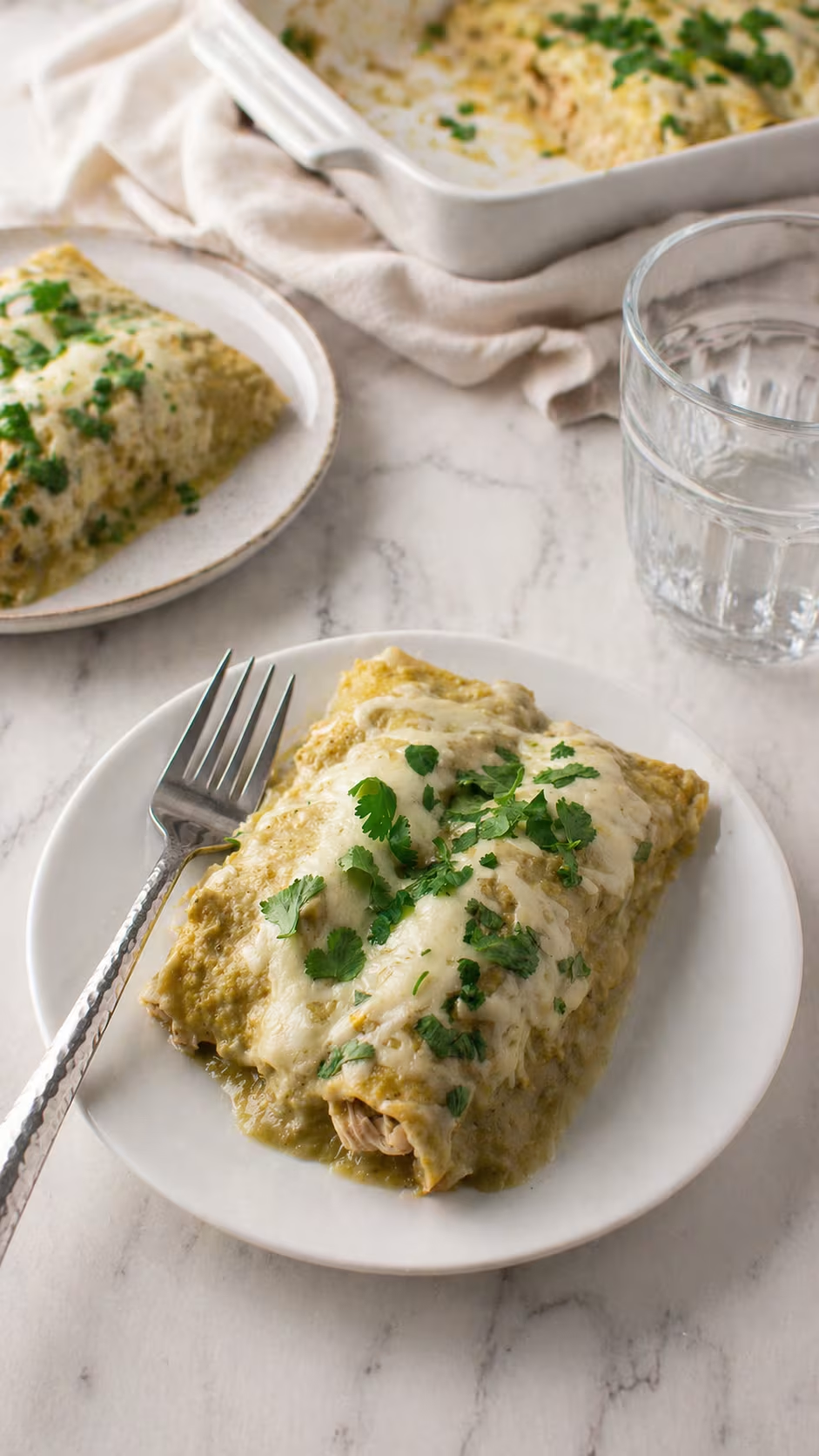
Chicken enchiladas with tomatillo sauce are corn tortillas filled with shredded chicken, rolled, and baked under a slow-roasted tomatillo verde that doubles as the dish’s structural foundation and its primary flavor source.
The tomatillo does not just season here it forms the sauce body, provides the acidity that keeps the chicken bright inside the enchilada, and delivers a color that tells you the dish is working before you even taste it.
This is an intermediate home cook dish: about 30 minutes of active prep, 50 minutes in the oven, and a blender you will need to clean. Whether you are searching for a green chicken dinner for a weeknight or a tomatillo chicken enchiladas casserole you can assemble ahead, this recipe handles both without modification.
I have made versions of this for close to thirty years and the tomatillo sauce never lets the dish down. If you are new to tomatillos, What Is a Tomatillo covers everything you need to know before starting.
| Serves | 6 to 8 |
| Prep Time | 30 minutes |
| Cook Time | 50 minutes |
| Total Time | 1 hour 20 minutes |
| Skill | Medium |
| Cost | Budget |
Table of Contents
What Is Chicken Enchiladas with Tomatillo Sauce?
Enchiladas verdes belong to the central tradition of Mexican home cooking, where a sauce built from roasted or braised tomatillos serves as both cooking medium and finish. The dish has roots in Mexican cuisine going back centuries the name “enchilada” means tortilla dipped in chile sauce, and the green version replaces red chile with tomatillo as the dominant acid and flavor. In Mexican home kitchens and regional restaurants from Oaxaca to Mexico City, the green enchilada is as foundational as its red counterpart.
What separates this dish from a salsa chicken or a braised tomatillo chicken recipe is the structure: corn tortillas are dipped in warm tomatillo sauce before rolling, then blanketed in more sauce and baked. The sauce both softens the tortilla from the outside and penetrates the rolled seam. A tomatillo chicken bowl or taco uses the sauce as a topping; this dish makes the sauce the architecture.
If someone arrives here searching for green enchiladas or enchiladas con salsa verde, the distinction worth understanding is that this recipe constructs the sauce from raw fresh tomatillos and roasts them before blending rather than using a jarred salsa verde or canned green enchilada sauce. That distinction affects every attribute of the final dish: color, body, brightness, and the specific char note that processed sauces cannot replicate.
Chef Thomas Info:
Dishes like these enchiladas verdes belong to a wider family of tomatillo-based preparations that run through Mexican regional cooking from Guerrero to the Bajío.
The method here roast, blend, cook in fat, bake over protein is the same engine driving chile verde, tomatillo braised pork, and even some fish preparations. The sauce logic transfers once you have made it once.
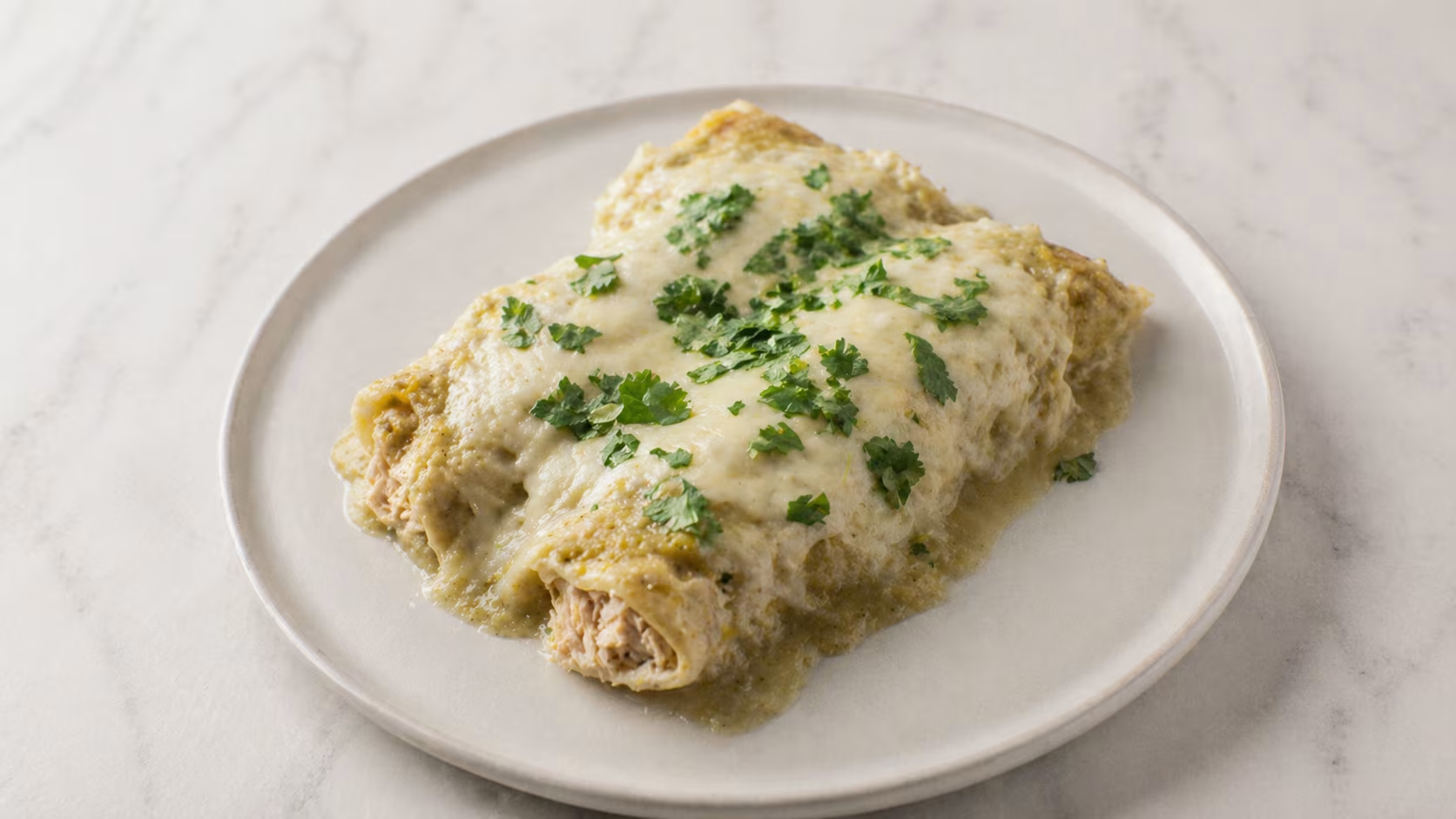

Chicken Enchiladas with Tomatillo Sauce
Ingredients
Equipment
Instructions
- Roast the tomatillos and aromatics. Set your oven broiler to high with a rack 6 inches from the element. Place the husked, rinsed tomatillos, jalapeños, and onion on a foil-lined baking sheet. Broil for 7–9 minutes, turning once halfway, until the tomatillo skins are charred in spots and the flesh is fully soft when pressed. The skins should blister and shift from bright green to olive green. That color change tells you the acidity has converted and the sugars have concentrated this step is not optional.
- Build and reduce the tomatillo sauce. Transfer the roasted tomatillos, jalapeños, and onion to a blender with the garlic, cilantro, chicken stock, and salt. Blend on high for 45–60 seconds until completely smooth. Heat the oil in a wide saucepan over medium-high until shimmering. Carefully pour in the blended sauce it will spatter. Cook over medium-high heat for 5–6 minutes, stirring frequently, until the sauce deepens in color and coats the back of a spoon. Remove from heat. Stir in the sour cream gently. Taste and adjust salt.
- Prepare the filling and warm the tortillas. Mix the shredded chicken with the diced onion, chopped cilantro, salt, pepper, and about ¼ cup of the tomatillo sauce. Stir to combine. Warm the corn tortillas wrapped in a damp cloth in the microwave for 60 seconds, or directly over a gas flame for 10 seconds per side. They should be fully pliable without cracking when folded.
- Dip, fill, roll, and assemble. Spread ½ cup of tomatillo sauce across the bottom of a 9×13-inch baking dish. Working one at a time, briefly dip each warm tortilla in the warm sauce 2 seconds per side, not a soak. Lay flat, add about 3 tablespoons of chicken filling across the center, and roll tightly. Place seam-side down in the dish. Repeat, packing enchiladas snugly side by side. Pour remaining sauce evenly over the top. Scatter remaining cheese across the surface.
- Bake. Preheat oven to 400°F [205°C]. Cover the baking dish tightly with foil and bake for 20 minutes. Remove foil and bake for an additional 10–12 minutes until the cheese is melted with light golden spots and the sauce is bubbling at the edges. The filling should read 165°F [74°C] at the thickest point of a center enchilada check away from the pan edge. Rest for 5 minutes before serving.
Notes
The Tomatillo’s Role in Chicken Enchiladas with Tomatillo Sauce
Raw tomatillos carry a pH near 3.8 sharply acidic, with a herbaceous tartness that reads almost grassy and aggressive when uncooked. This level of acidity is typical of many fresh fruits, where organic acids shape the overall flavor profile. When tomatillos are roasted under a broiler or dry-roasted in a cast iron pan, two things happen simultaneously: free moisture evaporates and the cell walls break down, which concentrates the fruit’s natural sugars and pushes the effective pH toward 4.5 as the volatile acids dissipate with heat.
The color shifts from a bright, clean green to an army or olive green that color change is the observable signal that the conversion has occurred. When the color is still vivid and the skin has not softened and slightly charred, the tomatillo has not finished its transformation and the sauce will be too tart to balance the dish.
For this recipe specifically, fresh tomatillos are the correct choice. Canned tomatillos have already been heat-processed, which means the roasting step produces no meaningful char you are re-heating something already cooked, not transforming it.
The smokiness and slight bitterness that develops at the char point on fresh tomatillos is what gives this sauce its depth and distinguishes it from a jarred salsa verde poured over assembled enchiladas. I stick with fresh for this dish because that char note is the flavor the rest of the ingredients are built around. If fresh tomatillos are not available in your area in a particular week, see the substitutions section but understand that the sauce will be structurally similar and functionally different.
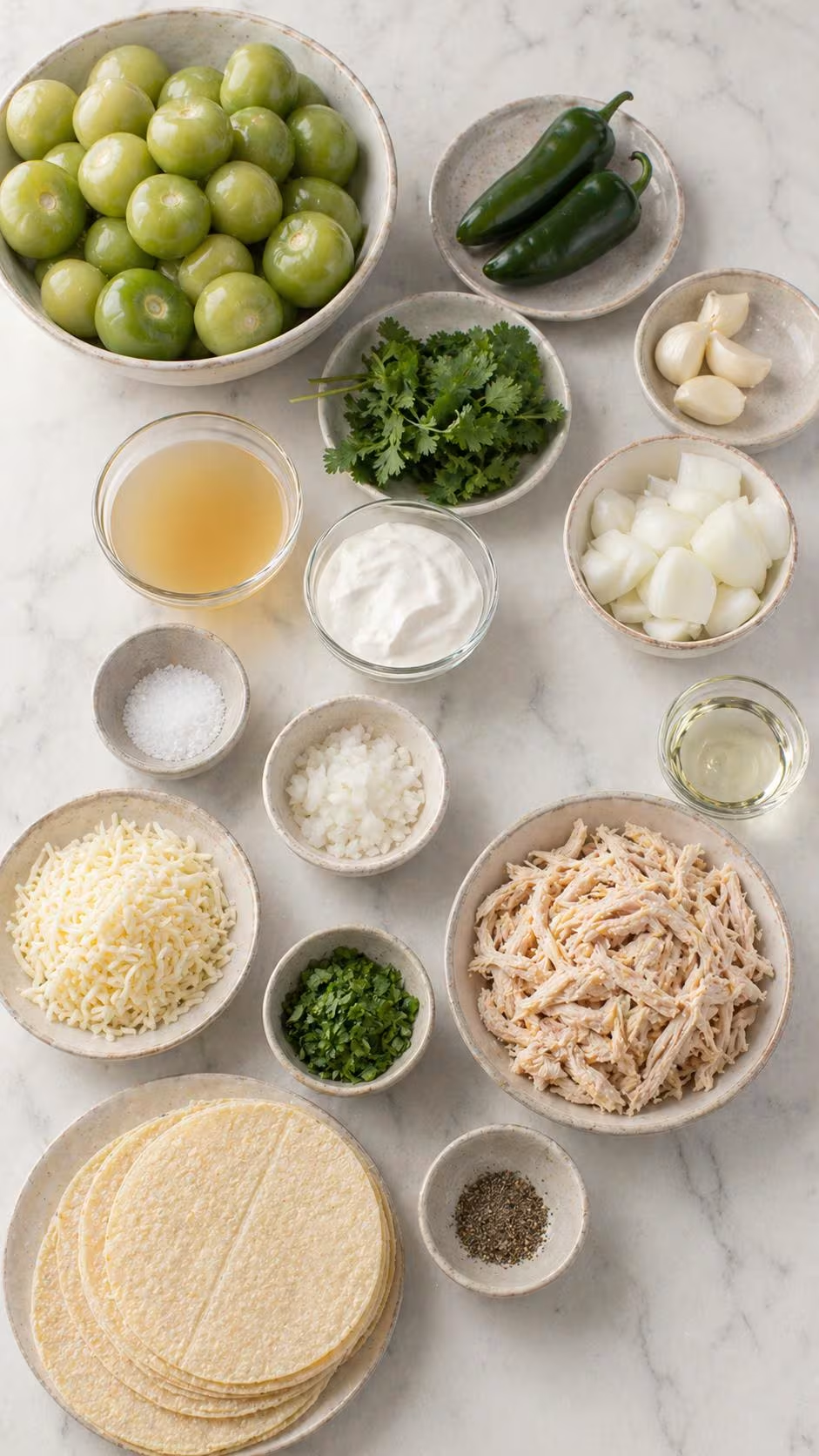
Ingredients
| Ingredient | Amount |
|---|---|
| Tomatillo Sauce | |
| Fresh tomatillos, husked and rinsed | 1½ lbs [680g] |
| Jalapeños, seeds removed | 2 medium |
| Garlic cloves | 3 |
| White onion, roughly chopped | ½ medium |
| Fresh cilantro sprigs | 6 |
| Chicken stock | ½ cup [120ml] |
| Sour cream | ¼ cup [60ml] |
| Neutral oil | 3 tbsp [45ml] |
| Salt | 1½ tsp |
| Enchilada Filling | |
| Corn tortillas (6-inch) | 12 |
| Cooked chicken, shredded | 3 cups [~400g] |
| Monterrey Jack or pepper jack, grated | 2 cups [200g] |
| White onion, finely diced | ½ medium |
| Fresh cilantro, chopped | 2 tbsp |
| Salt and pepper | to taste |
Ingredient Notes
Tomatillos — mandatory note. A good fresh tomatillo feels firm when pressed through the husk, not soft or spongy. The husk should be pale tan and dry, not green or sticky. Avoid any with split husks revealing brown or wrinkled skin underneath.
In this recipe, fresh tomatillos are roasted before blending skipping that roasting step and blending raw tomatillos produces a sauce with harsh, unresolved acidity that overpowers the chicken and makes the finished dish taste sharp rather than bright. Canned tomatillos can be used in an emergency, but the sauce will lack the char depth and will read thinner in both flavor and body.
Corn tortillas. Corn tortillas are the structurally correct choice here because their masa composition absorbs tomatillo sauce during the dipping step and holds that moisture during baking without dissolving.
Flour tortillas soften further than intended and can become gummy at the seam. If corn tortillas are cracking as you roll, they have dried out warm them directly over a gas flame for 10 seconds per side or wrap them in a damp paper towel and microwave for 45 seconds.
Chicken. I always use bone-in chicken thighs poached in salted water with a bay leaf when I have the time, because the collagen from the bone releases into the poaching liquid and the thigh meat shreds into longer, more textured pieces that hold up inside the rolled tortilla.
Rotisserie breast meat is a legitimate shortcut and the dish works well the texture inside the enchilada is simply more compact and slightly drier. Thigh meat stays moist through the full baking time; breast meat benefits from a more generous sauce coverage.
Sour cream. Adding sour cream directly to hot blended tomatillo sauce can cause it to break and curdle. Add it off the heat, after the sauce has reduced, and stir gently. The sour cream rounds the tomatillo’s acidity and adds a slight creaminess without making the sauce heavy.
Jalapeños. Seeds removed keeps the heat moderate appropriate for a family table. If you want more heat, leave the seeds in one jalapeño. For a milder version with no heat, substitute one poblano pepper and omit the jalapeño entirely.
How to Make Chicken Enchiladas with Tomatillo Sauce
The method here has a logic: roast the tomatillos first to transform their acidity and build the sauce body, build and reduce the sauce second, then assemble and bake — the sauce goes on before and after rolling so every part of the enchilada is covered.
Step 1: Roast the Tomatillos and Aromatics
Set your oven broiler to high and position a rack about 6 inches from the element. Place the husked, rinsed tomatillos, jalapeños, and onion on a foil-lined baking sheet. Broil for 7 to 9 minutes, turning once halfway, until the tomatillo skins are charred in spots and the flesh is fully soft when pressed.
Why it matters: Broiling drives off excess surface moisture and triggers Maillard browning on the tomatillo skin while simultaneously breaking down the cell walls inside the fruit. This collapse concentrates the tomatillo’s natural sugars and dissipates the sharpest volatile acids, converting a harsh raw tartness into a deeper, rounded flavor.
Without this step, the sauce will taste unbalanced bright to the point of sour and will lack the char note that anchors the finished dish.
What goes wrong: If the broiler is too low or the tomatillos are too close together on the pan, they steam rather than roast, and you lose the char development entirely.
Observable cue: The tomatillos are done when the skin blisters and darkens to an olive green in charred patches, the flesh yields easily to a fork, and the pan smells of roasted allium and caramelized fruit rather than raw herb.
Step 2: Build the Tomatillo Sauce Base — Blending and Reduction
Transfer the roasted tomatillos, jalapeños, and onion to a blender along with the garlic, cilantro, chicken stock, and salt. Blend on high for 45 to 60 seconds until completely smooth. Heat the oil in a wide saucepan over medium-high heat until shimmering.
Carefully pour the blended sauce into the hot oil it will spatter and hiss and cook over medium-high heat for 5 to 6 minutes, stirring frequently, until the sauce darkens slightly and thickens enough to coat the back of a spoon. Remove from heat. Stir in the sour cream gently. Taste and adjust salt.
Why it matters: Frying the blended tomatillo sauce in hot oil is a classic Mexican technique called “frying the sauce.” The hot fat causes the surface starch and sugars in the sauce to caramelize immediately on contact, adding depth and body that a simply blended or simmered tomatillo sauce does not achieve.
The reduction also concentrates the sauce enough that it will cling to tortillas during the dipping step and not run off the assembled enchiladas before baking.
What goes wrong: If the oil is not hot enough when the sauce goes in, it will not fry — it will just simmer and the color and depth will not develop. The oil should be shimmering and just below smoking point.
Observable cue: The sauce is ready when it has shifted from a bright, vivid green to a deeper olive-green and leaves a clean trail when you drag a spoon across the bottom of the pan.
Step 3: Prepare the Tortillas and Filling
Mix the shredded chicken with the diced onion, chopped cilantro, salt, pepper, and about ¼ cup of the tomatillo sauce. Stir to combine — the sauce binds the filling and means the chicken is already flavored before it’s rolled.
Warm the corn tortillas by wrapping them in a stack in a damp cloth and microwaving for 60 seconds, or by placing each directly over a gas flame for 10 seconds per side. They should be pliable and warm, not stiff.
Why it matters: A tortilla that is too cool will crack when rolled. The filling needs the sauce incorporated before rolling because a dry chicken filling will taste disconnected from the sauce baked on top — the two should taste unified.
What goes wrong: If you skip warming the tortillas, they crack along the seam during rolling and the enchilada opens in the baking dish.
Observable cue: A properly warmed corn tortilla folds in half without resistance and springs back gently when released.
Step 4: Dip, Fill, Roll, and Assemble
Spread about ½ cup of tomatillo sauce across the bottom of a 9×13-inch baking dish. Working one at a time, dip each warm tortilla briefly into the warm sauce — just a quick dip on both sides, not a soak.
Lay it flat on a plate, place about 3 tablespoons of chicken filling across the center, and roll it tightly. Place seam-side down in the baking dish. Repeat with remaining tortillas, fitting them snugly side by side. Pour the remaining sauce evenly over the top. Scatter the remaining grated cheese across the surface.
Why it matters: Dipping the tortilla in warm sauce before rolling means the tortilla absorbs sauce into its surface and will not dry out or become leathery during baking. The sauce on the bottom of the pan prevents the bottom seam from sticking and burning. Packing the enchiladas snugly against each other keeps them from unrolling during the bake.
What goes wrong: If you soak the tortilla too long in the sauce, it becomes fragile and tears when rolled.
Observable cue: Each rolled enchilada should be firm enough to lift and place seam-side down without unrolling.
Step 5: Bake the Chicken Enchiladas with Tomatillo Sauce
Preheat the oven to 400°F [205°C]. Cover the baking dish tightly with foil and bake for 20 minutes. Remove the foil and bake for an additional 10 to 12 minutes until the cheese is melted, spotted golden, and the sauce around the edges is bubbling.
Why it matters: The initial covered bake traps steam, which keeps the tortillas from drying out and ensures the chicken filling heats through evenly. Removing the foil for the final portion allows moisture to leave the top, the cheese to brown, and the sauce edges to reduce slightly into a more concentrated rim.
What goes wrong: If baked uncovered for the full time, the tortillas can dry and tighten at the edges before the cheese finishes.
Observable cue: The dish is done when the cheese is fully melted with light golden spots, the sauce is bubbling actively around the edges, and the internal temperature of the filling reads 165°F [74°C] at the thickest point of a center enchilada. Check the temperature away from the pan edge.
Chef Thomas Tip:
The enchiladas above are the whole recipe. What follows is everything you need to store, adapt, troubleshoot, and serve them well plus answers to the questions that come up most often.
Slow Cooker Variation
A slow cooker works for this dish with one important method change: the tomatillo sauce must still be roasted and reduced on the stovetop first. The slow cooker cannot produce the Maillard char on the tomatillo skin it only braises.
Once the sauce is ready, place raw bone-in chicken thighs in the slow cooker, pour the sauce over, and cook on low for 6 to 7 hours or high for 3 to 4 hours. Shred the chicken directly in the sauce. Use the finished tomatillo-braised chicken as the filling — it will be more intensely flavored than the baked version. Assemble and briefly broil for 5 to 7 minutes to melt the cheese.
The tomatillo sauce in the slow cooker version will thin out somewhat as the chicken releases moisture during the long braise — expect a slightly less structured sauce when you open the lid. For something closer to the original texture, check out the tomatillo chicken recipe which uses the braise method as its primary approach.
Chef’s Tips for the Best Chicken Enchiladas with Tomatillo Sauce
- Do not skip the tomatillo roasting step. Raw tomatillos carry an acidity that is too aggressive for this dish without heat treatment. Roasting converts that sharpness into a deeper, rounded flavor with a slight bitterness that is what makes the sauce taste like more than just blended green fruit. Five minutes under the broiler does the transformation — skipping it costs you the entire flavor foundation.
- Fry the sauce in hot oil, not warm oil. The oil must be shimmering before the blended tomatillo sauce goes in. If it is not hot enough, the sauce will steam rather than fry and you lose the color development and caramelization that gives this sauce its depth. Pour carefully and stand back — the spatter is real.
- Dip the tortillas, do not soak them. A brief two-second dip on each side is enough to coat and slightly soften the corn tortilla. Any longer and the tortilla will begin to dissolve at the edges and tear during rolling.
- Use a probe thermometer on the filling. The visual cues on the outside — melted cheese, bubbling sauce — can occur before the center enchiladas are fully heated through, especially if the dish is tightly packed. The filling should read 165°F [74°C] at the center before you serve.
- Taste the sauce before assembling. The sauce is the whole dish. If it tastes flat, add a pinch of salt. If it tastes too tart even after roasting, a small amount of honey — half a teaspoon will round it without making it sweet.
- Make the sauce the day before if you can. Tomatillo sauce improves overnight as the roasted flavors settle and deepen. I make it the morning of or the night before every time. Cold sauce also dips the tortillas more gently than very hot sauce does.
- For a richer filling, stir a couple of tablespoons of the tomatillo sauce directly into the chicken before rolling. The tomatillo salsa verde on this site works as an excellent second sauce option if you want to serve something fresh alongside the baked dish.
Variations and Substitutions
Tomatillo Substitutions
Fresh to canned: Canned tomatillos (drained) can be blended directly — skip the roasting step since they are already cooked. The sauce will be lighter in color, less complex in flavor, and slightly thinner in body because the controlled caramelization of roasting did not occur. Functional but noticeably different. If using canned, still fry the blended sauce in hot oil to build as much depth as possible.
Jarred salsa verde: A good quality jarred salsa verde reduces your active time to nearly zero — skip the sauce-building steps entirely and use the jar as your sauce. The texture will be thinner than a homemade sauce and the flavor more uniform. Plan to use about 2 cups of jarred salsa verde for this recipe.
Canned green enchilada sauce: Structurally similar result with a notably different flavor — canned green enchilada sauce is usually milder, more cumin-forward, and lacks the brightness of tomatillo. It produces an acceptable dish but a different one. When I want something closer to the original character but with less prep, I reach for the fresh vs canned tomatillos guide on this site before making a decision.
Protein Substitutions
Turkey: Works identically to chicken. Shredded cooked turkey thigh is the closest match in texture.
Pork: Pulled pork inside enchiladas with tomatillo sauce is a legitimate variation — the fat content of pork pairs naturally with tomatillo’s acid. Expect a richer, heavier finished dish. Increase bake time by 3 to 5 minutes if the pork is cold from the refrigerator.
Beans and cheese (vegetarian): Black beans or pinto beans replace the chicken volume without a method change. The baking time stays the same. The tomatillo sauce performs identically; the dish is simply less protein-dense.
Shrimp: If using shrimp, do not pre-cook them. Fill each tortilla with 3 to 4 raw shrimp, roll, and bake — raw shrimp finish cooking in the 20-minute covered bake. Pre-cooked shrimp will be rubbery by the time the dish comes out of the oven.
Spice Level Adjustments
The jalapeño with seeds removed produces a mild-to-medium heat. Removing the jalapeño entirely and substituting one poblano makes a genuinely mild dish with a deeper, earthier green flavor. Adding a serrano alongside the jalapeño (seeds in) pushes the sauce toward hot. The tomatillo’s acid level does not change with the heat adjustment — only the capsaicin level shifts.
Dietary Adaptations
Dairy-free: Replace sour cream with full-fat coconut cream (stir in off heat, same method) and use a dairy-free shredded cheese or skip the cheese topping. The tomatillo sauce itself contains no dairy and is naturally dairy-free without modification.
Gluten-free: Corn tortillas are naturally gluten-free. Check that your chicken stock carries no gluten-containing additives. Otherwise, this recipe requires no substitution.
Lower fat: Replace sour cream with plain non-fat Greek yogurt (stir in off heat, same method). Reduce the oil used for frying the sauce from 3 tablespoons to 1.5 tablespoons — note that the sauce will take slightly longer to reduce and may not develop quite the same depth of color.
Troubleshooting
The tomatillo sauce is too thin and watery
Problem: The finished sauce runs off the assembled enchiladas before baking or pools at the bottom of the dish.
Cause: The sauce was not reduced long enough during the frying step, or the tomatillos contained too much surface moisture when they went into the blender.
Fix: Return the sauce to the saucepan over medium-high heat and cook, stirring constantly, for an additional 3 to 5 minutes until it thickens enough to coat a spoon and hold a trail across the pan bottom.
Prevention: Pat the roasted tomatillos briefly with a paper towel after roasting before blending. Cook the blended sauce in hot oil for a full 5 to 6 minutes regardless of how it looks at 3 minutes.
The sauce is too tart or sour
Problem: The sauce tastes aggressively acidic even after roasting and reducing.
Cause: The tomatillos were underroasted — not enough char developed to convert the volatile acids — or the variety was particularly acidic this batch.
Fix: Add ½ teaspoon of honey and a pinch of salt. Stir and taste. The honey does not make the sauce sweet at this quantity — it rounds the acid and brings the other flavors forward.
Prevention: Roast until the skin blisters and chars in multiple spots, not just softens. Color change is the signal that acid conversion has occurred.
The sauce is too thick and paste-like
Problem: The sauce is too dense to pour over the enchiladas and clumps on top.
Cause: Over-reduction during the frying step, or too many solid ingredients relative to liquid.
Fix: Add chicken stock or water a tablespoon at a time, stirring between additions, until the sauce reaches a pourable consistency. Heat briefly to incorporate.
Prevention: Pull the sauce from the heat as soon as it coats the back of a spoon and holds a clean trail. It will continue to thicken slightly as it cools.
The chicken filling is dry inside the enchilada
Problem: The chicken tastes dry and cottony when the enchiladas are cut open.
Cause: Breast meat used without enough sauce incorporation in the filling, or the dish was baked uncovered for too long.
Fix: Nothing reverts dry chicken after baking, but spooning additional warm tomatillo sauce over each serving at the table compensates well.
Prevention: Mix at least ¼ cup of tomatillo sauce directly into the chicken filling before rolling. Cover the baking dish for the first 20 minutes. Use thigh meat when possible.
The sauce separated and looks greasy on top
Problem: The sauce shows a visible oil layer floating on top of the baked enchiladas.
Cause: The sour cream was added while the sauce was too hot and broke, releasing fat rather than emulsifying. Or the oil-to-sauce ratio in the frying step was too high.
Fix: Drain the visible oil from the surface with a spoon or blot with a paper towel laid briefly on the surface. Stir warm sauce at the table to re-emulsify partially.
Prevention: Always add sour cream off the heat and stir gently rather than whisking vigorously. Use 3 tablespoons of oil for frying, not more.
The tortillas split or unroll during baking
Problem: Enchiladas open in the baking dish and the filling is exposed and drying.
Cause: Tortillas were not warm enough when rolled, cracked during rolling, or were packed too loosely in the dish.
Fix: Cover immediately with foil and proceed with baking — the steam will re-soften the split tortilla around the filling. The presentation will not be clean but the dish will be edible.
Prevention: Warm tortillas properly before rolling. Pack enchiladas snugly against each other so they support one another. Place seam-side down immediately after rolling.
Storage, Make-Ahead, and Reheating
Refrigerator
Assembled and baked enchiladas keep for 3 days in the refrigerator stored in the baking dish covered tightly with foil or transferred to an airtight container. The tomatillo sauce continues to absorb into the tortilla during storage — by day two the enchiladas are softer and more unified in flavor, which some people prefer.
Freezer
The tomatillo sauce freezes well for up to 3 months in a sealed container. Freeze the sauce separately from the assembled enchiladas if possible — frozen assembled enchiladas tend to become soft and lose structural definition. If you freeze assembled, wrap tightly in foil, then in a freezer bag. Thaw overnight in the refrigerator before reheating.
Reheating
Oven: Place enchiladas in a covered baking dish at 350°F [175°C] for 20 to 25 minutes until heated through. Add a splash of chicken stock or water to the dish before covering to prevent the tortillas from drying.
Microwave: Cover loosely with a damp paper towel. Microwave individual portions at 70% power for 2 to 3 minutes, checking and rotating once halfway through.
Make-Ahead
The tomatillo sauce can be made up to 2 days in advance and refrigerated in a sealed container. Warm gently on the stovetop before dipping tortillas. The full dish can be assembled, covered, and refrigerated for up to 24 hours before baking add 5 minutes to the covered baking time to account for the cold start.
Chef Thomas Info:
Tomatillo’s natural acid acts as a mild preservative in cooked sauces, which is part of why this dish holds up well in the refrigerator for 3 days without the sauce quality declining significantly. The acid level stays stable after cooking and the flavor continues to settle rather than degrade.
Estimated Nutrition Per Serving
| Nutrient | Amount per serving (based on 8 servings) |
|---|---|
| Calories | ~420 |
| Protein | 28g |
| Carbohydrates | 32g |
| Fat | 18g |
| Saturated Fat | 7g |
| Sodium | 680mg |
| Fiber | 3g |
Estimates only. Values vary with tomatillo preparation method, protein cut, and additional ingredients used.
Frequently Asked Questions
Can I use canned tomatillos instead of fresh?
Yes, but expect a different sauce. Canned tomatillos have already been heat-processed, so the roasting step produces no char and the conversion from sharp acidity to rounded sweetness has already been done partially and less precisely than fresh roasting achieves. The sauce will be lighter, less complex, and slightly thinner in body.
In this dish specifically, where the roasted tomatillo char is what gives the sauce its depth, the trade-off is noticeable. Use canned if fresh are unavailable, and still fry the blended sauce in hot oil to build as much character as possible.
Can I make these enchiladas with rotisserie chicken?
Yes. Rotisserie chicken particularly thigh meat shreds easily and produces a fully acceptable filling. Breast meat from a rotisserie bird is drier and more compact inside the rolled tortilla. Either works; thigh holds up better through the full bake.
What is the difference between enchiladas verdes and regular chicken enchiladas?
The sauce. Enchiladas verdes use a tomatillo-based green sauce as both the dipping sauce and the baked topping. Standard red enchiladas use a dried chile sauce typically ancho or guajillo-based. The flavor profiles are entirely different: tomatillo sauces are bright, herbaceous, and acidic; red chile sauces are earthy, deeper, and slightly sweet.
What does tomatillo taste like in this dish?
After roasting and reducing, the tomatillo sauce in this dish tastes bright and slightly tangy with a mild smokiness from the char. The raw tartness is mostly gone what remains is a green, herbaceous quality with a rounded acidity that keeps the chicken from tasting flat inside the tortilla. It is not sour. It does not taste like tomato.
How spicy is this dish?
Mild to medium with seeds-removed jalapeños. Genuinely mild with a poblano substitution. Noticeably hot if you leave the jalapeño seeds in or add a serrano. The tomatillo sauce itself contributes no capsaicin heat — all the spice level comes from the pepper choice.
Can I make these ahead of time?
The sauce, yes — up to 2 days ahead. The full assembled dish can be refrigerated unbaked for up to 24 hours before going into the oven. Add 5 minutes to the covered baking time when baking straight from cold. Already-baked enchiladas reheat well for up to 3 days.
What should I serve with chicken enchiladas with tomatillo sauce?
Mexican rice and refried or whole black beans are the most natural companions — they absorb extra sauce well and balance the dish without competing with the tomatillo flavor. A simple shredded cabbage slaw with lime adds a fresh, crunchy contrast. For a lighter side, the roasted tomatillos chickpea curry offers a different take on the roasted tomatillo base if you want something alongside rather than a starch.
Can I use flour tortillas instead of corn?
You can, but the result is different. Flour tortillas absorb the tomatillo sauce more aggressively and can become gummy at the seam by the time the dish finishes baking. They also do not carry the masa flavor that balances the tomatillo’s acidity. Corn tortillas are the correct choice for the texture and structural integrity this recipe relies on.
A Few Final Notes
The tomatillo sauce does the work here. If you roast it properly and fry it in hot oil, the rest of the assembly is straightforward — fill, roll, cover, bake. The dish handles itself once it is in the oven.
I have been making enchiladas verdes in one form or another for a long time. The one thing I would pass on is this: taste the sauce before you assemble. It tells you everything about how the finished dish will eat. Adjust salt and acid at that stage, not after baking.
If you want to explore the tomatillo base further, the how to roast tomatillos guide covers every roasting method in detail. For a weeknight version with a similar flavor profile and less active time, the tomatillo chicken recipe is ready without the enchilada assembly.