
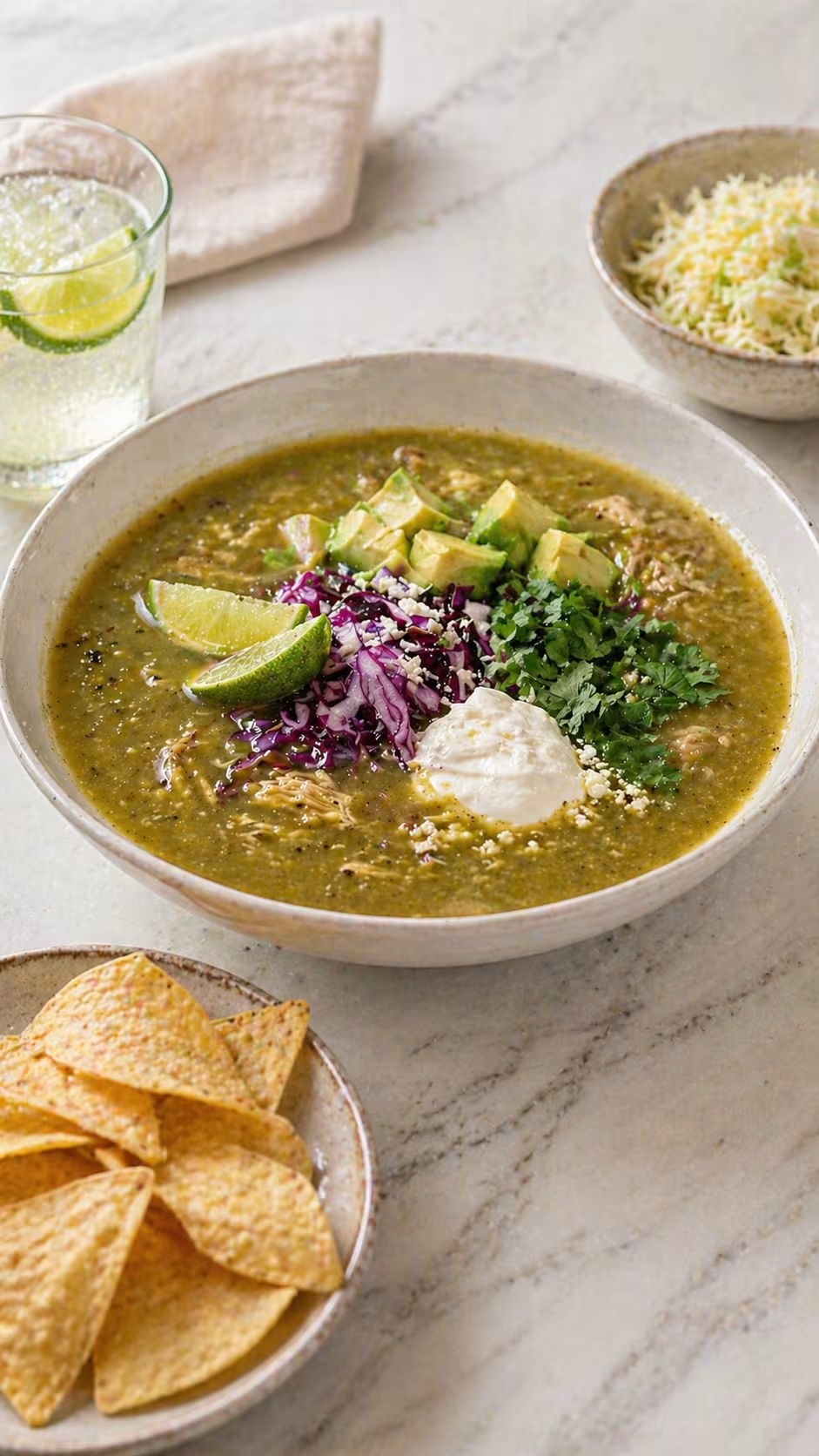
Tomatillo chicken soup is a Mexican-style green broth soup built on broiled tomatillos, shredded chicken, and aromatics simmered into a clean, slightly smoky broth.
The tomatillo does the structural work. Once roasted, it breaks down into a naturally thickened base that carries the broth without any starch or cream giving the soup a light body and a tartness you cannot get from tomatoes.
The prep is honest. About 15 minutes of active work, then the broiler and pot take over. Finished in under an hour. No special equipment, no hard techniques.
Whether you are after a healthy chicken soup recipe for the week or a green chicken enchilada soup with real tomatillo flavor rather than jarred salsa, this is the version worth making. I have cooked this soup more times than I can count, and the tomatillo sauce has never once let me down.
If you are new to working with this ingredient, What Is a Tomatillo covers everything you need before you start.
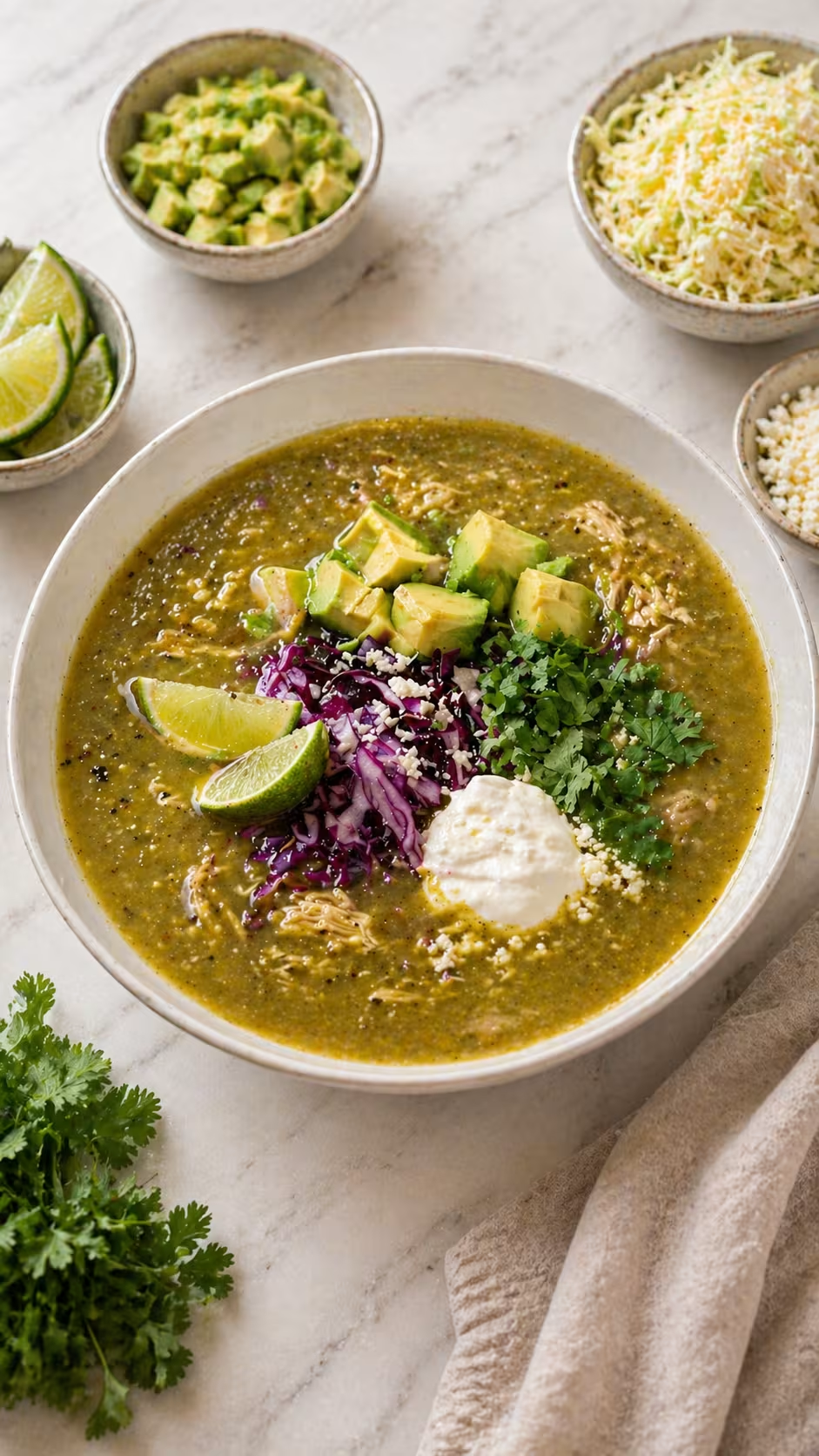
| Serves | 4 to 6 |
| Prep Time | 15 minutes |
| Cook Time | 40 minutes |
| Total Time | 55 minutes |
| Skill | Easy |
| Cost | Budget |
Table of Contents
What Is Tomatillo Chicken Soup?
Tomatillo chicken soup belongs to the tradition of Mexican green broths sometimes called caldo verde or sopa de tomatillo made in home kitchens across central Mexico for generations.
The dish is built around Physalis philadelphica, the husked tomatillo. It serves as the acid source, the body, and the color of the broth all at once.
Unlike a tomato-based chicken soup, the character here comes entirely from the tomatillo: roasted first, blended, then simmered with chicken until the two become one flavor rather than two separate elements in the same pot.
What separates this from chile verde or a tomatillo chicken braise is the broth ratio. The tomatillo base is extended with chicken stock so the dish is spoonable rather than saucy.
The tomatillo provides enough natural pectin that the broth stays slightly thick without roux or cornstarch. That is why it qualifies as both a gluten free chicken soup and a genuinely low carb chicken soup with no modifications. It is also naturally dairy free.
The flavor is tangy, lightly smoky from the broiling step, earthy from cumin and oregano, and clean on the finish. That is what makes it different from a chicken enchilada soup using green enchilada sauce from a can the flavor is live and sharp, not flat and processed.
The dish also differs from tomatillo salsa verde chicken in one important way: the chicken cooks directly in the tomatillo broth here, not alongside tomatillo sauce on the side. That simmer time is what binds everything together.
Chef Thomas Info:
This soup fits into a wider family of roasted tomatillo broths that run through Mexican regional cooking from Veracruz to Oaxaca. The technique roast the tomatillo first, blend it into the broth, simmer the protein directly in the liquid is the same foundation used in green pozole and tomatillo-based braised pork. Once you can make this soup, that entire method is yours.
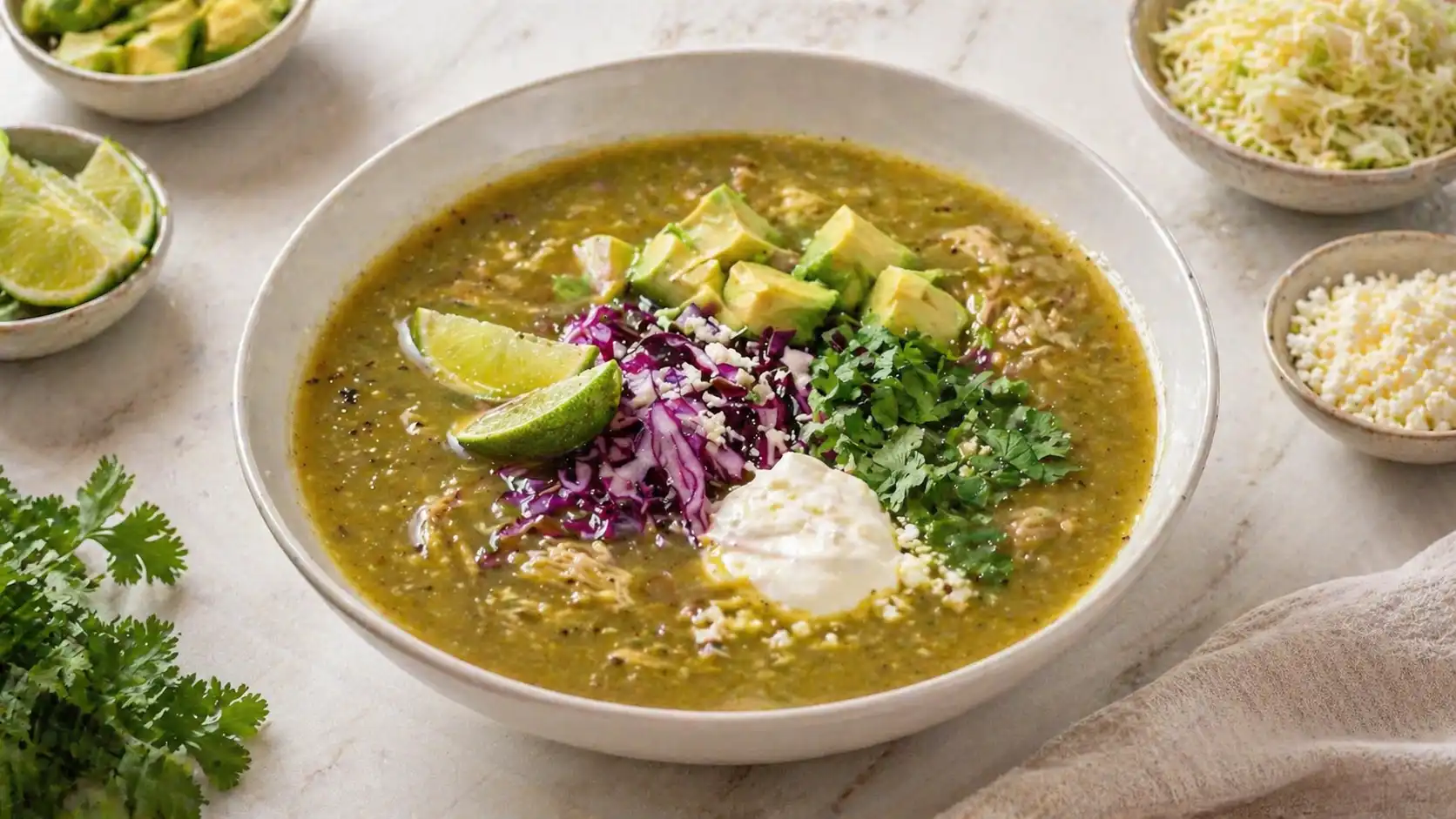

Tomatillo Chicken Soup
Ingredients
Equipment
Instructions
- Broil the tomatillos and vegetables. Set broiler to high, rack 4 inches from element. Place tomatillos, poblanos, jalapeño, and onion on a foil-lined sheet pan. Drizzle with 2 tbsp olive oil and season with salt. Broil 5 minutes, then add unpeeled garlic cloves and flip everything. Broil another 5–6 minutes until tomatillos are collapsed and skins are charred in spots.
- Blend the tomatillo sauce base. Transfer roasted tomatillos and all pan juices to a blender. Squeeze garlic from skins and add. Peel and deseed the poblanos and add along with the jalapeño, roasted onion, cumin, oregano, and coriander. Blend on high for 60 seconds until completely smooth.
- Sear the chicken. Heat remaining 1 tbsp olive oil in a Dutch oven over medium-high heat. Season chicken thighs with salt and pepper. Sear skin-side down for 4–5 minutes until deep golden, flip and sear 2 more minutes. Remove to a plate.
- Build and simmer the broth. Pour the blended tomatillo sauce into the pot and deglaze. Add chicken stock and stir. Return chicken thighs skin-side up. Bring to a gentle boil, then reduce to a steady simmer. Simmer uncovered for 25–30 minutes until chicken reaches 165°F (74°C) at the thickest point away from the bone.
- Shred and finish. Remove chicken, discard skin, shred meat from bones. Return shredded chicken to the pot. Stir in cilantro and lime juice. Simmer 2 more minutes. Taste and adjust salt. Ladle into bowls and serve with toppings of your choice.
Notes
The Tomatillo’s Role in Tomatillo Chicken Soup
Raw tomatillos carry a pH of approximately 3.5 to 3.8 the same acid range as a ripe tomato. That raw acidity is bright and aggressive. Useful in fresh salsa, but too sharp for a soup where the goal is a layered, integrated broth.
When tomatillos go under a broiler, the surface temperature rises fast enough to trigger Maillard browning on the exterior while the interior cells collapse and release their liquid. The organic acids partially volatilize with the steam, shifting the pH toward 4.2 to 4.5.
The flavor moves from sharp and raw to mellow, lightly sweet, and smoky where the skin has charred. Visually, the tomatillo shifts from bright apple-green to army or olive green. That color change confirms the structure has broken down and the sugars have begun to caramelize.
In this soup, that roasted base is the only source of thickening and flavor depth in the broth.
When the blended roasted tomatillo contacts the chicken during simmering, two things happen. The residual acid acts on the surface proteins of the chicken, causing partial denaturation that accelerates moisture release and shredding. This is why tomatillo-braised chicken shreds more cleanly than chicken cooked in a neutral broth.
At the same time, pectin released from the tomatillo cell walls disperses through the liquid and gives the broth a body that tomatoes or bell peppers cannot provide. The chicken’s natural gelatin adds a secondary layer as it cooks.
That combination of tomatillo pectin and chicken gelatin is what produces a broth that coats a spoon without being starchy.
For fresh versus canned in this specific recipe: canned tomatillos are already cooked and acidified in brine. They cannot be roasted to produce the char that defines the flavor of this soup. The sauce will be thinner and more one-dimensional.
I use fresh tomatillos every time I make this, and that is not a preference it is the reason the soup tastes the way it does. The roasting step is not optional. Skip it and you have a different dish.
Essential Equipment for Tomatillo Chicken Soup

- MORE FUNCTIONALITY: The Ninja Professional Plus Kitchen System with Auto-iQ features a new modern design and more functi…
- POWERFUL CRUSHING: Ninja Total Crushing Blades give you perfectly crushed ice for your smoothies and frozen drinks with …
- FOOD PROCESSING: The 8-cup Precision Processor Bowl provides precision processing for even chopping and smooth purees.

- Our popular natural aluminum half sheet with a nesting, oven-safe and nonstick steel grid
- This set can be used together in the oven for crisping bacon, roasting veggies or more. Separately use the pan for bakin…
- The included nonstick grid lifts food off the pan surface, allowing air to circulate, creating crisp finished products w…
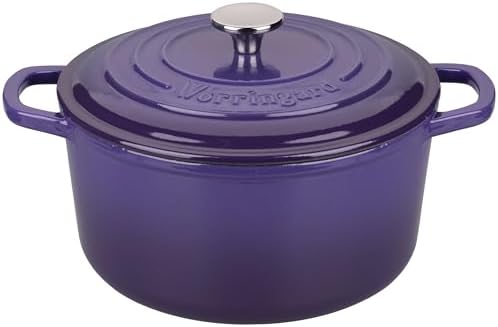
- VERSATILE USE:The Vorringard enameled dutch oven Can be used for slow-cooking, simmering, braising, baking, or roasting …
- COMPATIBLE WITH ALL COOK TOPS: Dutch ovens can be used on gas, electric, ceramic and induction cook tops, Oven safe up t…
- HIGH QUALITY: Heavy- duty cast iron, round shape with Looped handles and a matching lid retains heat well and distribute…
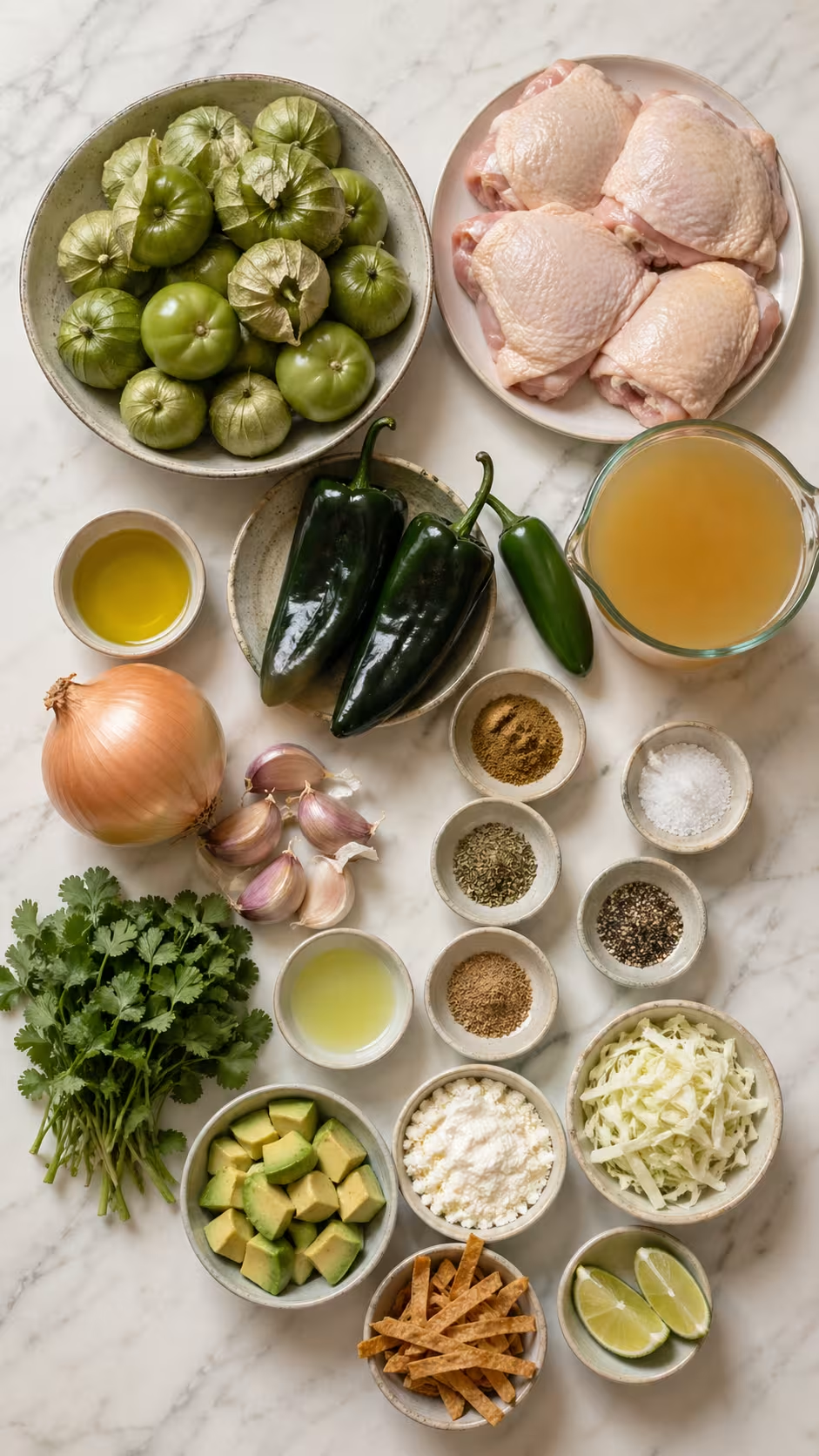
Ingredients
| Ingredient | Amount |
|---|---|
| Fresh tomatillos, husked and rinsed | 1½ lb (680 g) |
| Poblano peppers | 2 medium |
| Jalapeño | 1 (seeds removed for mild, kept for hot) |
| Yellow onion, quartered | 1 large |
| Garlic cloves, unpeeled | 6 cloves |
| Olive oil | 3 tbsp (45 ml), divided |
| Bone-in, skin-on chicken thighs | 2 lb (900 g) |
| Chicken stock, low sodium | 4 cups (950 ml) |
| Ground cumin | 1½ tsp |
| Dried Mexican oregano | 1 tsp |
| Ground coriander | ½ tsp |
| Kosher salt | to taste |
| Black pepper | to taste |
| Fresh cilantro | ½ cup (loosely packed) |
| Lime juice, fresh | 2 tbsp (30 ml) |
| To serve: | |
| Diced avocado | as needed |
| Shredded cabbage | as needed |
| Cotija cheese or sour cream | optional |
| Tortilla strips or chips | optional |
| Lime wedges | for the table |
Ingredient Notes
Tomatillos: Fresh tomatillos are the ingredient you cannot compromise on here. The broiling step drives off their raw aggressive acid and triggers surface caramelization that produces the smokiness in the finished broth. Skip roasting and the soup tastes sharp and unbalanced.
A good fresh tomatillo feels firm like a plum, shows no soft spots through the husk, and has a tight-fitting papery cover. If the husk is pulling away or the skin underneath is sticky and discolored, skip it.
Canned tomatillos can be used if absolutely necessary drain and blend directly but the broth will be thinner and the smoky character will not be there.
Chicken thighs: I always use bone-in, skin-on thighs for this soup because the collagen in the bones releases directly into the tomatillo broth and gives the liquid a body that boneless cuts cannot produce. The skin renders fat into the broth during cooking, carrying flavor through the whole simmer. You discard the skin before serving, but it does its work while the pot is going.
Boneless thighs are an acceptable substitute reduce simmering time by about 10 minutes. Chicken breast works but dries out quickly above 165°F (74°C) in an acidic broth, so check it early.
Poblano peppers: Poblanos contribute a mild, grassy warmth and a roasted sweetness that rounds out the tomatillo’s acidity without competing with it. Roasting alongside the tomatillos chars the skin, which peels away and leaves a clean, silky flesh.
Anaheim peppers are a reasonable substitute. Do not use green bell peppers the flavor is flat and does not match the dish.
Mexican oregano: Standard Mediterranean oregano is a different plant with a different flavor profile more floral, less earthy. Mexican oregano has a citrus-forward, slightly anise-adjacent quality that fits the tomatillo base. If you only have Mediterranean oregano, use half the amount.
Chicken stock: Low sodium stock lets you control the salt level as the broth reduces. The soup naturally intensifies during simmering, and a salty starting stock will push the finished dish over.
How to Make Tomatillo Chicken Soup
The sequence matters: roast the tomatillos and vegetables first to build the flavor base, blend them second, then cook the chicken directly in that liquid so the meat and sauce become one consistent flavor from the inside out.
Step 1: Tomatillo and Vegetable Roasting Broil to Develop the Base
Set your broiler to high and position the rack about 4 inches from the element.
Arrange the tomatillos (whole, husked, rinsed), poblano peppers, jalapeño, and quartered onion on a foil-lined sheet pan. Drizzle with 2 tablespoons of olive oil and season lightly with salt.
Broil for 5 minutes, then add the unpeeled garlic cloves and flip everything. Broil for another 5 to 6 minutes until the tomatillos have collapsed and the skins are charred in spots.
Broiling concentrates the tomatillo’s natural sugars through caramelization while partially driving off the raw organic acids. The char on the skin is where the smokiness comes from that is what separates this broth from anything made with raw or canned tomatillos. Skip this step and the soup will taste thin regardless of how long you simmer it.
The tomatillos should look soft and collapsed with visible blistering. The peppers should have dark, wrinkled skin on at least two sides. Pull the pan before anything burns black through to the flesh — charred skin is correct, charred interior is not.
Step 2: Tomatillo Sauce Base Blend and Season
Transfer the roasted tomatillos and all their pan juices to a blender. Squeeze the garlic out of its skins and add the flesh. Peel the charred skin from the poblanos, remove the stems and seeds, and add the flesh along with the jalapeño and roasted onion. Add the cumin, oregano, and coriander.
Blend on high for 60 seconds until completely smooth. Taste it should be smoky, slightly tart, and savory. This is your sauce base.
Blending at this stage distributes the tomatillo pectin fully through the liquid. Blending too briefly leaves texture that will not integrate into the broth during simmering. Do not add stock to the blender at this stage keeping the sauce concentrated gives you control over the final broth consistency.
Safety note: if pressure builds from the heat, hold the lid with a folded towel and start on low speed before increasing.
The sauce should be smooth, pourable, and a deep olive green with no visible chunks.
Step 3: Chicken Sear and Broth Build Brown, Then Braise
Heat the remaining tablespoon of olive oil in a Dutch oven over medium-high heat. Season the chicken thighs with salt and pepper.
Place them skin-side down and sear without moving for 4 to 5 minutes until the skin is deep golden and the fat has rendered. Flip and sear the other side for 2 minutes. Remove to a plate they will not be cooked through at this point, and that is correct.
Searing creates a layer of Maillard-browned proteins on the surface that dissolves into the broth during simmering, contributing a savory depth that poached chicken cannot produce. The rendered fat also carries fat-soluble flavor compounds from the spices into the liquid. Skip the sear and you get a paler, less complex broth.
The skin should be deep golden brown with visible rendered fat in the pan. The smell should be savory and roasted, not steamed.
Pour the blended tomatillo sauce into the pot and stir to deglaze any browned bits from the bottom. Add the chicken stock and stir to combine. Return the chicken thighs skin-side up. Bring to a gentle boil over medium-high heat, then reduce to a steady simmer.
Step 4: Tomatillo Broth Simmer Cook the Chicken Through
Simmer uncovered for 25 to 30 minutes, or until the chicken reads 165°F (74°C) at the thickest point of the thigh, away from the bone.
Simmering uncovered allows steam to escape and concentrates the tomatillo broth. Covering the pot traps steam and dilutes the sauce the soup will taste thinner. The tomatillo acid continues to work on the chicken fiber throughout the simmer, which is why the meat shreds cleanly at temperature without needing to overcook.
The broth should bubble gently at the edges, not roll. A rolling boil toughens chicken protein and produces a cloudy broth. When the chicken pulls apart easily with two forks, it is done.
Step 5: Shred the Chicken and Finish the Soup
Remove the chicken from the pot. Discard the skin. Shred the meat from the bones with two forks, discarding the bones. Return the shredded chicken to the pot.
Add the fresh cilantro and lime juice. Stir to combine. Taste and adjust salt. Simmer for 2 more minutes.
The lime juice goes in at the end because heat destroys the volatile citrus compounds responsible for the bright top note. Added early, lime tastes flat. Added at the finish, it lifts the whole broth. Same logic applies to the cilantro.
The soup is ready when the broth tastes balanced smoky, tangy, savory, with the lime just visible on the finish.
Ladle into bowls and serve with diced avocado, shredded cabbage, cotija, tortilla strips, and lime wedges.
You have the core of the dish. The tomatillo sauce is built, the chicken is cooked in it, the broth is done. What follows covers variations, what goes wrong, and how to store it.
Slow Cooker Variation
The slow cooker version works well as a meal prep soup or a weekday set-it-and-forget-it dinner with one non-negotiable: you still need to roast the tomatillos first. There is no shortcut around that step if you want the smoky depth in the final broth.
Roast and blend the tomatillo sauce as directed in Steps 1 and 2. Skip the sear on the chicken. Add the blended sauce, chicken stock, and seasoned chicken thighs to a 5 to 6 quart slow cooker. Cook on low for 6 to 7 hours or high for 3 to 4 hours.
Remove the chicken, shred, discard skin and bones, return the meat to the pot. Stir in lime juice and cilantro just before serving.
What you gain: complete hands-off cooking after the blending step. What you lose: the sear layer and the broth concentration that uncovered stovetop simmering produces. The slow cooker broth will be slightly thinner remove the lid for the last 30 minutes on high if you want more concentration.
For the full broiler and oven roasting technique, How to Roast Tomatillos covers both methods in detail.
Chef Thomas Tips for the Best Tomatillo Chicken Soup
- Do not skip the tomatillo roasting step. Raw tomatillos carry an aggressive, one-dimensional acidity that does not mellow in the broth no matter how long you simmer. The broiler is what converts that sharpness into the smoky, slightly sweet base this dish depends on. Five minutes of broiling is not optional prep it is the technique.
- Roast the garlic in its skin alongside the tomatillos. Unpeeled garlic roasted under a broiler develops a caramelized sweetness that raw or sautéed garlic simply does not produce. Squeeze the flesh out before blending and the difference in the finished broth is immediate.
- Taste the blended tomatillo sauce before it goes into the pot. It is much easier to balance the concentrated sauce at that point than to correct a flat or over-seasoned broth once the chicken stock is added.
- Simmer uncovered. The broth needs to reduce slightly to reach the right concentration. A covered pot traps steam and gives you a thinner soup. Keep it at a steady, gentle bubble and leave the lid off.
- Check the chicken at 25 minutes, not 30. Thighs cooked past 175°F (79°C) in this broth will still shred, but the texture becomes softer and less structured. Pulling them at 165°F (74°C) to 170°F (77°C) gives you clean, distinct shreds.
- Add the lime and cilantro at the very end. Both lose their brightness quickly with sustained heat. Stir them in during the last 2 minutes and the soup will taste noticeably fresher.
- Make it a high protein soup by serving over a small portion of hominy or white rice. Either absorbs the tomatillo broth well without changing the flavor balance. Hominy is the traditional pairing and adds a satisfying chew.
- When I want the same tomatillo flavor direction with almost no active cook time, I usually put together the Tomatillo Chicken Recipe it uses the same roasted tomatillo base but cooks the chicken differently with less broth and a shorter total time.
The roasted-tomatillo technique that defines this soup runs through a large part of what we cook on this site from the salsa verde to the braised dishes to the curry. Once you understand what the broiler does to a tomatillo, the logic of all those recipes starts to make sense.
Chef Thomas Info:
The roasted-tomatillo technique that defines this soup runs through a large part of what we cook on this site from the salsa verde to the braised dishes to the curry. Once you understand what the broiler does to a tomatillo, the logic of all those recipes starts to make sense.
Variations and Substitutions
Tomatillo Substitutions
Fresh is the right choice for this recipe. If unavailable, here are the trade-offs for each alternative:
Canned tomatillos: Already cooked and brine-packed. Drain them and add directly to the blender skip the roasting step. The broth will be thinner, less smoky, and more uniformly tart without the caramelized sweetness the broiler produces. Acceptable for a weeknight shortcut. Fresh vs Canned Tomatillos covers the full comparison if you want the detail.
Jarred salsa verde: Use 1½ cups in place of the blended tomatillo sauce. Reduce the chicken stock by ½ cup. The flavor will be more one-dimensional and often sweeter or more vinegary depending on the brand. A reasonable backup, not a replacement.
Green enchilada sauce (canned): Similar trade-off to jarred salsa verde. The flavor is more processed. Increase the lime juice at the end to compensate for the loss of natural acidity.
Protein Substitutions
Boneless, skinless chicken thighs: Reduce simmering time to 18 to 22 minutes. Check at 165°F (74°C). Broth will be slightly less rich without the bone collagen, but still very good.
Chicken breast (boneless): Reduce simmering time to 15 to 18 minutes and check early. Breast meat dries out quickly above 165°F (74°C) in an acidic broth. Shreds well but produces a leaner, less silky texture.
Rotisserie chicken: Skip the sear entirely. Add the blended sauce and stock, simmer for 15 minutes to develop the broth, then stir in 2 to 3 cups of pulled rotisserie chicken and heat through for 5 minutes. Fastest version of this dish.
Pork tenderloin or shoulder: Cube and sear as directed. Shoulder needs 35 to 40 minutes of simmering; tenderloin cooks in about 20. Both work well with the tomatillo base.
Spice Level Adjustments
The jalapeño is the primary heat control.
For mild: remove all seeds and membranes before broiling, or omit the jalapeño entirely and rely on the poblano’s background warmth. For medium: keep the jalapeño with seeds removed. For hot: keep the jalapeño seeds or substitute a serrano, which runs hotter with a sharper, more citrusy heat.
Adding more heat shifts the flavor toward aggressive, which means the tomatillo’s smoky-tart quality comes through less prominently. If you add significant heat, add a little extra lime juice at the finish to restore brightness.
Dietary Adaptations
Gluten free: Naturally gluten free as written. No thickeners, no flour. Verify your chicken stock is labeled gluten free if cross-contamination is a concern.
Dairy free: Naturally dairy free as written. Cotija and sour cream are optional toppings skip them and nothing changes in the soup itself.
Low carb / keto: As written, this is a low carb chicken soup. Tomatillo is low in net carbs (approximately 4 g per medium tomatillo), and the broth has no starch added. Skip the tortilla strips, serve with avocado and cabbage. For the full nutritional profile of tomatillos, What Do Tomatillos Taste Like covers that alongside the flavor breakdown.
Whole30 / Paleo: Fully compliant as written. Omit cotija, sour cream, and any corn-based toppings. Use compliant chicken stock.
Troubleshooting
The tomatillo broth is too thin and watery
Problem: The finished soup has the consistency of colored water rather than a light, slightly thickened broth.
Cause: The tomatillos were not roasted long enough to collapse and release their pectin, or the pot was covered during simmering.
Fix: Increase heat to a moderate boil and simmer uncovered for 10 to 15 minutes to reduce the liquid.
Prevention: Roast until the tomatillos are fully collapsed and blistered. Always simmer uncovered.
The soup is too tart or sour
Problem: The broth tastes sharp and acidic, not balanced.
Cause: The tomatillos were not roasted long enough, so raw acidity was not mellowed by heat. Or the soup cooked too aggressively.
Fix: Add a small amount of additional chicken stock to dilute the acidity. A pinch of sugar or a tablespoon of honey also rounds out the sharpness without adding noticeable sweetness. Do not add more lime.
Prevention: Roast until the tomatillos show visible browning and collapse. Keep the simmer gentle.
The sauce is too thick and paste-like
Problem: The broth is dense and heavy, more like a sauce than a soup.
Cause: Too much liquid evaporated during simmering, or the tomatillo-to-stock ratio was off.
Fix: Add warm chicken stock a quarter cup at a time, stirring after each addition, until the consistency is right. Taste as you go adding stock dilutes the seasoning.
Prevention: Measure the stock and add it all at the start. If the broth is reducing too fast, partially cover the pot.
The chicken is dry or stringy
Problem: The shredded chicken is tough and dry, not moist and clean-pulling.
Cause: The chicken overcooked internal temperature exceeded 175°F to 180°F (79°C to 82°C), causing the protein fibers to tighten and expel moisture.
Fix: Return the dry shreds to the broth and let them sit in the warm soup off the heat for 10 minutes. They will absorb some liquid back. Not a full correction, but it helps.
Prevention: Check the internal temperature at 25 minutes. Pull the chicken as soon as it reads 165°F (74°C).
The sauce separated or looks greasy
Problem: Fat is pooling on the surface and the broth looks broken.
Cause: The chicken skin rendered significant fat into the broth during simmering. This is normal.
Fix: Use a ladle or wide spoon to skim the fat from the surface before serving. Or refrigerate the soup overnight the fat will solidify and lift off cleanly. At least that is what I have found.
Prevention: Trim excess skin before searing if you want a leaner broth. Skim during the last 10 minutes of simmering.
The tomatillo color turned gray or brown
Problem: The broth has a gray-green or brownish color rather than olive green.
Cause: The soup simmered too aggressively and the chlorophyll degraded. Or too much air was incorporated during blending.
Fix: A squeeze of fresh lime juice at the end will brighten the color slightly.
Prevention: Keep the simmer gentle. Start blending on low speed before going to high. Note that the shift from bright green to olive green during cooking is normal gray-brown is overcooking.
Storage, Make-Ahead, and Reheating
Refrigerator
Store cooled soup in an airtight container for up to 4 days.
The flavor improves noticeably after the first day as the tomatillo broth and chicken settle together. Store the soup and any toppings separately avocado and cabbage deteriorate quickly in the broth.
Freezer
This soup freezes well for up to 3 months. Let it cool completely before transferring to freezer-safe containers. Leave an inch of headspace for expansion.
The tomatillo broth freezes cleanly without separating, though the chicken texture will be slightly softer after thawing. Thaw overnight in the refrigerator before reheating.
The tomatillo’s natural acidity acts as a mild preservative in the broth, which is part of why this soup holds up in both the refrigerator and freezer better than a neutral chicken stock would.
Reheating
Stovetop (preferred): Reheat over medium heat, stirring occasionally, until the soup reaches a gentle simmer. Add a splash of chicken stock if the broth has thickened during storage — 2 to 4 tablespoons is usually enough.
Oven: Transfer to an oven-safe dish, cover tightly with foil, and reheat at 325°F (165°C) for 20 to 25 minutes until hot throughout.
Microwave: Reheat covered on medium power (70%) in 90-second intervals, stirring between each, until hot throughout. Add a tablespoon of chicken stock before microwaving if the soup looks thick.
Make-Ahead
The tomatillo sauce base (Steps 1 and 2) can be made up to 3 days ahead and refrigerated, or frozen for up to 2 months.
When ready to finish the soup, bring the sauce to a simmer in the pot, add the stock, and proceed from Step 3. This is the best approach for weeknight meal prep the blending is the slow part, and having it done cuts total active cooking time to about 20 minutes.
The fully assembled soup can also be refrigerated overnight before serving. The flavor is genuinely better the next day.
Estimated Nutrition Per Serving
(Based on 6 servings, bone-in thighs, without optional toppings)
| Nutrient | Amount per Serving |
|---|---|
| Calories | ~310 |
| Protein | ~28 g |
| Carbohydrates | ~11 g |
| Fat | ~17 g |
| Saturated Fat | ~4 g |
| Sodium | ~520 mg |
| Fiber | ~2 g |
Estimates only. Values vary with tomatillo preparation method, protein cut, and additional ingredients used.
Frequently Asked Questions
Can I use canned tomatillos instead of fresh?
You can, but the trade-off is significant in this recipe specifically. Canned tomatillos are pre-cooked and brine-packed, which means they cannot be roasted to produce the char and caramelization that give this soup its smokiness and depth. The broth will taste thinner and more one-dimensional. If fresh are unavailable, drain and blend the canned tomatillos and add them directly to the stock. The soup is still good. It is just a different dish.
Is tomatillo chicken soup the same as green enchilada soup?
Not quite. Green enchilada soup typically uses canned green enchilada sauce or jarred salsa verde a processed product built for convenience. Tomatillo chicken soup uses fresh tomatillos as the primary ingredient, which gives you control over the flavor, the acidity, and the body of the broth. The flavor is sharper, more layered, and less uniform than enchilada sauce. One is a soup built from a sauce; the other is a soup where the sauce is built from scratch inside the pot.
Can I make tomatillo chicken soup in a slow cooker?
Yes. Roast and blend the tomatillo base as directed that step does not change. Add everything to the slow cooker and cook on low for 6 to 7 hours or high for 3 to 4 hours. Remove the chicken, shred, return to the pot, and finish with lime and cilantro. The main difference from the stovetop version is that the broth will be slightly thinner since you are not simmering uncovered to reduce it.
What does tomatillo taste like in this soup?
In this soup specifically, the cooked tomatillo tastes smoky, lightly tart, and faintly sweet nothing like raw tomatillo, which is sharp and bright. The broiling step removes most of the raw edge. The finished broth has a green, grassy quality underneath the smokiness, with a clean acidic finish that the lime juice reinforces at the end. It is not spicy on its own that comes from the jalapeño and poblano, which you control separately.
How spicy is this soup?
As written with the jalapeño seeds removed, this is mild to medium. The poblano adds a background warmth most people do not register as heat. For mild, omit the jalapeño entirely. For medium, include it with seeds removed. For hot, keep the jalapeño seeds or substitute a serrano.
Can I make this soup ahead of time?
Yes, and it is actually better the next day. The tomatillo broth settles and the flavor deepens after 12 to 24 hours of refrigeration. Make the full soup up to 2 days ahead, refrigerate, and reheat gently on the stovetop with a splash of stock. Add fresh lime juice and cilantro just before serving to restore brightness.
What should I serve with tomatillo chicken soup?
The soup is a complete meal with the toppings avocado, shredded cabbage, cotija, and tortilla strips cover texture, fat, salt, and crunch. If you want something on the side, warm corn tortillas are the natural pairing. A simple rice and beans plate also works. For something in the same tomatillo flavor family that makes a good follow-up meal, Chicken Enchiladas with Tomatillo Sauce uses the same roasted tomatillo base in a completely different format.
Is this soup Whole30 and gluten free?
Yes on both counts, as written. No flour, no dairy, no starch, no added sugar in the base recipe. Skip the tortilla strips and any corn-based toppings for strict Whole30 compliance. Cotija and sour cream are optional and can be omitted for dairy-free or Whole30 versions without any change to the soup itself.
A Few Final Notes
The tomatillo is doing all the heavy work here.
Once you have roasted and blended the sauce, the soup builds itself. The chicken cooks in the liquid, the broth tightens, the flavors settle without much intervention from you.
Make it once and you will understand why this method transfers to other dishes. The same roasted tomatillo base works in braises, with different proteins, with beans added, with hominy for something closer to a pozole verde. The logic is the same every time.
When you want the same tomatillo flavor in a format that comes together faster, Tomatillo Salsa Verde is ready in about 15 minutes and uses the same broiler method. For the braised version with a tighter, more concentrated sauce, Tomatillo Chicken is the one to make next.