
Roasting tomatillos converts their sharp, raw acidity into a mellow, rounded base that is the foundation of great salsa verde, green enchilada sauce, and chile verde. That transformation is not cosmetic it is chemical, and it is what separates a sauce that tastes alive and layered from one that tastes flat and sour.
If you are making tomatillo chicken, a slow-simmered chile verde, or a roasting tomatillos for salsa verde situation where the whole dish depends on the quality of the base, this technique is the step you cannot skip.
The best way to roast tomatillos depends on what you are cooking a broiler gives you smokiness, an oven gives you consistency, a cast-iron pan gets you there fast. I have roasted tomatillos hundreds of times and I still find myself reaching for the broiler more often than not.
If you are new to tomatillos, What Is a Tomatillo covers everything about the ingredient how to select it, what the husk means, and why it tastes the way it does before you start here.
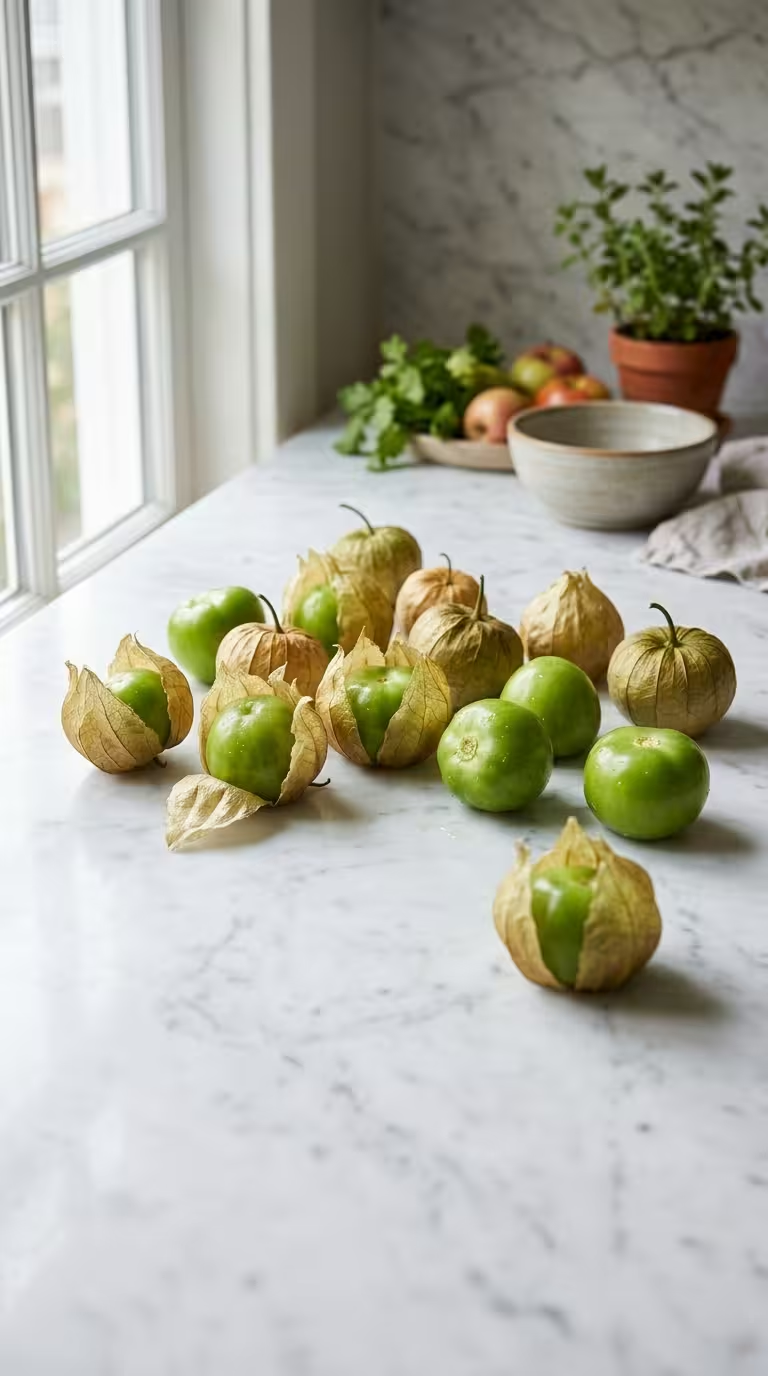
Table of Contents
Why Roasting Tomatillos Matters for Flavor and Sauce Quality
Raw tomatillos (Physalis philadelphica) carry a pH of roughly 3.6 to 3.9 sharply acidic, with citric and malic acid dominating their flavor profile. When dry heat above 300°F (149°C) contacts the tomatillo surface, it drives off a portion of those volatile acids through evaporation and thermal decomposition.
The pH rises measurably as the acid load decreases. What this produces at the palate level is a perceivable drop in sharpness and the emergence of the tomatillo’s natural sugars, which were always present but masked by the acid.
A raw tomatillo sauce tastes one-dimensional and aggressive. A roasted tomatillo sauce tastes rounded and complex. That single change is the technique doing its job.
The second transformation happens to the tomatillo’s moisture and cell structure. Raw tomatillos contain approximately 92% water by weight. Under dry oven heat, surface moisture evaporates before interior moisture has time to steam the flesh uniformly which means the exterior dehydrates and concentrates flavor while the interior remains soft.
The cell walls, weakened by heat, release pectin into the surrounding liquid as the tomatillo collapses. That released pectin is what gives roasted-tomatillo sauces their body. A sauce made from boiled tomatillos lacks this because boiling leaches pectin into the water and then discards it.
A roasted tomatillo releases pectin directly into the flesh that goes into the blender. The sauce that results is thicker, more stable, and less likely to separate after cooking.
The third transformation is the Maillard reaction at the surface. When surface temperatures exceed 280°F (138°C), amino acids and reducing sugars on the tomatillo skin react to form hundreds of flavor compounds the same browning chemistry behind seared meat and toasted bread.
On a tomatillo, this produces dark patches and blistered skin with a slightly smoky, complex character that no amount of seasoning can replicate after the fact. Broiling intensifies this because the heat source is directly overhead and the surface temperature climbs faster. Oven roasting produces gentler browning across the whole fruit.
The stovetop, in a preheated dry pan, chars only the contact surface. Each method activates the Maillard reaction differently, which is why the method choice is not arbitrary it shapes the flavor of every dish downstream.
Roasting is the technique that unlocks the full range of what tomatillos can do in a kitchen. Every serious tomatillo sauce salsa verde, green enchilada sauce, chile verde base depends on it.
The difference between dishes that taste genuinely good and ones that taste thin and one-note almost always traces back to whether this step was done right. The recipes that skip it are recognizable immediately. The ones that do not are the ones people ask about.
What You Need
Equipment: A rimmed baking sheet is the most important piece of equipment for oven and broiler roasting. The rim matters as tomatillos collapse, they release liquid that will run off a flat pan and burn onto the oven floor.
A heavy sheet pan conducts heat more evenly than a thin one; thin pans develop hot spots that char some tomatillos before others are ready. A cast-iron skillet is the right tool for stovetop charring its mass holds heat steadily enough to sear tomatillo skin without the temperature dropping when the fruit hits the surface.
A standard nonstick pan does not hold heat the same way and produces a pale, steamed result rather than a charred one. Aluminum foil or parchment is optional but simplifies cleanup considerably.
Tomatillos: For a typical batch yielding enough for one recipe, plan on 1 to 1.5 pounds of fresh tomatillos roughly 8 to 12 medium fruits. Look for tomatillos where the husk fits snugly or has begun to dry back slightly; husks that are actively bursting off the fruit often signal overripeness.
The fruit itself should feel firm, not soft, and be uniformly medium green. Pale yellow-green tomatillos are overripe and will taste flat after roasting. Bright, very hard tomatillos that are slightly small for their husk are ideal their acid-to-sugar balance is at its peak, and roasting will do the most for them.
A light coating of neutral oil (about 1 tablespoon per pound) prevents the skin from drying out too fast under direct heat.
How to Roast Tomatillos: Step by Step
The steps below follow the order they do for a reason: you prepare the surface first, apply heat second, and read the cues third. Skipping the preparation or rushing the heat application are where most problems start.
Step 1: Prepare the Tomatillos Husking, Rinsing, and Removing the Sticky Coating
Remove the papery husk from each tomatillo and discard it. Rinse the tomatillos under cold running water and rub the surface with your fingers tomatillos carry a natural, slightly tacky resin on their skin that is invisible but real.
This resin does not burn off cleanly under dry heat; it turns gummy and slightly bitter if left on, and it can prevent the skin from charring evenly by creating a moisture barrier at the surface. A 20-second rinse per tomatillo removes it completely.
Dry them with a kitchen towel afterward. Wet tomatillos going into a hot pan or under a broiler will steam before they char.
Why it matters: The resin is water-soluble and physically present rinsing is not an optional hygiene step, it is a technique step. A tomatillo with residual resin will produce a slightly off note in the finished sauce that is hard to identify but easy to taste.
What goes wrong: If you skip the rinse and go straight to heat, the skin surface will steam slightly in the first two minutes, delaying Maillard browning and producing a paler, less flavorful exterior and the slight bitterness from the resin compounds will carry into the sauce.
Observable cue: After rinsing and drying, the tomatillo surface should feel smooth and faintly tacky-free not slippery. If it still feels slick, rinse again.
Step 2: Halve and Arrange Creating Maximum Surface Contact and Heat Exposure
Cut each tomatillo in half through the equator (across the widest point, not stem to base). Place the halves cut-side down on the baking sheet for the oven method, or cut-side up under the broiler. The flat cut surface exposes the maximum area of tomatillo flesh to direct heat.
A whole tomatillo placed on a baking sheet contacts the heat only at the bottom curve the rest steams in its own moisture. A halved tomatillo gives you both a direct-contact roasted bottom and a heat-exposed open face under the broiler.
Spread them in a single layer with space between each half. Give them room. Crowded tomatillos trap steam between each other and the pan surface, and you will get softened, pale tomatillos instead of charred ones.
Why it matters: Steam is the enemy of the Maillard reaction. It keeps the surface temperature below 212°F (100°C) the boiling point of water which is well below the 280°F (138°C) threshold where browning begins. Air circulation between halves allows moisture to escape as vapor rather than pool between fruits.
What goes wrong: Overlapping tomatillos or halves placed too close together will steam each other. The result looks done on the outside but tastes boiled on the inside — the sauce will be thin and flat.
Observable cue: Each tomatillo half should have visible space around it, roughly half an inch at minimum. The sheet pan should not look full.
Step 3: Apply Dry Heat Building the Maillard Crust and Reducing Tomatillo Acidity
For the oven: preheat to 400°F (205°C), place the pan on the middle rack, and roast for 20 to 25 minutes. For the broiler: set to high, position the rack 4 to 6 inches (10 to 15 cm) below the element, and broil for 10 to 14 minutes, watching continuously after the 8-minute mark.
Do not add water to the pan. Do not cover with foil. Both actions trap steam and defeat the purpose of the technique entirely.
Why it matters: Dry air in the oven or broiler removes surface moisture continuously, allowing the tomatillo exterior to climb to temperatures where Maillard chemistry and caramelization can occur.
Even a small amount of trapped steam from foil or added liquid creates a microclimate around each tomatillo that caps surface temperature at 212°F and keeps browning from starting. This is the same reason a wet steak does not sear: water must leave the surface before heat can brown it.
What goes wrong: If the oven has not fully preheated when the tomatillos go in, the initial lower temperature allows surface moisture to evaporate slowly rather than rapidly the tomatillos release liquid onto the pan and essentially poach in it before the temperature climbs high enough to char. The result is boiled tomatillos on a messy pan.
Observable cue: At the correct temperature, you should smell the tomatillos beginning to caramelize somewhere around the 12- to 15-minute mark in the oven a faintly sweet, toasty aroma. Under the broiler, blistering should appear within 6 to 8 minutes.
Step 4: Read Doneness Identifying Correct Char, Collapse, and Interior Softness
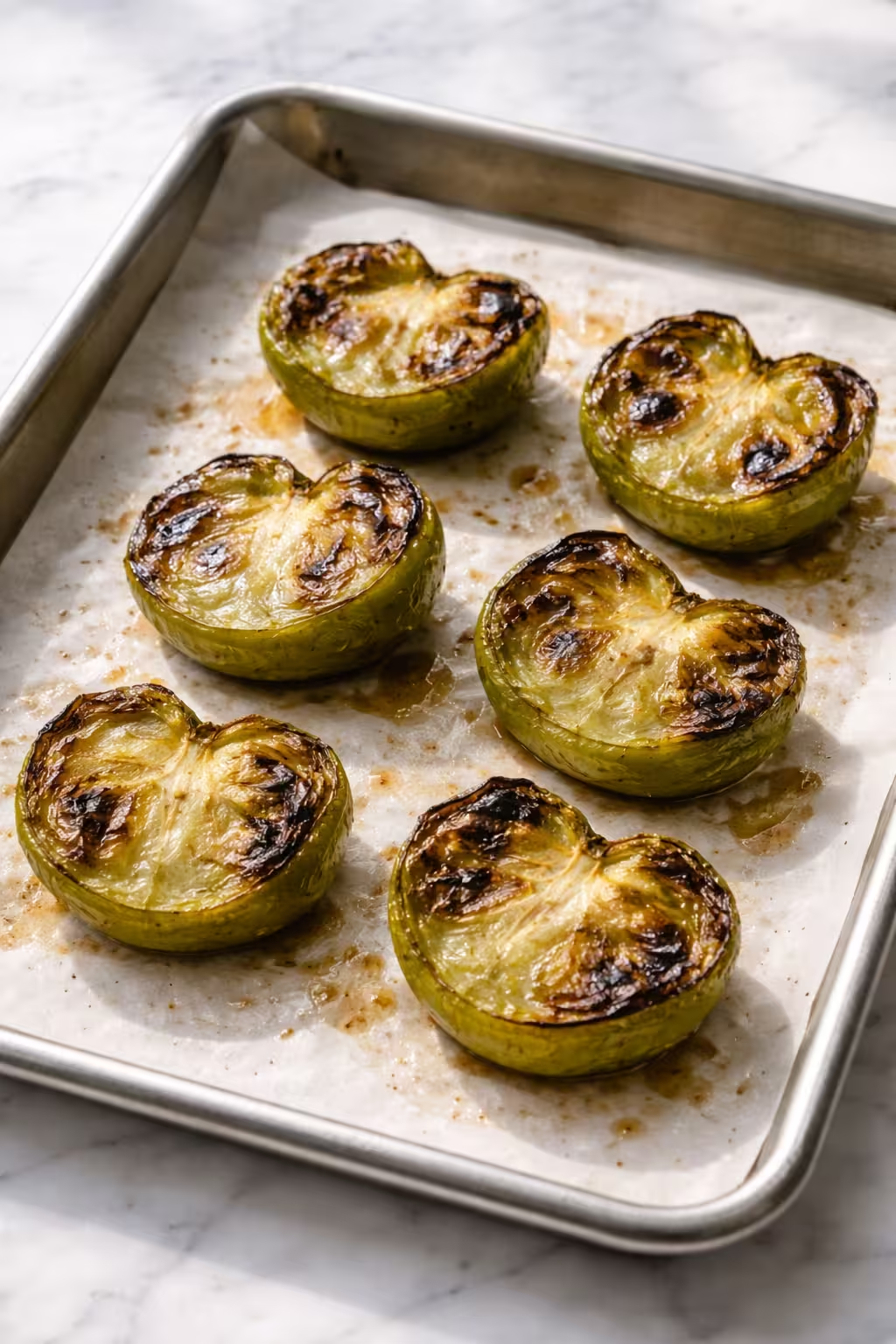
The tomatillos are done when the skin is wrinkled and olive-drab green not the bright, firm green they started as with dark brown or black patches on the surface. They should look slightly collapsed and deflated, as if the interior has softened.
The skin may have lifted or split in spots. Under the broiler, there will be more aggressive blackening; a few fully charred patches are fine and contribute smokiness. For the oven method, the browning will be more even and less dramatic.
Press one gently with a spoon it should give immediately and feel completely soft throughout.
Why it matters: The visible collapse signals that the cell structure has fully softened, pectin has been released, and the acid reduction has had sufficient heat exposure and time to occur. An underdone tomatillo still firm, still bright green has not yet completed the acid conversion and will taste noticeably sharper in the finished sauce.
What goes wrong: Pulling the tomatillos too early is the most common error. A tomatillo that has just started to blister but is still firm in the center has undergone surface Maillard browning but the interior remains essentially raw. The sauce will taste partially roasted and partially sharp uneven in a way that is hard to correct.
Observable cue: Lift one half with a spatula. It should be flexible, not rigid. The cut surface should show browning and slight caramelization. The edges should be dark. If it holds its shape cleanly like a raw vegetable, it is not done.
Method Variations
Oven Method Consistent Results, Cleaner Flavor
Preheat the oven to 400°F (205°C). Place halved tomatillos cut-side down on a foil-lined rimmed baking sheet lightly coated with oil. Roast for 20 to 25 minutes on the middle rack. The tomatillos will not develop heavy char, but they will brown at the edges and collapse fully.
The flavor outcome is clean, mellow, and rounded all the acidity reduction with none of the smokiness. This is the method for soup bases, green enchilada sauce, and any application where you want the tomatillo flavor itself to come through without smoke notes layered on top.
Doneness cue: olive-drab skin, completely soft interior, edges beginning to brown. One risk: an underpowered home oven that does not hold 400°F consistently will produce tomatillos that steam-soften rather than roast check that your oven has fully preheated before the pan goes in.
Broiler Method Smokier Char, Higher Flavor Complexity
Set the broiler to high. Position the oven rack 4 to 5 inches (10 to 13 cm) below the element. Place tomatillo halves cut-side up on a foil-lined sheet. Broil for 10 to 14 minutes, checking at the 8-minute mark and every 2 minutes after. The surface will blister and charsome blackening is intentional and correct.
The flavor outcome is complex, smoky, and deeper than the oven method, with the Maillard reaction running harder and faster at the surface. This is the method for salsa verde, salsas where smokiness is a feature, and any dish where you want a more aggressive tomatillo character.
Doneness cue: significant blistering, some black patches, tomatillos visibly collapsed and soft. Primary risk: the broiler does not stop working when you walk away. I have burned more batches than I would like to admit by answering a question from the other room for two minutes too long. Stay in the kitchen.
Stovetop Method Fast Charring, Drier Result
Heat a cast-iron skillet over high heat for at least 3 minutes the pan must be fully hot before anything goes in. Place whole tomatillos (not halved) directly in the dry, ungreased pan. Do not add oil. Cook for 3 to 5 minutes per side, turning with tongs when each contact surface is charred and dark. Total time: 8 to 12 minutes depending on size.
Temperature of the pan surface should be above 400°F (205°C) if a drop of water flicked onto the pan evaporates instantly, the pan is ready. The flavor outcome is the most intense char of the three methods, but the interior softening is less complete than oven or broiler roasting because the heat is one-directional.
This works well for salsa where you want a charred, almost fire-roasted character and where a slightly firmer tomatillo texture in the blend is acceptable. Doneness cue: exterior blackened on two sides, fruit feels soft when pressed with tongs. Risk: a pan that is not hot enough will produce a steamed, pale tomatillo with no char heat the pan longer than you think you need to.
Chef Thomas’s method decision: For soup bases and enchilada sauce where I want a clean tomatillo flavor without smokiness, I use the oven at 400°F. I can fit two pounds on one sheet and walk away for 20 minutes. For salsa verde and fresh salsas where smokiness is part of the character, I use the broiler but I stay in the kitchen the whole time.
For a quick weeknight batch when I have less than 15 minutes, the stovetop cast-iron method works if the pan is genuinely hot before anything touches it. The microwave softens tomatillos but produces none of the flavor development that makes roasting worth doing in the first place.
The method you choose shapes the flavor of everything that gets built on top of it. A broiler-roasted base belongs in a salsa that wants that edge.
An oven-roasted base belongs in a sauce where tomatillo needs to be the clean, primary flavor. Getting clear on that before you start saves a lot of rethinking at the end.
Common Mistakes and How to Avoid Them
The Tomatillos Steamed Instead of Charring Pan Overcrowded or Temperature Too Low
The tomatillos softened but stayed pale and damp-looking, with no browning or blistering on the surface. This happens when halves are placed too close together the moisture they release cannot escape and pools between them, turning the sheet pan into a steam environment. It also happens when the oven has not fully preheated.
Fix: if this happens partway through, spread the tomatillos out and raise the oven to 425°F (220°C) to drive off the accumulated moisture browning may still develop in the last 5 to 8 minutes. Prevention: always give tomatillo halves visible space on the pan, and always confirm oven temperature with an oven thermometer before roasting.
Skipping the Rinse Resin Left on the Skin Causes Off Flavor and Uneven Browning
Raw tomatillos feel slightly sticky even after the husk is removed. That coating is a natural resin that does not cook off cleanly it turns gummy under heat and contributes a slight bitterness to the finished sauce that sits just behind the other flavors. Many guides skip this step.
Fix: if you notice something slightly off in the final sauce that you cannot attribute to seasoning, the resin is often the cause. Prevention: rinse every tomatillo thoroughly and dry before applying any heat.
Pulling Them Too Early Underexecution Leaves the Acidity Intact
The tomatillos look blistered and the skin has changed color, but they still feel firm when pressed. Surface browning does not guarantee interior completion. The acid reduction and pectin release that make roasted tomatillos useful require full interior softening, which takes longer than surface charring.
A tomatillo pulled early will produce a sauce that tastes partially sharp roasted at the edges but raw in the middle, in a flavor sense.
Prevention: use the squeeze test. The tomatillo should give completely under light pressure. If there is any resistance, it needs more time.
Going Too Far Over-Roasting Dries Out the Flesh and Turns the Flavor Bitter
The tomatillos are fully charred and have shrunken dramatically; the interior looks dry or stringy rather than soft and juicy. At this stage the natural sugars have caramelized past their sweet point into bitter compounds, and the sauce will taste harsh in a way that is difficult to correct.
The window between perfectly done and overdone is narrower than most guides admit particularly under the broiler.
Prevention: check tomatillos at the minimum time given for each method. Under the broiler, start checking at 8 minutes regardless of what the recipe says, because home broiler temperatures vary significantly.
Using Tomatillos That Are Too Ripe or Too Firm
Overripe tomatillos soft, yellowing, with a husk that has separated and dried completely have already lost significant acid and turn mushy under roasting heat, producing a sauce that is thin and lacks brightness.
Very underripe tomatillos extremely hard, very small for their husk, almost white-green carry insufficient sugars and produce a sauce that remains sharp even after proper roasting. Look for medium-sized tomatillos that are firm but not rock-hard, fully green, with a husk that fits snugly. Those are the ones that respond best to roasting.
Selecting the Wrong Method for the Dish
Using the broiler method when cooking a soup base and getting smoke flavor where you did not want it is a real outcome. Broiler roasting infuses smokiness into the tomatillo flesh, not just the surface.
That smoke carries through blending and into the final sauce. For a clean soup or a delicate green sauce, the smokiness is out of place. Match the method to the dish: oven for clean, broiler for smoky, stovetop for quick and charred.
Which Recipes Use Roasting Tomatillos?
Mastering how to roast tomatillos is the unlock for the most important dishes in the tomatillo kitchen. Salsa verde, green enchilada sauce, and tomatillo-based braises all depend on it.
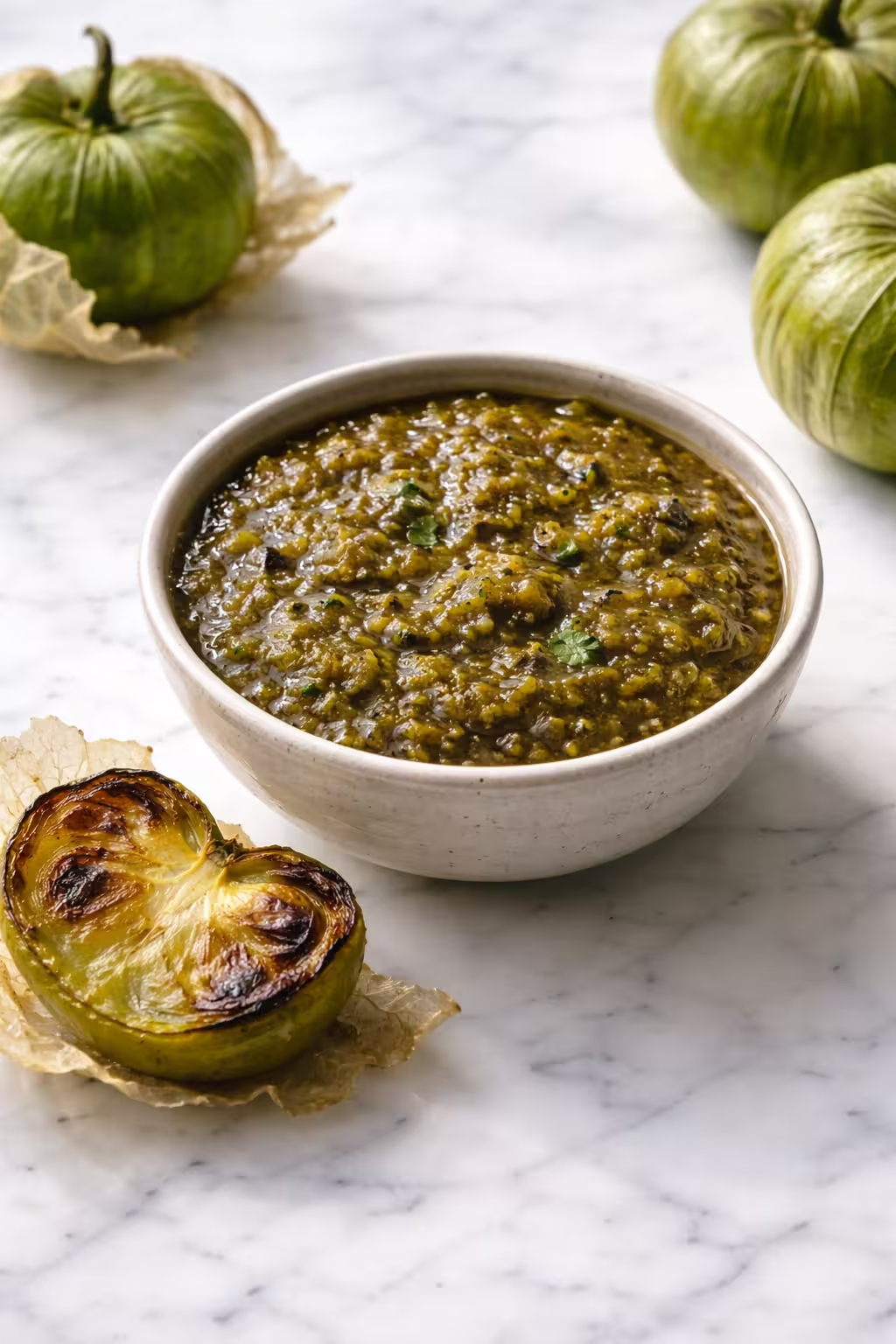
Salsas and sauces: Roasted tomatillos are the base of every salsa verde worth making. Raw tomatillos blended into salsa produce a sharp, thin result edible but one-dimensional. Roasted tomatillos produce a salsa with body, mild sweetness, and a layered flavor that holds up to chips, eggs, and grilled meats. The difference in texture alone from the released pectin is reason enough to roast first.
Chicken dishes: The recipe where this technique shows its full value most clearly is a roasted tomatillo chicken braise. Adding a raw tomatillo sauce to chicken and simmering it produces a thin sauce with persistent sharpness that does not integrate with the protein.
Adding a roasted tomatillo base and building from there gives you a sauce that thickens as it cooks and develops a flavor that reads as complex, not just sour. I use the roasted tomatillos chickpea curry as the clearest example of how the roasted base changes everything the sauce has a depth that simply is not possible starting from raw.
Soups and stews: For chile verde and tomatillo-based soups, roasting is the difference between a soup base that tastes like the sum of its ingredients and one that tastes like something built with intention. The oven method gives the cleanest result here you get full acid reduction and pectin release without the smokiness that would compete with chiles and other aromatics.
Once you have the technique down, the range of dishes it serves is genuinely wide. The whole tomatillo recipe cluster on this site comes back to this step roasting is where most of those recipes actually begin, even when the recipe itself starts with “add the tomatillos.”
Storing and Using Roasted Tomatillos
Storing Roasted Tomatillos Before Blending
Roasted tomatillo halves, cooled completely, will keep in an airtight container in the refrigerator for up to 5 days. Store them with all the pan juices that liquid carries concentrated flavor and pectin from the roasting process and belongs in the sauce.
Do not discard it. For freezing: spread cooled roasted tomatillos on a sheet pan, freeze until solid (about 2 hours), then transfer to a zip-top freezer bag. They keep well for up to 4 months. Thaw in the refrigerator overnight before blending.
Texture after thawing will be softer than fresh-roasted but the flavor holds extremely well frozen roasted tomatillos make very good sauces.
Storing Prepared Tomatillo Sauce or Blend
Once roasted tomatillos are blended into a sauce, the sauce keeps in the refrigerator for up to 1 week in an airtight container. For freezing, portion the blended sauce into 1-cup or 2-cup amounts in freezer containers or heavy zip-top bags.
Label with the date. Frozen tomatillo sauce keeps well for 3 to 4 months and thaws quickly in a pot over low heat or overnight in the refrigerator. Stir after thawing some separation is normal and resolves with brief reheating.
I make a double batch of roasted tomatillos almost every time I have fresh ones, because the second pound goes into the freezer and means I have a sauce base ready on any weeknight without any prep work.
Frequently Asked Questions
Can I roast tomatillos whole instead of halving them?
You can, but halving is better for two reasons. Halved tomatillos expose a flat cut surface directly to heat, accelerating browning and reducing roasting time. Whole tomatillos contact the heat only at their bottom curve, and the rest of the surface softens through indirect heat producing a paler, less developed result. If you roast them whole, add 8 to 10 minutes to the oven time and expect less surface color.
What temperature should I use for roasting tomatillos?
For oven roasting, 400°F (205°C) on the middle rack. For broiling, high broil with the rack positioned 4 to 5 inches (10 to 13 cm) below the element. For stovetop in a cast-iron pan, preheat the pan over high heat for at least 3 minutes before anything touches it surface temperature should be above 400°F (205°C).
How do I know when the tomatillos are done?
The three-part test: skin is wrinkled and olive-drab green rather than bright green; tomatillo feels completely soft when pressed gently with a spoon or tongs no resistance anywhere; dark brown or black patches are visible on the surface. All three together means they are done. Any one of them alone does not.
Can I use canned tomatillos instead of roasting fresh ones?
Canned tomatillos are already cooked and will not develop char or the Maillard-reaction flavor complexity that roasting produces. You can roast canned tomatillos under a broiler briefly 5 to 7 minutes to add some surface color, but the acid-reduction and pectin-release benefits of full oven or broiler roasting from raw will not be present.
For salsas where char flavor is important, fresh roasted tomatillos are meaningfully better. For a quick cooked sauce where depth of flavor matters more than smokiness, well-drained canned tomatillos are a usable shortcut.
What is the best way to roast tomatillos for salsa verde specifically?
The broiler method gives salsa verde the most flavor complexity the char produces smoky notes and concentrated tomatillo flavor that the oven method does not match. Broil cut-side up at high heat, 4 to 5 inches from the element, for 10 to 12 minutes. Let them cool completely before blending. Use all the pan juices. Season after blending, not before.
Do I need to add oil when roasting tomatillos?
A light coat of neutral oil about a teaspoon per pound is helpful but not essential. Oil conducts heat to the tomatillo surface more efficiently than air alone, which promotes more even browning.
Without oil, the surface can dry out unevenly, with some spots drying before they brown and others browning well. For the stovetop method, no oil is needed or wanted the dry pan surface is what creates the char.
Why do my roasted tomatillos taste bitter even when they look done?
Over-roasting. Once tomatillos go past full softness into shrunken, leathery territory, the sugars have caramelized past their sweet point into bitter compounds. The sauce from over-roasted tomatillos has a harsh, dark bitterness that is hard to correct.
Pull them at the first sign of full collapse do not wait for them to shrink dramatically. The correct window is softer than most people expect.
A Few Final Notes
The technique is simple but the margin matters. Every step the rinse, the space on the pan, the fully preheated oven, the doneness check is in place because tomatillos respond to heat quickly and in ways that shape everything downstream.
Get it right and the sauce has depth before you have added a single additional ingredient. The first recipe to try it on is the roasted tomatillos chickpea curry the roasted base is what makes the sauce work, and you will taste exactly what this technique does the first time you make it.