
Homemade Salsa Recipe with Fresh Tomatoes is one of those things I crave the second I see a bag of tortilla chips on the counter. You know the feeling, you want something fresh, punchy, and not weirdly sweet like some store bought jars. I started making my own after I fell down a rabbit hole learning about different salsa styles, including the tart little green guys called tomatillos, and I finally understood the difference after reading what is a tomatillo. This recipe is my go to when tomatoes are juicy and actually taste like tomatoes. It is simple, forgiving, and it makes your kitchen smell like you are about to have people over, even if it is just you. 
Table of Contents
Key Ingredients for Fresh Salsa
I am a big believer that great salsa is mostly about decent produce and not overthinking it. If your tomatoes are bland, salsa will be bland. If your cilantro tastes like soap to you, skip it and use green onion. No judgment.
Here is what I use for my Homemade Salsa Recipe with Fresh Tomatoes, plus little notes I have learned the hard way.
- Fresh tomatoes: Roma tomatoes are my favorite because they are meaty and not too watery. Garden tomatoes work too, just scoop some seeds out if they are super juicy.
- White onion: Sharp and clean tasting. Red onion is fine if that is what you have.
- Jalapeno: Start with one. You can always add more, but you cannot un spicy the bowl.
- Cilantro: Adds that classic salsa vibe. If you are unsure, start small.
- Garlic: One or two cloves. Raw garlic is powerful, so do not go wild unless you really love it.
- Lime juice: Brightens everything and makes it taste like you know what you are doing.
- Salt: The thing that turns chopped veggies into salsa. Add, taste, adjust.
- Optional extras: Pinch of cumin, a little sugar if tomatoes are out of season, or a splash of vinegar for extra tang.
Quick tomato tip: if you ever want to play with a tangier flavor, you can mix in roasted tomatillos, but that becomes a different salsa style. Still delicious though.

Different Methods to Prepare Salsa
I rotate between a few methods depending on my mood and how much time I have. The ingredients stay basically the same, but the texture changes a lot, and that can totally change how you use it.
1) Classic hand chopped
This is the method I use when I want chunky salsa for chips. Dice everything small, toss it in a bowl, then let it sit for 10 to 15 minutes. The salt pulls out juices and suddenly it looks like real salsa. The downside is your cutting board gets messy, but honestly that is part of the charm.
2) Food processor quick blend
This is when I want salsa fast and I do not care if it is a little more like restaurant style. I pulse tomatoes first, then pour off a bit of extra liquid if needed. Then I add onion, jalapeno, garlic, and cilantro and pulse again. Do not puree it unless you want salsa soup.
3) Roasted for deeper flavor
If your tomatoes are not at peak flavor, roasting saves the day. I roast tomatoes, onion, jalapeno, and garlic until a little charred, then blend or chop. The result tastes smoky and a bit sweeter. It is amazing on tacos or eggs.
And speaking of different flavors, if you are into homemade comfort food nights, this homemade Big Mac copycat recipe that rivals McDonalds is a fun one to pair with chips and salsa on the side. Weird combo? Maybe. Tasty? Absolutely.
Tips for Making the Best Salsa
Here is the stuff I wish someone had told me earlier, because I used to wonder why my salsa tasted flat even when I used decent ingredients.
Salt in layers. Add a little, stir, taste, then add more. Salsa can handle more salt than you think, especially once it chills.
Let it rest. Fresh salsa tastes best after it hangs out for at least 15 minutes. In the fridge for an hour is even better. The onion calms down, the tomato juices mix in, and the lime mellows out.
Control the heat. For jalapenos, the heat mostly lives in the white ribs and seeds. Want mild? Remove them. Want spicy? Keep some in. Want really spicy? Add a second pepper or use serrano.
Drain if needed. If your tomatoes are extra juicy, you can scoop out the watery seed pockets or strain the salsa for a minute. I usually just drain a few spoonfuls of liquid instead of fussing with it.
Do not drown it in lime. Lime should lift the flavor, not turn your salsa into ceviche vibes. Start with half a lime and work up.
This is also where I will say it out loud: the best Homemade Salsa Recipe with Fresh Tomatoes starts with tomatoes that actually smell like something. If you are shopping and none of them smell like a tomato, go for Roma or vine ripened and roast them. Roasting is my little cheat code.
How to Can Salsa Properly
I am going to be real with you. Canning salsa is not hard, but it is the part where you need to follow safe steps and not freestyle. Fresh salsa you store in the fridge is one thing. Shelf stable canning is another thing.
First, a gentle heads up: a typical Homemade Salsa Recipe with Fresh Tomatoes that is meant for the fridge is not automatically safe for canning. For canning, you need enough acid and the right ratios. When I can salsa, I use a tested canning recipe and I do not swap ingredients around like I might for a fresh batch.
Here is the basic process I follow when I am canning salsa:
1) Use a tested recipe: This matters because acidity keeps things safe. Tomatoes vary in acidity, so recipes usually include bottled lemon juice or vinegar for consistency.
2) Prep jars and lids: Wash jars, keep them hot, and follow your lid brand instructions.
3) Simmer the salsa: Canning salsa is usually cooked first, not raw. It helps with texture and heat penetration.
4) Fill jars correctly: Leave the recommended headspace, usually around 1/2 inch, but follow the exact recipe.
5) Water bath process: Process for the full time listed for your jar size and altitude. Altitude adjustments are not optional.
6) Cool and check seals: Let jars sit untouched for 12 to 24 hours, then check that each lid is sealed.
If you are new to it, start small with a single batch so it does not feel like a whole weekend project. Also, write the date on the lid with a marker. Future you will appreciate it.
Salsa Serving Suggestions
This is the fun part because once you have a bowl of salsa, suddenly dinner ideas show up out of nowhere. I usually make this Homemade Salsa Recipe with Fresh Tomatoes and then find excuses to put it on everything for the next couple of days.
- Classic: tortilla chips and a cold drink.
- Breakfast: scrambled eggs, breakfast tacos, or spooned over avocado toast.
- Taco night: on carne asada, chicken, shrimp, or even roasted veggies.
- Quick lunch: stirred into rice bowls or spooned over a microwaved baked potato with cheese.
- Party move: mix it into mashed avocado for the laziest, happiest guacamole situation.
When I want something sweet after all the salty chip snacking, I go for an easy fruit dessert. This blueberry rustic crumble recipe with oats is a cozy follow up, especially if you are feeding people and want a no stress dessert.
For storing fresh salsa, I keep it in a sealed container in the fridge. It is best on day one and day two. Day three is still fine, but it gets softer and wetter. If that happens, I just drain a spoonful of liquid and give it a stir.
Before I wrap up, I want to share a few extra resources I genuinely trust when you want to compare styles or get even more guidance. If you need something super fast, check out Fresh Salsa Recipe (5 Minutes) – Wholesome Yum for a quick option. If canning is your goal and you want deeper canning specific tips, The BEST Homemade Salsa for Canning – Delish Knowledge is a solid read. And for a classic, familiar version that a lot of people swear by, take a look at The Best Fresh Tomato Salsa Recipe – Allrecipes.
If you make this Homemade Salsa Recipe with Fresh Tomatoes, taste it after it sits for a bit and tweak it to match your mood. More lime when you want bright. More salt when it tastes shy. Another jalapeno when you want to feel alive. That is the whole joy of homemade salsa. 
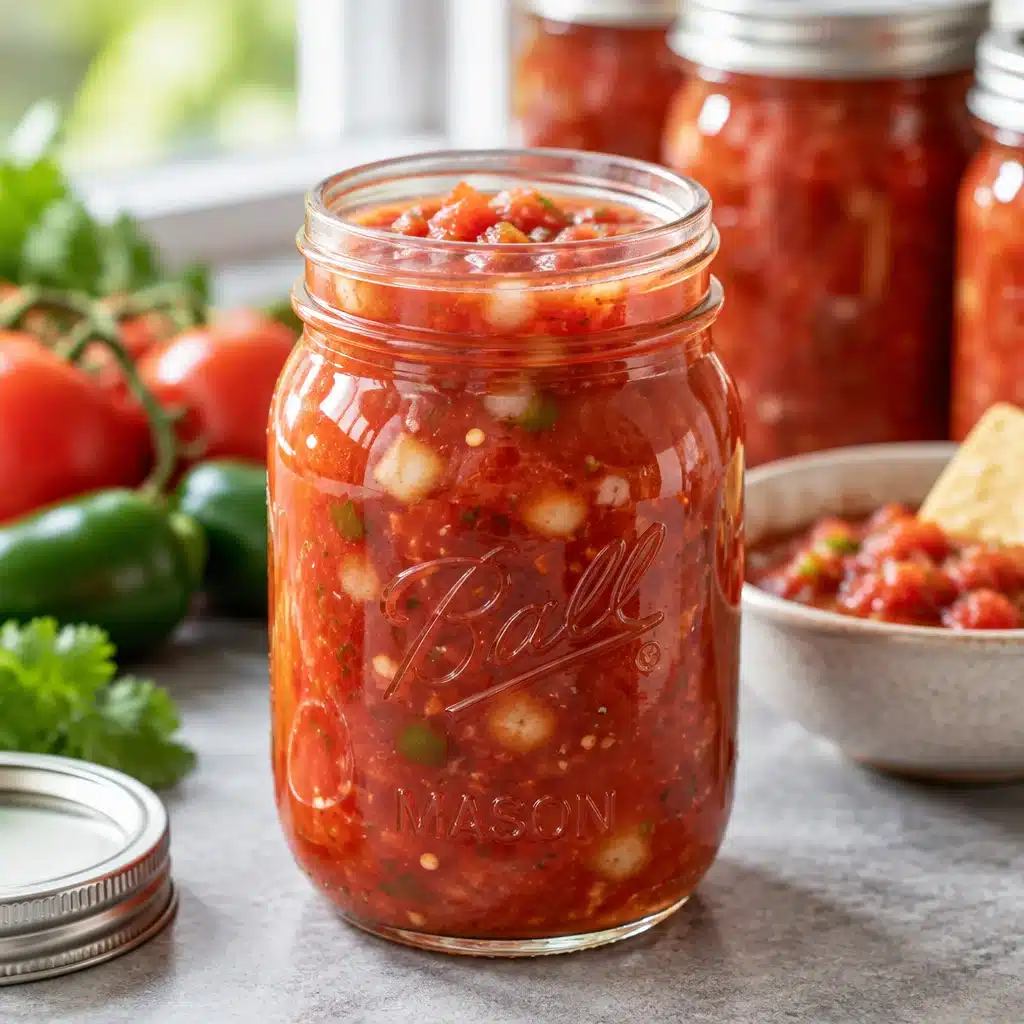
Homemade Salsa with Fresh Tomatoes
Ingredients
Instructions
- Dice the tomatoes, onion, jalapeno, cilantro, and garlic.
- Combine all ingredients in a bowl.
- Let the salsa sit for 10 to 15 minutes to allow flavors to meld.
- For chunky salsa, chop ingredients by hand.
- For a quick version, use a food processor, pulsing ingredients together until desired texture is achieved.
- For a deeper flavor, roast the tomatoes, onion, jalapeno, and garlic before blending.