
Salmon with tomatillo salsa verde is one of those meals I turn to when dinner needs to feel simple after a long day in the kitchen. Chef Thomas has learned that even a good piece of salmon can use a fresh, balanced sauce to bring everything together without adding extra fuss. If you’re new to roasting tomatillos, this guide on how to roast tomatillos makes the process easy. I come back to this recipe because it delivers steady flavor, warmth, and freshness every time.
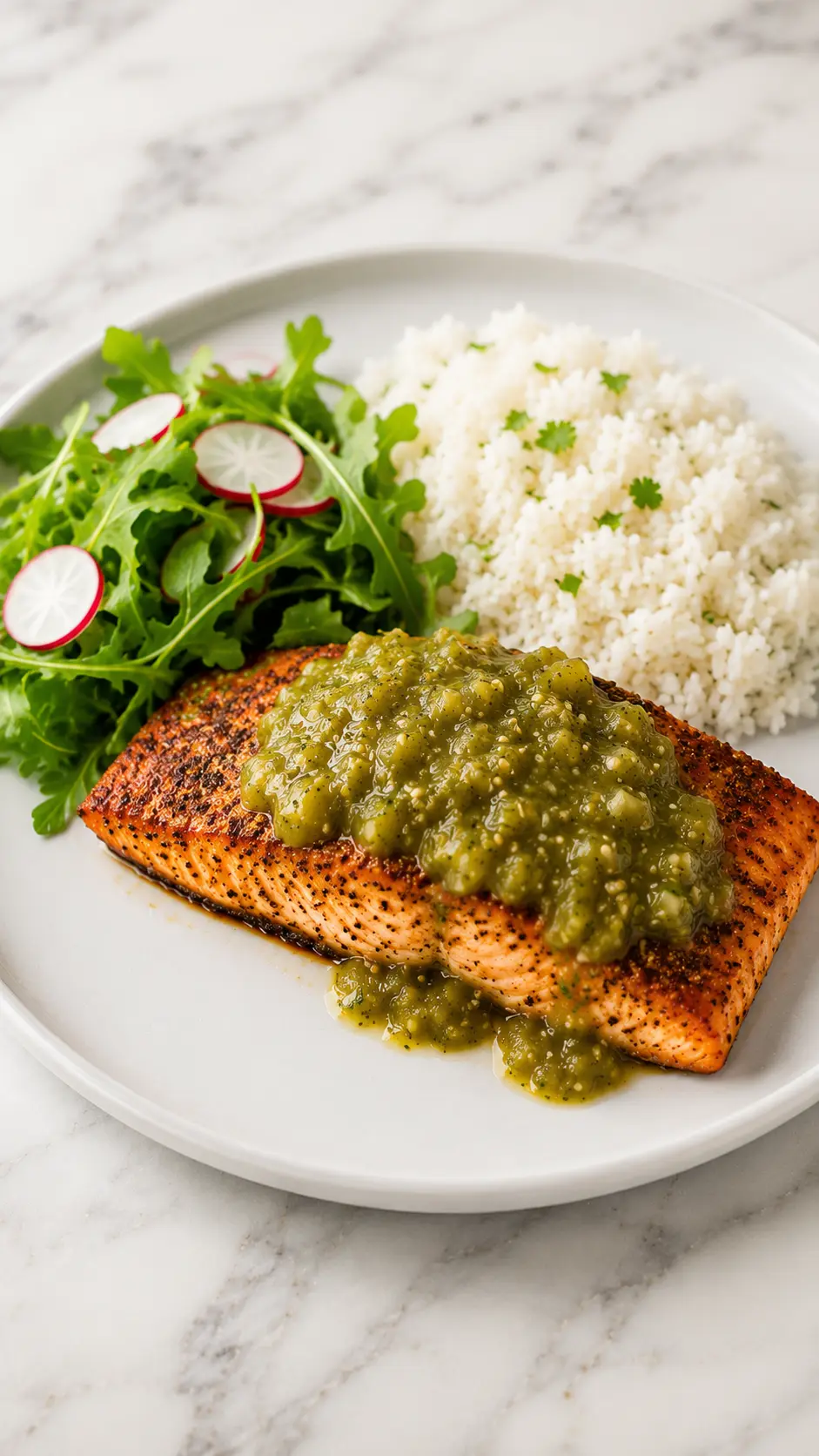
Table of Contents
What Is Salmon with tomatillo salsa verde?
Salmon with tomatillo salsa verde is a simple main dish that pairs tender baked or grilled salmon with a bright, tangy green sauce made from roasted tomatillos, herbs, garlic, and peppers. The combination draws inspiration from Mexican cooking, where tomatillo salsa verde has been a staple for generations, while salmon became a popular choice as home cooks began using the sauce with seafood. Unlike creamy salmon recipes or buttery pan sauces, this version stands out for its fresh, lightly tart flavor that balances the richness of the fish without covering it up. It is also easy to adjust with different herbs or spice levels, making it flexible for weeknight dinners or casual gatherings. Home cooks appreciate that it feels fresh, cooks quickly, and uses everyday ingredients with dependable results. Let’s take a look at everything you’ll need to make it.
Why I Love Salmon with tomatillo salsa verde
Salmon with tomatillo salsa verde is one of the recipes I keep coming back to because it always feels balanced without asking for much. Over the years, Chef Thomas has found that simple combinations often become the ones you remember, and this is one of them.
The rich salmon and the fresh, tangy salsa work together without either one taking over. The recipe comes together with everyday steps that are easy to follow, even on a busy evening. It feels special enough for guests but relaxed enough for a regular weeknight dinner.
- Bright, balanced flavor with every bite
- Simple ingredients that are easy to find
- Straightforward preparation without extra fuss
- Reliable results whether baked or grilled
- Fresh enough for warm days and comforting enough for cooler evenings
I often make this when I want dinner to feel homemade without spending hours in the kitchen. It is one of those recipes that quietly earns a place in the regular meal rotation.
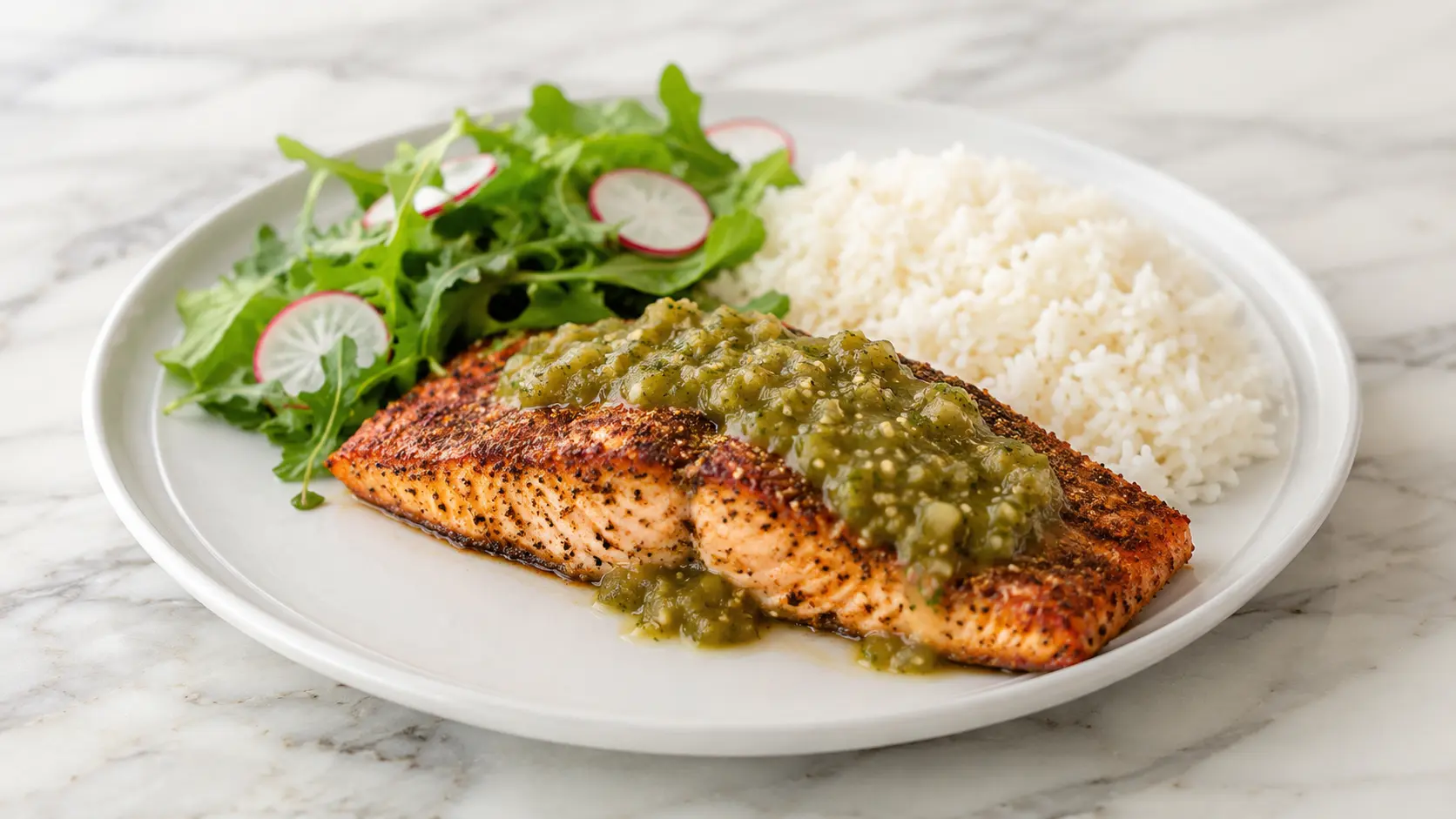
Mexican Salmon with Salsa Verde Sauce
Ingredients
Equipment
Instructions
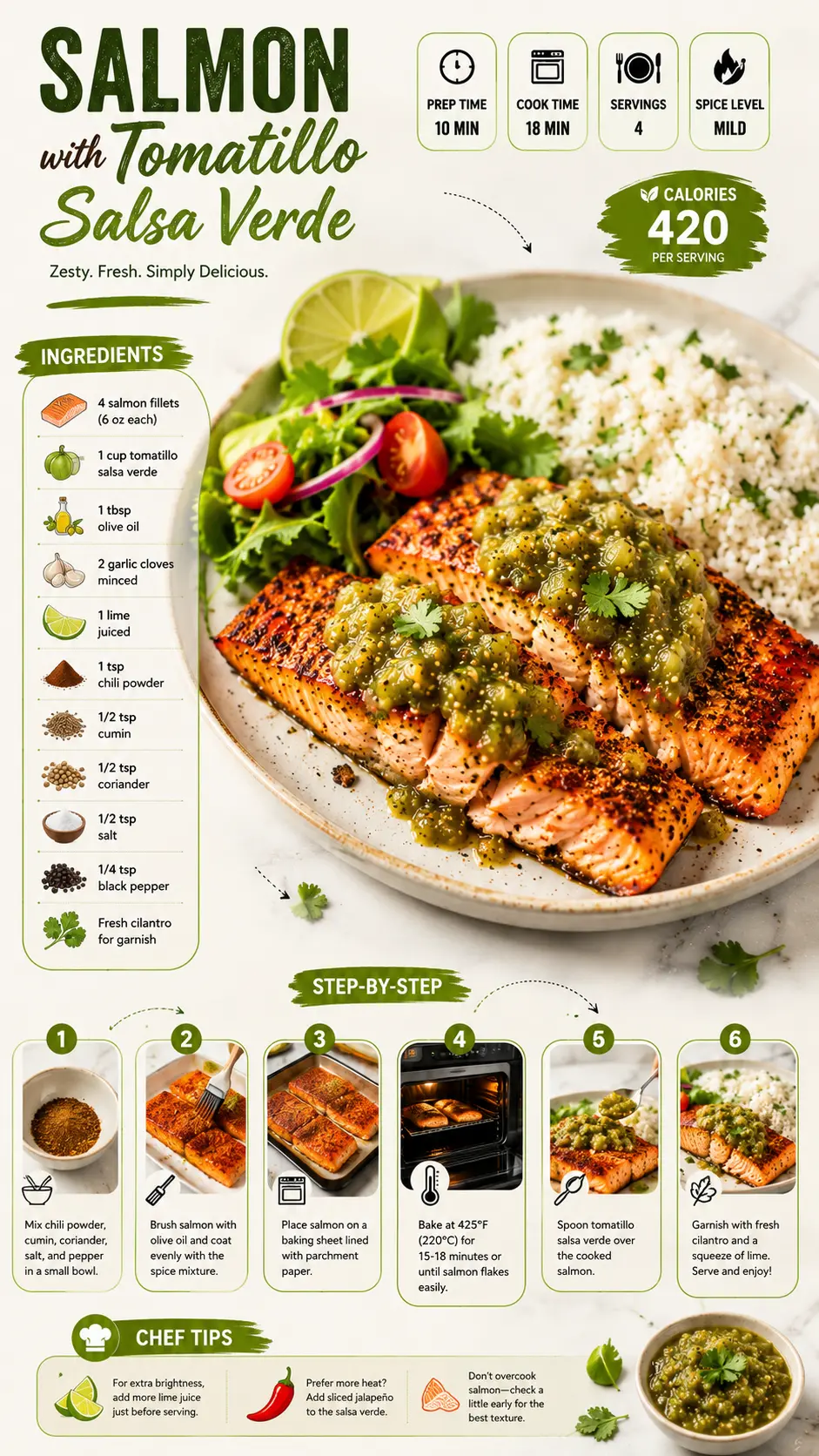
- Preheat oven to 400 degrees.
- Place the salmon fillets, skin side down on a baking sheet that’s been sprayed with PAM. Using a silicone pastry brush, brush salmon fillet flesh with olive oil.
- In a small bowl, combine the cumin, coriander, chile powder and salt and pepper.
- Pat (don’t rub) the spice mix on top of the flesh of the salmon.
- Bake the salmon until the flesh starts to flake. To check doneness, use the back of a fork to press on the salmon. If the salmon starts to flake it’s done. If you start to see albumen (the white liquid in the salmon) the salmon is cooked.
- Divide the salmon among 4 dinner plates and top each with a spoonful of Tomatillo Salsa.
Notes
Ingredients for Salmon with tomatillo salsa verde
| Ingredient | Amount |
|---|---|
| Salmon Fillets rinsed, patted dry | 4 |
| olive oil | 1 Tablespoons |
| Salt and pepper to taste | To taste |
| ground cumin | 1 teaspoon |
| ground coriander | 1 teaspoon |
| New Mexico Chile Powder or ancho chile powder | 1 teaspoon |
| Tomatillo Salsa | 1 Cup |
I like how these few ingredients each have a clear job, letting the salmon stay at the center while the spices add warmth and the tomatillo salsa brings fresh balance. Chef Thomas has found that keeping the ingredient list simple makes the flavors easier to appreciate, and you can learn more about tomatillos from the USDA FoodData Central ingredient reference.
Salmon with tomatillo salsa verde — Ingredient Substitutions
Sometimes you may not have every ingredient on hand, or you may simply prefer a different flavor. These substitutions help you keep the recipe balanced while making the best use of what is already in your kitchen.
| Original Ingredient | Best Substitute | Notes (ratio changes, flavor impact, tips) |
|---|---|---|
| Salmon fillets | Steelhead trout or Arctic char | Use a 1:1 swap. Both have a similar texture and cook in about the same amount of time. |
| Olive oil | Avocado oil | Replace 1:1. It has a mild flavor and handles oven roasting well. |
| Ground cumin | Ground chili cumin blend or ground caraway | Use the same amount. Caraway gives a different flavor but still adds earthy depth. |
| Ground coriander | Ground cumin or ground fennel seed | Replace 1:1. Fennel adds a gentle sweetness, while extra cumin creates a warmer spice profile. |
| New Mexico chile powder or ancho chile powder | Mild paprika with a pinch of cayenne, or chipotle chile powder | Use the same amount. Paprika keeps the dish mild, while chipotle adds a smoky flavor, so use it sparingly. |
| Tomatillo salsa | Green salsa made from roasted green tomatoes or store-bought salsa verde | Replace 1:1. The flavor will be slightly less tangy, but the sauce will still complement the salmon well. This is naturally dairy-free and typically gluten-free, though it’s worth checking the label on packaged products. |
The substitution that changes this recipe the most is the tomatillo salsa because it provides the bright, tangy contrast that balances the rich salmon. If you use a different green salsa, taste it before serving and adjust the seasoning if needed so the finished dish stays balanced rather than overly mild or spicy.
How to Make Salmon with tomatillo salsa verde
Step 1: Preheat the Oven
I start by preheating the oven to 400 degrees so it reaches the right temperature before the salmon goes in. A fully heated oven helps the fillets cook evenly from the beginning.
Visual idea: Oven display set to 400 degrees with an empty baking sheet nearby.
Step 2: Prepare the Salmon
I place the salmon fillets skin side down on a baking sheet that’s been sprayed with PAM, then brush the flesh with olive oil using a silicone pastry brush. The oil gives the surface a light sheen and helps the seasoning stick.
Chef Thomas’s Tip:
Pat the fillets dry before brushing on the oil. A dry surface helps the spices stay in place during baking.
Visual idea: Salmon fillets on a baking sheet while olive oil is brushed over the top.
Step 3: Mix the Seasoning
I combine the cumin, coriander, chile powder, and salt and pepper in a small bowl until the spices are evenly blended. You should notice a warm, earthy aroma as they come together.
Visual idea: A small bowl of mixed spices beside measuring spoons.
Step 4: Season the Salmon
I gently pat the spice mixture onto the flesh instead of rubbing it. This keeps the coating even and helps the spices stay where they belong.
Chef Thomas’s Tip:
A light pat is enough. Pressing too hard can remove moisture from the surface of the fish.
Visual idea: Hands gently pressing the spice mixture onto the salmon fillets.
Step 5: Bake Until Flaky
I bake the Salmon with tomatillo salsa verde until the flesh begins to flake when pressed gently with the back of a fork. If you notice a little white albumen appearing, it’s a sign the salmon is fully cooked and ready to come out of the oven.
Chef Thomas’s Tip:
Check the salmon a minute or two before you think it’s done. It’s easier to keep it moist than to fix an overcooked fillet.
Visual idea: A fork gently testing a baked salmon fillet as it begins to flake.
Step 6: Finish and Serve
I divide the salmon among four dinner plates and top each serving with a spoonful of Tomatillo Salsa. The fresh salsa adds a bright finish that balances the warm spices.
Visual idea: Finished salmon on dinner plates with vibrant green tomatillo salsa spooned over the top.
How I Serve Salmon with tomatillo salsa verde
Salmon with tomatillo salsa verde is one of the meals I reach for when I want dinner to come together without much fuss after a busy day. Chef Thomas has served it this way for years because it feels just as welcome on a quiet weeknight as it does when friends gather around the table.
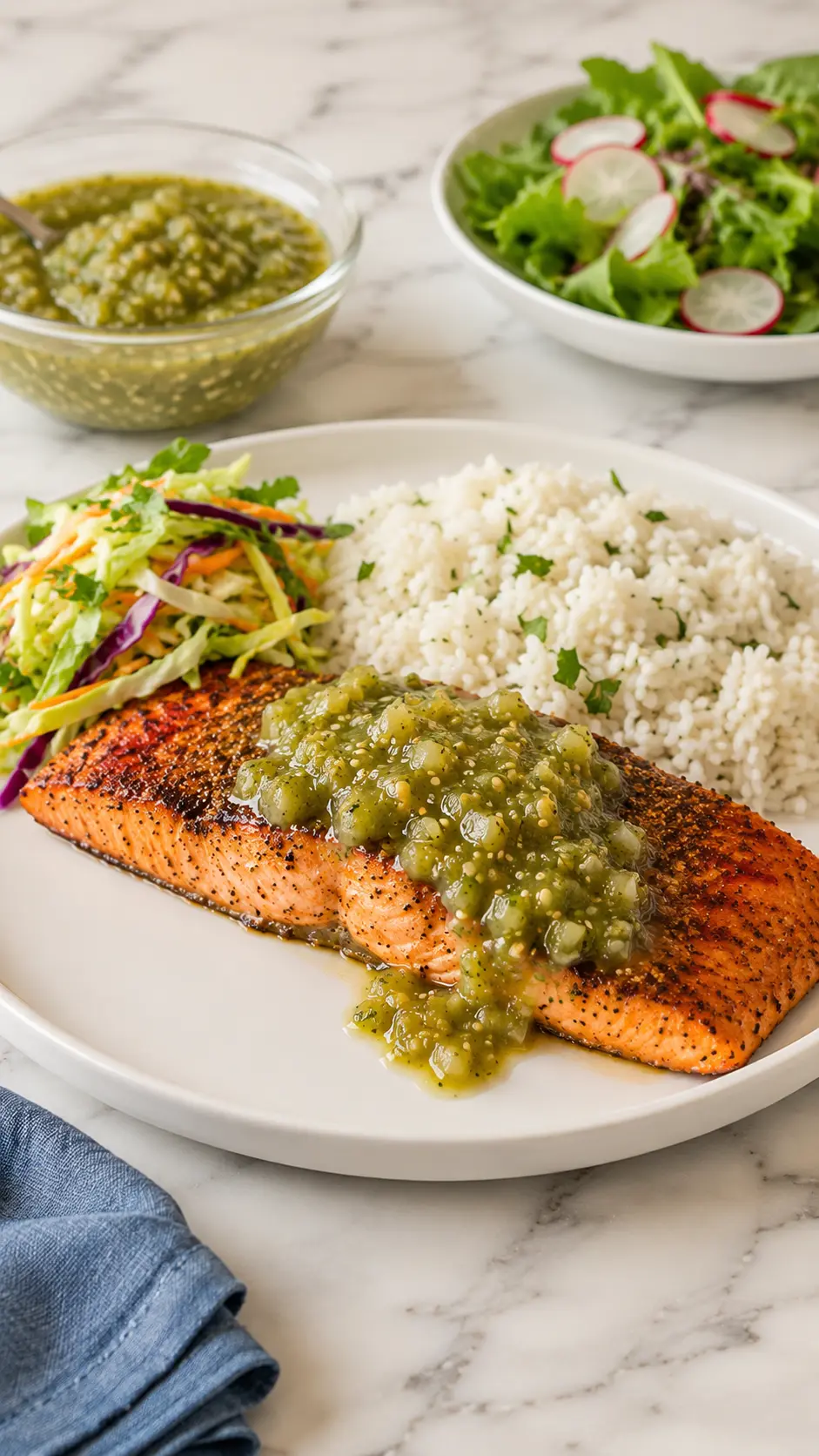
Most often, I serve the salmon with a scoop of warm rice and a simple green salad. The fresh tomatillo salsa brings enough brightness that the meal feels balanced without needing extra sauces or rich side dishes. If you’re making the salsa from scratch, I recommend reading how to roast tomatillos before you begin.
When I have leftovers, I flake the salmon into warm corn tortillas with another spoonful of salsa for an easy lunch. If I’m serving a larger group, I keep the salmon portions a little smaller and add another vegetable side so everyone leaves the table satisfied.
- Steamed white or brown rice
- Roasted baby potatoes
- Grilled zucchini or asparagus
- A crisp green salad
- Warm corn tortillas
Variations and Adjustments for Salmon with tomatillo salsa verde
Salmon with tomatillo salsa verde is a recipe I’ve adjusted in small ways over the years depending on who was coming to dinner and what I had on hand. Chef Thomas has found that a few thoughtful changes can work well as long as the basic cooking method stays the same.
Mild or Spicy
If you prefer a gentler flavor, reduce the New Mexico chile powder or choose ancho chile powder for a softer, slightly sweeter taste. When I want a little more heat, I add an extra pinch of chile powder instead of changing the rest of the seasoning.
Protein or Ingredient Swaps
Steelhead trout or Arctic char can be used in place of salmon with very similar cooking times and texture. If you only have store-bought salsa verde, it works well, though a homemade tomatillo salsa usually has a brighter, fresher flavor.
Cooking Method Changes
I often bake this recipe because it is simple and dependable, but the seasoned fillets also cook well on a clean, lightly oiled grill. Watch the fish closely, since thinner fillets may finish a few minutes sooner than thicker ones.
Sauce Texture
For a smoother finish, blend the tomatillo salsa a little longer before serving. If you enjoy more texture, leave it slightly chunky so each bite has a little more character.
The base method is what gives this recipe its reliable results. Small adjustments are easy to make, but changing too many things at once can make it harder to get the same balanced flavor and texture.
Storing and Making Salmon with tomatillo salsa verde Ahead
Salmon with tomatillo salsa verde is one of the recipes I often make with leftovers in mind because it holds up well when handled with a little care. Chef Thomas has found that a few simple habits keep the flavor and texture enjoyable without adding extra work.
Store any leftover salmon and tomatillo salsa in separate airtight containers in the refrigerator for up to 3 days. The salmon will stay moist, though the salsa may soften a little as it sits, which is completely normal.
I find that the cooked salmon freezes reasonably well for up to 2 months if it is wrapped tightly before placing it in a freezer-safe container or bag. I prefer to make a fresh batch of tomatillo salsa after thawing because its bright texture is at its best when freshly prepared.
The salmon can be seasoned a few hours before cooking and kept covered in the refrigerator until you’re ready to bake it. The tomatillo salsa can also be prepared a day ahead, but I wait to spoon it over the salmon until just before serving so everything keeps its fresh flavor.
For reheating, I warm the salmon gently in a 300 degree oven until it is heated through. It should stay tender and flake easily with a fork. I avoid using high heat because it can dry out the fish and dull the fresh flavor of the salsa.
Frequently Asked Questions About Salmon with tomatillo salsa verde
Can I use frozen salmon for this recipe?
Yes. I thaw the salmon completely in the refrigerator and pat it dry before adding the oil and seasonings. Removing excess moisture helps the spices stick and gives the fish a better texture after baking.
What can I use if I can’t find tomatillo salsa?
A good-quality store-bought salsa verde is the closest option. The flavor may be a little different, but it still pairs well with the seasoned salmon. If you have fresh tomatillos, making your own salsa adds a brighter finish.
How do I know when the salmon is done cooking?
I gently press the thickest part of the fillet with the back of a fork. When it flakes easily, it’s ready to serve. Chef Thomas has learned that checking a little early helps prevent overcooking.
Can I make this recipe less spicy?
Yes. You can use ancho chile powder instead of a hotter chile powder, or simply reduce the amount a little. The cumin and coriander still provide plenty of flavor without making the dish feel too mild.
Can I grill the salmon instead of baking it?
Yes. I grill the fillets over medium heat until they flake easily with a fork. Keep the grill lightly oiled so the fish releases cleanly when it’s ready to turn or remove.
Should I add the tomatillo salsa before or after cooking?
I always spoon the salsa over the salmon after it comes out of the oven. Chef Thomas finds that this keeps the salsa fresh and bright while letting the seasoned fish stay the focus of each bite.
Final Thoughts on Salmon with tomatillo salsa verde
Salmon with tomatillo salsa verde is one of the recipes I return to because it stays simple, dependable, and enjoyable every time I make it. Chef Thomas has prepared versions of this meal often enough to know that a few good ingredients and a steady approach are usually all you need for a satisfying dinner. If you’re looking for another everyday meal with similar flavors, take a look at Tomatillo Chicken Recipe. It’s another recipe I enjoy keeping in the regular dinner rotation.