
How to Can Tomatillo Salsa Verde is one of those things I put off for years because it sounded fussy, like a project for someone with a dedicated pantry and matching jars. Then one late summer weekend I ended up with a counter full of tomatillos and that was that. If you are still getting to know this fruit, I have a quick, helpful explainer on what a tomatillo is that makes the whole salsa verde thing click fast. Once you do it once, it feels way less intimidating and way more like a cozy kitchen rhythm. Plus, opening a jar of bright green salsa in the middle of winter is honestly a little mood boost. 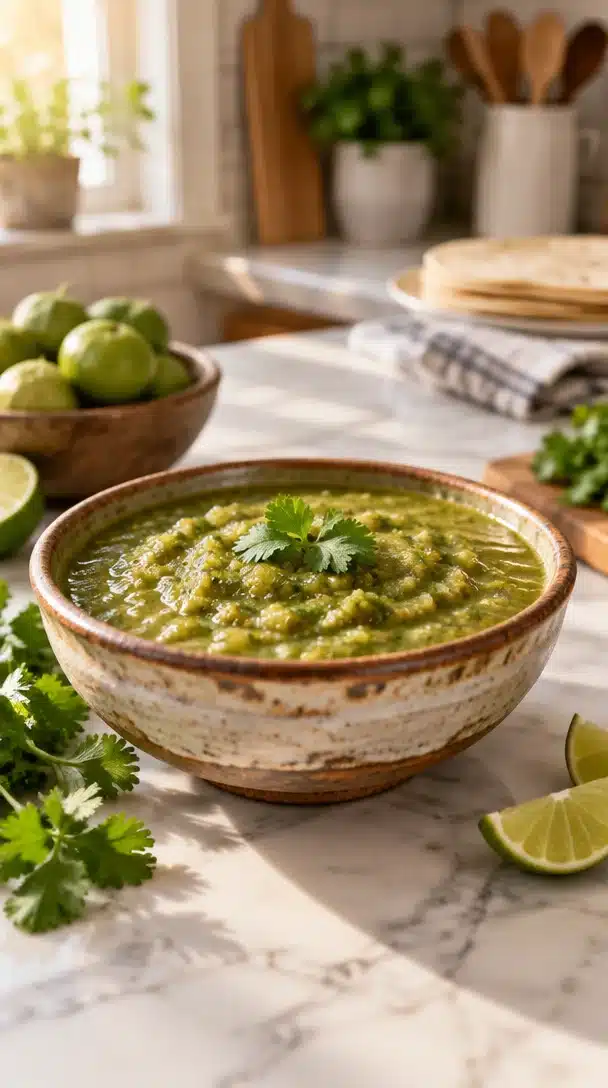
Table of Contents
Key Ingredients for Salsa Verde
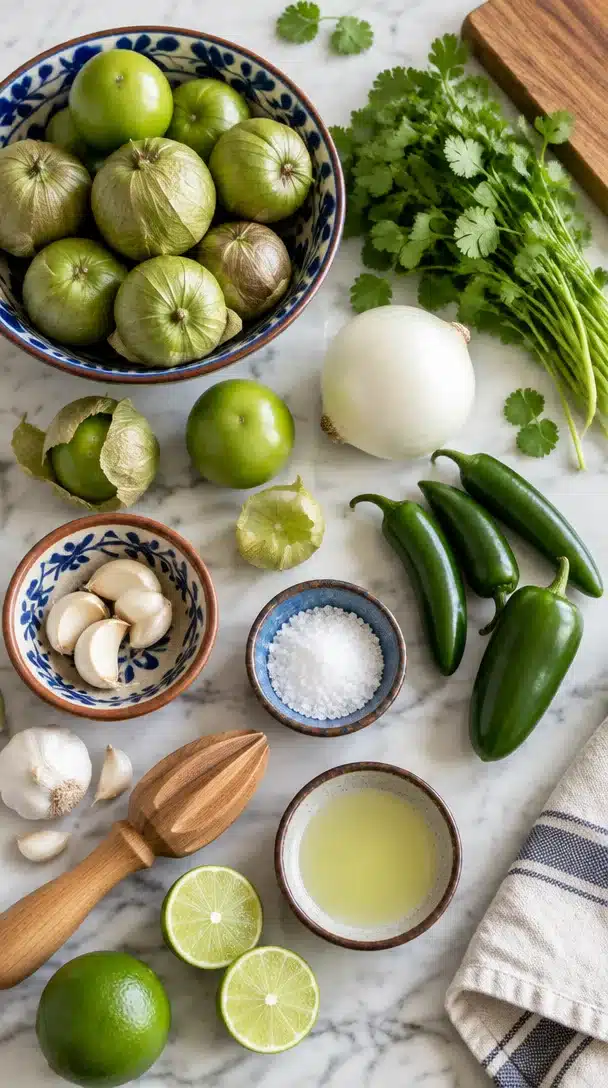
Let us keep this simple and real: the best salsa verde starts with good tomatillos and a flavor plan. I like mine tangy, a little smoky, and definitely not bland. You can tweak heat and salt later, but you cannot fix tired produce.
Here is what I reach for most of the time:
- Tomatillos: firm, bright, and sticky under the husk is a good sign. Peel, rinse well, and wash off that natural tackiness.
- Onion: white or yellow both work. White tastes sharper to me, which I like in salsa verde.
- Garlic: a few cloves make everything taste more like itself.
- Peppers: jalapeno for everyday, serrano for more heat. You control the burn by using fewer peppers or removing seeds.
- Cilantro: totally optional, but I love the freshness. If you are a cilantro hater, skip it and add a little extra onion.
- Lime juice: for fresh flavor, but do not rely on it for canning safety.
- Bottled lime or bottled lemon juice: this is the one that matters for acidity in safe canning recipes. I know, fresh tastes better, but bottled is consistent.
- Salt: I use canning or kosher salt. Table salt can make things taste a little harsh.
If you are a roasted salsa person, you might prefer a deeper, toastier vibe. I have used this style too, and it is incredible with tacos. If you want that version, check out this helpful guide for a roasted tomatillo salsa verde canning recipe.
Before we move on, one quick note: do not add random low acid ingredients like extra peppers, corn, or black beans and then can it like normal. That is how you get into unsafe territory. You can always stir fun add ins into a jar after you open it.
Essential Tools for Canning Salsa Verde
You do not need a fancy setup, but you do need a few basics. The first time I canned, I tried to hack it with whatever I had, and I ended up stressed and splashing hot salsa on the stove. Learn from me.
My go to tools:
Water bath canner or a big stockpot: It needs to be deep enough that the jars are covered by at least 1 inch of water.
Canning jars with lids and bands: Use jars made for canning. No recycled pasta sauce jars.
Jar lifter: This is the tool I will never skip. It keeps you from dropping hot jars and panicking.
Wide mouth funnel: Cleaner filling, less mess on jar rims.
Bubble remover or a chopstick: You need to get air bubbles out before sealing.
Clean towels and a small bowl of vinegar: Vinegar on a towel is great for wiping jar rims if they get messy.
Kitchen scale or measuring cups: Canning is not the time to eyeball the acid or liquid ratios.
Also, plan your workspace. I like setting everything up like a little assembly line: hot jars on one side, pot of salsa on the stove, and a clear spot for filled jars. It makes the whole process feel calmer.
If you want an extra detailed walkthrough that mirrors what I do in my kitchen, I also keep a reference open for how to can tomatillo salsa verde while I work. It is nice to have a checklist vibe when the pot is bubbling and you are trying to remember headspace.
Step-by-Step Canning Instructions
This is the part where it all comes together. I am going to explain it in plain language, the way I would talk a friend through it while we hang out in the kitchen.
First, make sure you are following a tested recipe. That means the amounts of tomatillos, onions, peppers, and especially bottled citrus are there for a reason. Safe canning depends on the right acidity and processing time.
Here is the basic flow that works for most tested salsa verde canning recipes:
1) Prep the jars and canner
Wash jars, lids, and bands in warm soapy water. Keep jars hot until filling. You can keep them in a pot of simmering water or run them through a hot dishwasher cycle and leave them in there until you are ready.
Fill your canner with water and start heating it. You want the water hot but not wildly boiling when you add filled jars.
2) Cook the salsa
Peel tomatillos and rinse well. Chop your onions and peppers. Simmer tomatillos with peppers and onion until everything softens. Then blend to your preferred texture. I like it mostly smooth with a little texture so it clings to chips.
Put the blended mixture back in the pot. Add garlic, salt, and the required bottled citrus. Simmer a few minutes so the flavors settle.
3) Fill jars and remove bubbles
Use a funnel and ladle hot salsa into hot jars. Leave the headspace your recipe calls for, often about 1/2 inch for salsa. Run a bubble remover or chopstick around the inside of the jar to release trapped air. Adjust headspace if needed.
Wipe the rim with a clean damp towel or a towel with a little vinegar. Put the lid on, then screw the band on fingertip tight, not cranked down.
4) Process in a water bath
Lower jars into the canner. Make sure the water covers the jars by at least 1 inch. Put the lid on the canner and bring to a full boil. Start timing only when it is truly boiling. Process for the time listed in your tested recipe, and adjust for altitude if needed.
5) Cool and check seals
When time is up, turn off the heat and let jars sit in the hot water for 5 minutes. Then lift them out and set them on a towel. Let them cool untouched for 12 to 24 hours.
After cooling, check the seals. The lid should not flex up and down when you press the center. Remove the bands for storage, label the jars, and stash them somewhere cool and dark.
;
Once you get into the rhythm, How to Can Tomatillo Salsa Verde feels less like a science experiment and more like stocking your own little salsa stash. I usually make a double batch because it is basically the same amount of work.
Tips for a Successful Canning Experience
These are the things I wish someone had told me early on, when I was nervously hovering over the stove like the salsa might judge me.
Keep everything hot. Hot salsa into hot jars goes into hot water. That temperature flow helps prevent jar shock and helps processing work the way it should.
Taste before you jar it. You can adjust salt and cilantro before canning. Just do not adjust the ratios of the low acid ingredients or the bottled citrus in a tested recipe.
Blend in batches. If you have a small blender, do not overfill it with hot salsa. Steam builds fast and can pop the lid up. I vent the blender carefully and use a towel for safety.
Label like you mean it. I write the date and whether it is mild or hot. In six months, all green jars look the same.
Plan for how you will eat it. Yes, chips and tacos, but also eggs, soup, and quick dinners. One of my favorite lazy meals is spooning salsa verde over salmon. If that sounds good, you should try this salmon with tomatillo salsa verde idea sometime. It makes a weeknight feel special without much work.
And a practical storage note: if a jar does not seal, just pop it in the fridge and eat it within a week or two. That is not a failure, that is bonus fresh salsa.
Common Mistakes to Avoid When Canning
I am not here to scare you, but I am big on doing canning the safe way. Salsa is a mix of low acid ingredients, so you really want to follow tested guidance.
Mistake 1: Using fresh lime juice instead of bottled in a canning recipe
Fresh is delicious, but acidity varies. Bottled lemon or lime juice is standardized, which is why tested recipes call for it.
Mistake 2: Tweaking the recipe too much
Adding extra onion, extra peppers, or thickening with cornstarch changes how heat moves through the jar. If you want it thicker, simmer it down before canning only if the tested recipe allows it, or thicken after opening.
Mistake 3: Not adjusting for altitude
Water boils at a lower temperature at higher elevations, so you may need more processing time. It is a boring detail, but it matters.
Mistake 4: Skipping headspace or not removing bubbles
Too little headspace can cause siphoning, where salsa leaks out during processing. Bubbles can mess with headspace and sealing too.
Mistake 5: Storing with bands on
Bands can trap moisture and hide a broken seal. Once jars are sealed and cooled, take the bands off for storage.
If you are reading this because you have a mountain of tomatillos and you are determined to make it work, I get it. How to Can Tomatillo Salsa Verde is exactly the kind of kitchen project that pays you back later.
Before you head off, I like to cross check my process with a few trusted sources once in a while, especially if I have not canned in a few months. These are worth bookmarking for extra confidence and recipe inspiration: Canning Salsa Verde, Made With Tomatillos – Heartbeet Kitchen, Roasted Tomatillo Salsa Verde Canning Recipe – Grow a Good Life, and Roasted Salsa Verde Canning Recipe – Ball Mason Jars. I love comparing little differences in technique, then sticking with the tested rules so I know my pantry is safe.
And that is it. Once you have a few jars lined up on the counter, you will feel ridiculously proud. Then you will crack one open, taste that bright tangy kick, and you will already be plotting your next batch of How to Can Tomatillo Salsa Verde.
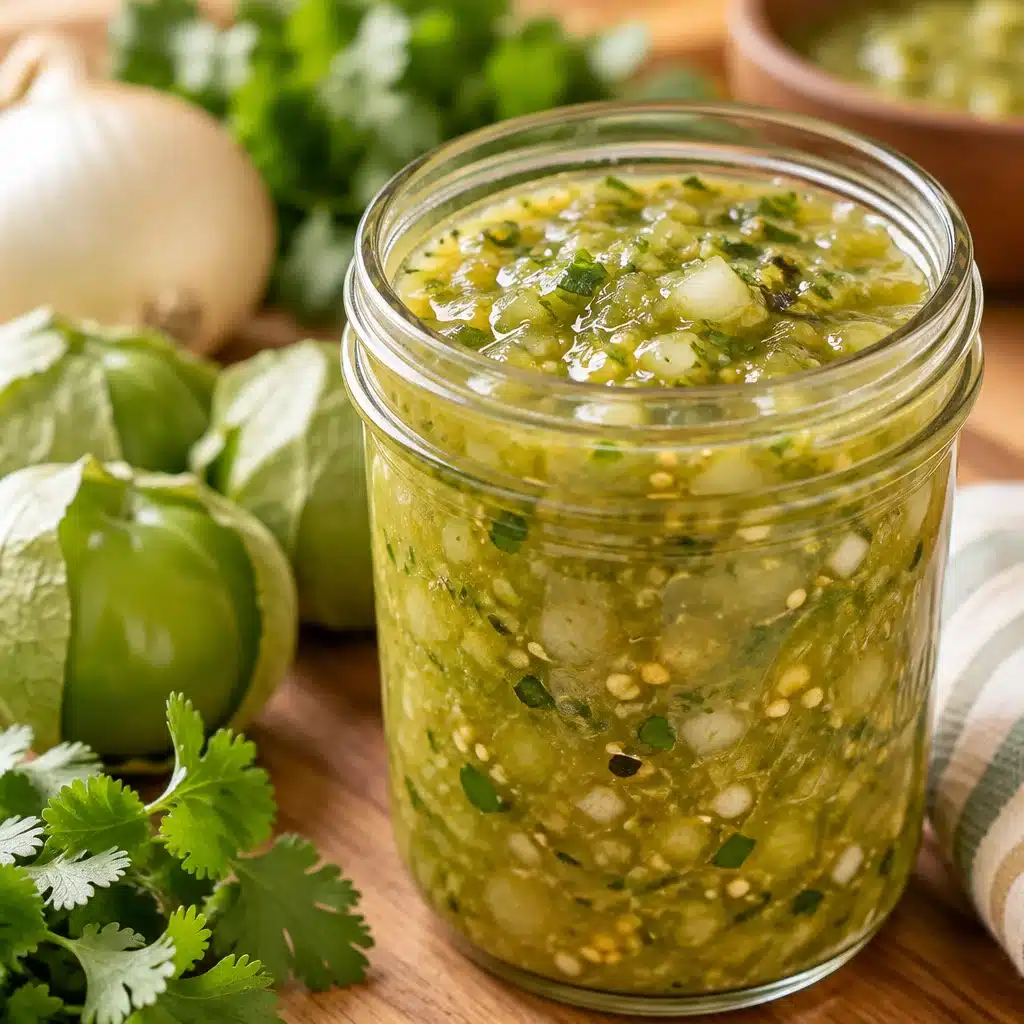
Tomatillo Salsa Verde
Ingredients
Instructions
- Wash jars, lids, and bands in warm soapy water. Keep jars hot until filling.
- Fill the canner with water and start heating it to a hot but not boiling temperature.
- Peel and rinse tomatillos. Chop onions and peppers.
- Simmer tomatillos with onions and peppers until softened, then blend to your preferred texture.
- Return the blended mixture to the pot, adding garlic, salt, and the required bottled citrus. Simmer for a few minutes.
- Ladle hot salsa into hot jars leaving headspace as recommended in your recipe.
- Remove air bubbles using a bubble remover or chopstick. Adjust headspace if needed.
- Wipe jar rims with a clean damp towel and place lids on jars.
- Screw the bands on fingertip tight.
- Lower jars into the canner, ensuring they are covered by at least 1 inch of water.
- Cover the canner and bring to a full boil. Start timing once it's boiling.
- Process jars according to your tested recipe's timing.
- After processing, let jars sit in the hot water for 5 minutes then lift them out and set to cool for 12 to 24 hours.
- Check the seals by pressing the center of the lids; they should not flex up and down.