
Tomatillo hot sauce is one of those things I make when dinner needs a little help and the fridge looks nearly empty. I have stood at the counter with a handful of tomatillos and wondered if fresh or canned would work better, which is why I often point cooks to fresh vs canned tomatillos.
Chef Thomas likes this sauce because it comes together quickly and brings a bright, balanced flavor to tacos, eggs, and grilled chicken.
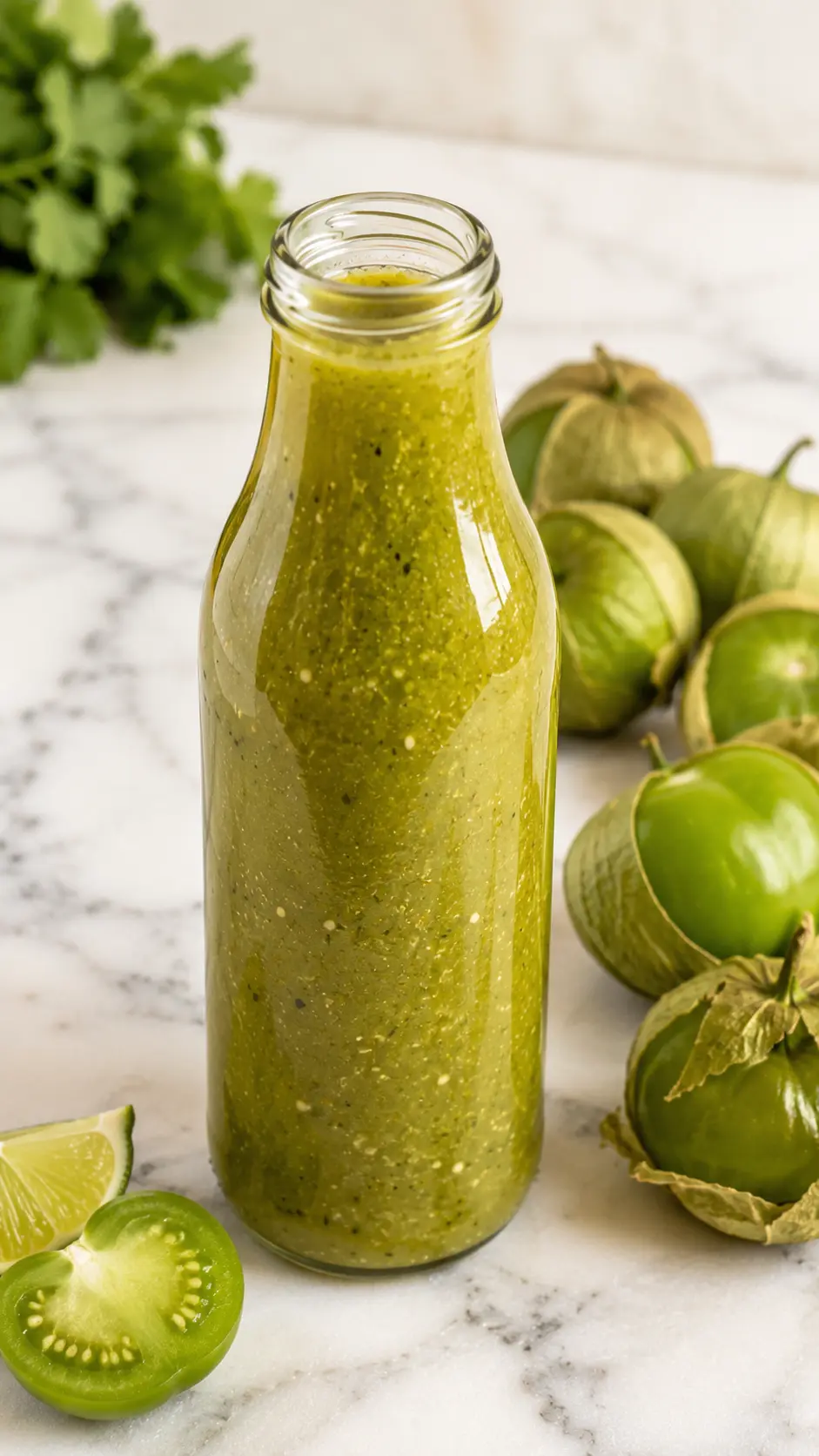
Table of Contents
What Is Tomatillo hot sauce?
Tomatillo hot sauce is a tangy green sauce made by blending tomatillos with chiles, garlic, and a few simple seasonings. It comes from Mexican cooking, where green salsas have been served for generations and became widely known through tacos, street food, and family recipes. Unlike red hot sauces that rely on tomatoes or dried peppers, this sauce gets its bright flavor and fresh taste from tart tomatillos.
The texture can be smooth or slightly chunky, and the heat level is easy to adjust with different peppers. Home cooks enjoy making it because the ingredients are simple, the sauce works with many meals, and a small batch can change the flavor of an ordinary dinner. The ingredients below show how easy it is to put together.
Why You’ll Love Tomatillo Hot Sauce
Tomatillo hot sauce is one of those recipes I have come to appreciate more with time, and Chef Thomas keeps coming back to it because it does so much with very little effort.
The sauce tastes fresh and tangy without covering up the food underneath it. The steps are simple, the ingredients are easy to work with, and it fits nicely into busy weeknights when dinner needs a little extra flavor.
- Bright, balanced flavor that goes with many meals
- Made with a short list of everyday ingredients
- Easy to adjust if you like more or less heat
- Keeps well for several days in the refrigerator
- Works with tacos, eggs, grilled meats, and roasted vegetables
I make a batch of this most weeks because there always seems to be something in the kitchen that tastes better with a spoonful of it.
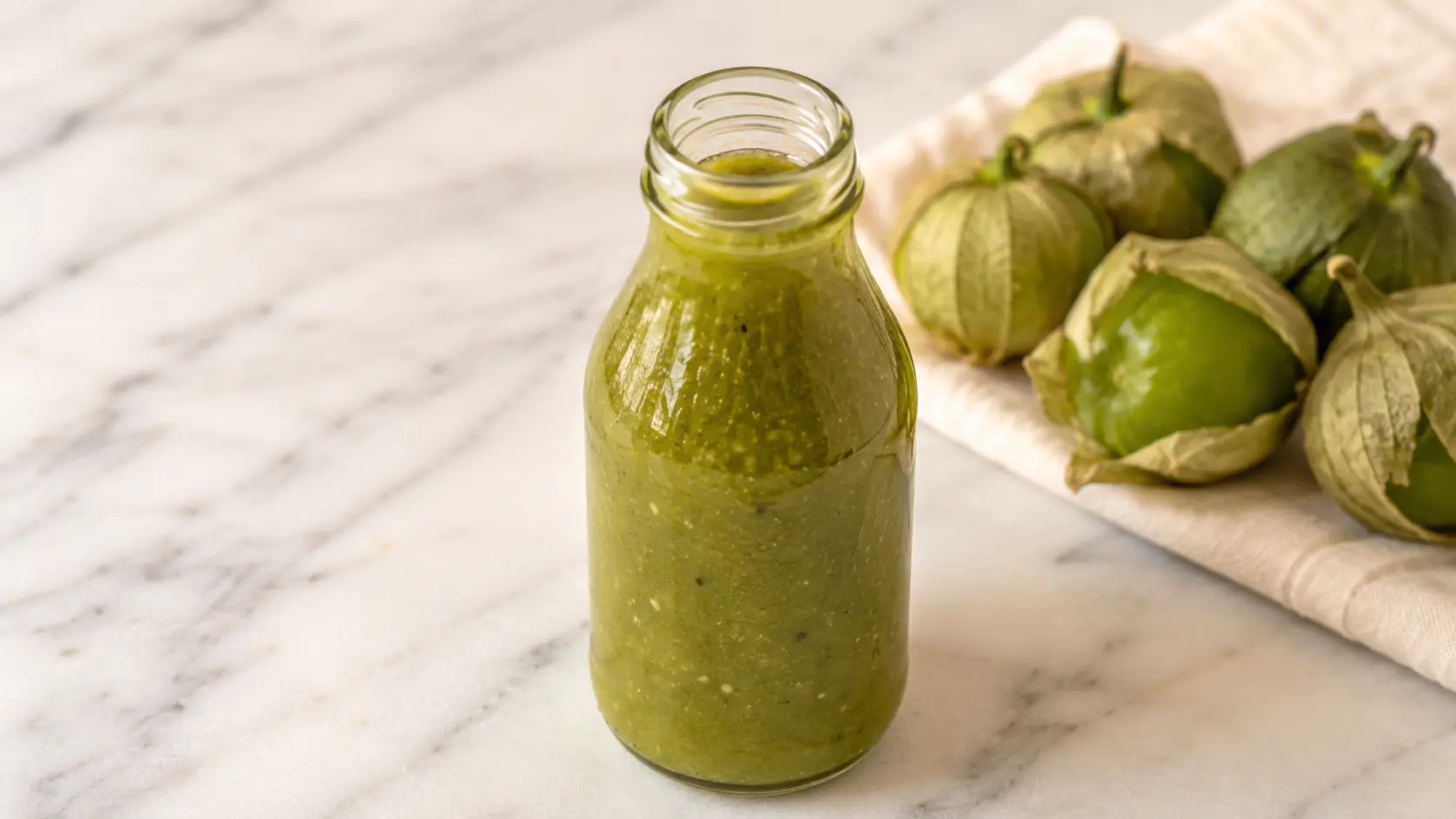
Tomatillo Hot Sauce
Ingredients
Equipment
Instructions
- Bring water to boil in a saucepan. Add the tomatillos, onion, garlic and jalapeño pepper. Lower the heat and simmer for about 15 minutes (until softened). Drain the liquid.
- In a blender, purée the tomatillos, onion, garlic, jalapeño pepper, vinegar and cilantro. Make sure to take the vent cap off and cover the hole with a kitchen towel while blending to avoid splatter.
- Strain the seeds out of the hot sauce with a fine-mesh strainer. You can use the back of a spoon to push the juices through the strainer into a separate container or bowl. Season with salt, to taste.
- Store in a bottle in the refrigerator for up to 3 weeks. Shake the bottle before each use.
Notes
Ingredients for Tomatillo hot sauce
| Ingredient | Amount |
|---|---|
| water | 2 cups |
| tomatillos – husked, cleaned and quartered–about 2 cups | 9 ounces |
| onion – chopped (white or yellow) | ¼ cup |
| garlic – peeled | 2 cloves |
| jalapeño peppers – stem removed (or serrano peppers) | 1 to 3 |
| white vinegar | ½ cup |
| cilantro – chopped (optional) | ¼ cup |
| salt – to taste |
I like how these ingredients come together to make a sauce that is bright, tangy, and balanced. The vinegar adds sharpness, the peppers bring gentle heat, and the cilantro rounds out the fresh flavor that Chef Thomas looks for in a simple green sauce. If you are curious about the fruit at the center of this recipe, this page about tomatillos gives a helpful bit of background.
Tomatillo hot sauce — Ingredient Substitutions
| Original Ingredient | Best Substitute | Notes (ratio changes, flavor impact, tips) |
|---|---|---|
| Tomatillos | Green tomatoes | Use the same amount. Green tomatoes are less tart, so the sauce will taste milder and slightly sweeter. |
| Onion | Shallots | Replace in a 1:1 ratio. Shallots give a softer, sweeter flavor and blend smoothly into the sauce. |
| Garlic | Garlic powder | Use 1/4 teaspoon garlic powder for each clove. The sauce will have a gentler garlic flavor. |
| Jalapeño peppers | Serrano peppers | Use the same number of peppers, but expect more heat. Start with one and taste before adding more. |
| White vinegar | Apple cider vinegar | Replace in a 1:1 ratio. It adds a light fruity note and slightly softens the sharp acidity. |
| White vinegar | Distilled gluten-free vinegar | Use the same amount. This is a good option if you need to avoid vinegar made from gluten-containing grains. |
| Cilantro | Flat-leaf parsley | Use the same amount. The sauce will lose some citrusy flavor but still stay fresh and green. |
The swap that changes this recipe the most is replacing tomatillos with green tomatoes because the signature tang becomes much softer. Changing the peppers also has a big effect, since serranos can make the sauce noticeably hotter than jalapeños. Taste the sauce before bottling so you can adjust the balance if needed.
How to Make Tomatillo hot sauce
Step 1: Simmer the vegetables
I bring the water to a boil, then add the tomatillos, onion, garlic, and jalapeño pepper. I lower the heat and let everything simmer for about 15 minutes, until the tomatillos look soft and dull green.
Step 2: Drain the mixture
I pour off the cooking liquid and let the vegetables sit for a minute so the extra moisture can drip away. This helps the sauce stay thick and full of flavor.
Step 3: Blend the sauce
I place the cooked vegetables in a blender with the vinegar and cilantro, then purée until smooth. The Tomatillo hot sauce should turn a bright green and smell fresh and tangy.
Step 4: Strain and season
I pour the sauce through a fine-mesh strainer and press gently with the back of a spoon to remove the seeds. Then I add salt to taste and stir until the seasoning is evenly mixed.
Step 5: Bottle and chill
I pour the finished sauce into a clean bottle and store it in the refrigerator for up to three weeks. Before serving, I give the bottle a good shake because the ingredients settle as they rest.
How I Serve Tomatillo hot sauce
Tomatillo hot sauce is something I keep in the refrigerator for busy evenings, and Chef Thomas usually puts it on the table when dinner needs a little extra flavor without much fuss.
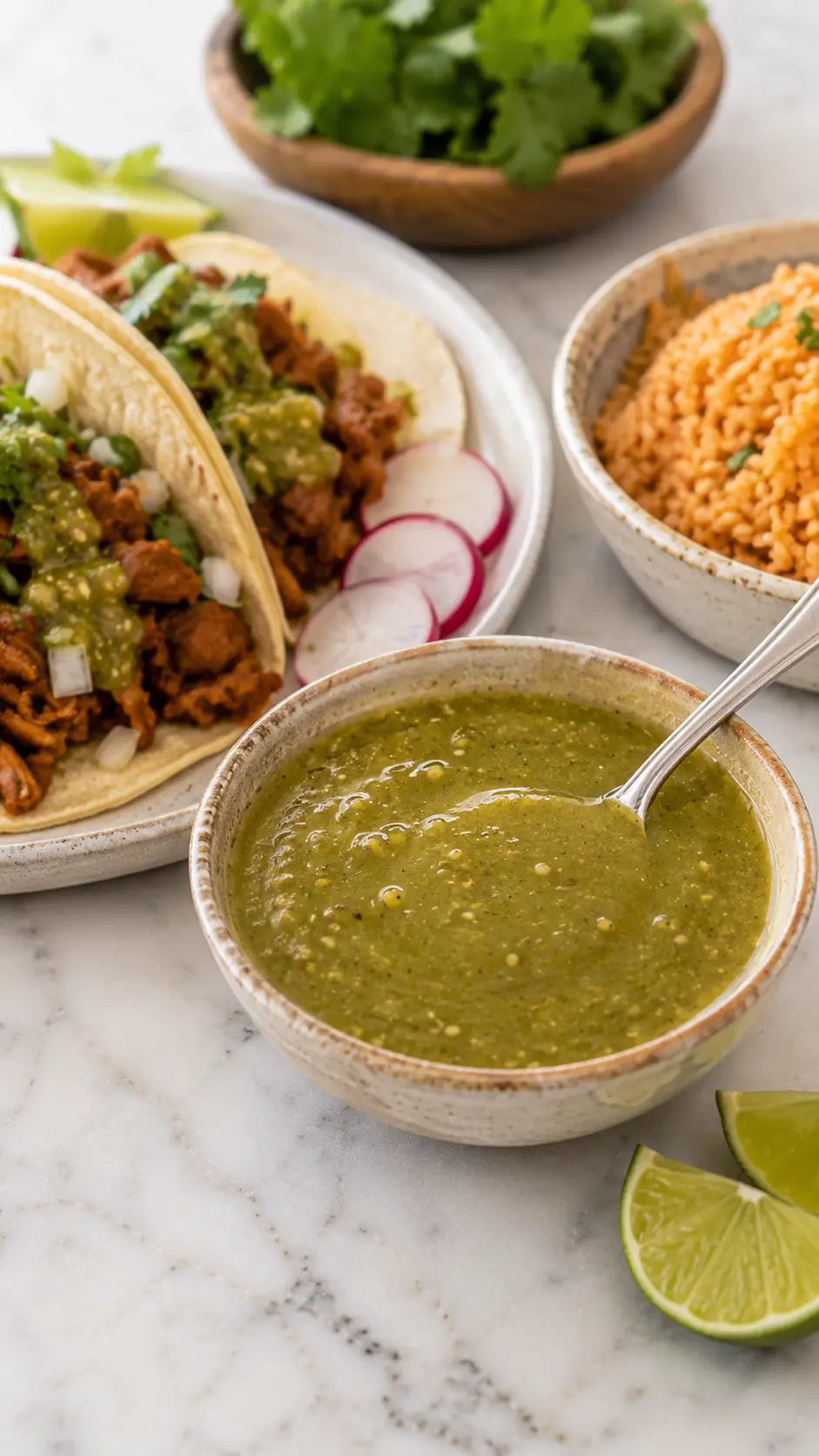
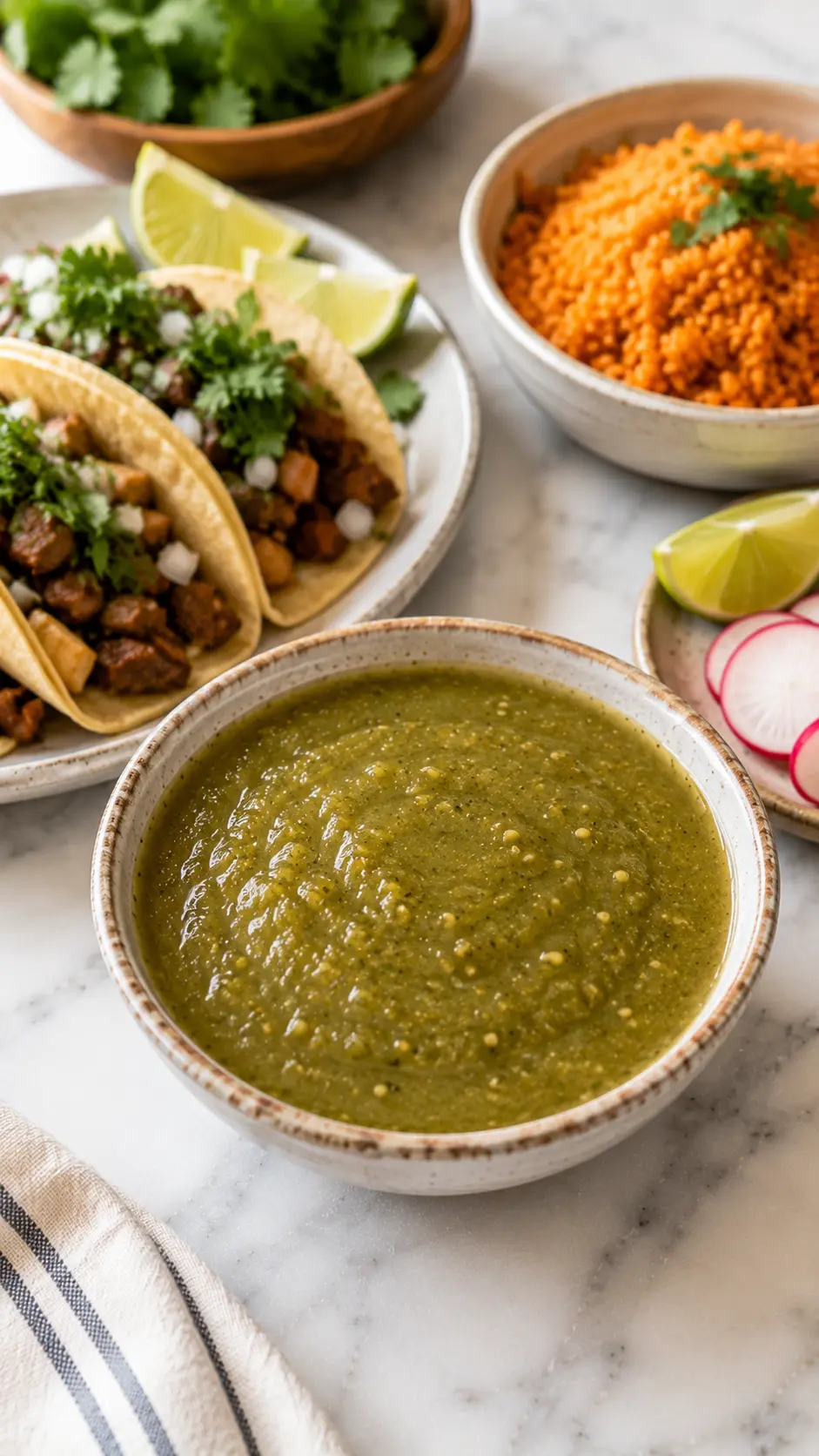
I serve it most often with warm tacos, scrambled eggs, or grilled chicken. A small bowl of this sauce on the table lets everyone add as much or as little as they like.
When I have leftovers, I spoon it over roasted vegetables or stir a little into rice and beans. If I am deciding between fresh and canned tomatillos, I often look back at this guide on fresh vs canned tomatillos before making a batch.
- Warm corn tortillas
- Grilled chicken or pork
- Rice and black beans
- Sliced avocado
- Simple roasted vegetables
I do not serve large portions because the sauce is bright and lively. A few spoonfuls are usually enough to bring everything on the plate together.
Variations and Adjustments for Tomatillo hot sauce
Tomatillo hot sauce is one of those recipes I have adjusted many times over the years, and Chef Thomas has found that a few small changes can make the sauce fit different meals without changing its character.
Mild or Spicy
If I want a gentler sauce, I use just one jalapeño and remove the seeds before cooking. For a spicier batch, I add an extra jalapeño or swap in a serrano pepper, knowing the heat will build quickly.
Texture Adjustments
I strain the sauce when I want it smooth and easy to pour over tacos or eggs. If I leave a few seeds and bits of pulp behind, the sauce feels a little thicker and heartier.
Brightness and Flavor Balance
Sometimes I add a little extra cilantro when I want a fresher finish. If the vinegar tastes too sharp for the meal I am serving, I use a slightly smaller splash the next time, but I still keep enough to preserve the bright flavor of the sauce.
Serving Style Changes
I keep the sauce thinner for drizzling over grilled meats and vegetables. For dipping, I blend it a little less so it has more body and clings better to the food.
I have learned that this recipe responds well to small adjustments, but changing too many things at once can make it lose the balance that makes it work.
Storing and Making Tomatillo hot sauce Ahead
Tomatillo hot sauce is one of those recipes I often make in a slightly larger batch, and Chef Thomas has learned that a little planning makes it even more useful during the week.
I keep the sauce in a clean glass bottle or a jar with a tight lid in the refrigerator. It stays in good shape for up to 3 weeks, though the flavors mellow a bit and the sauce may separate as it sits. A quick shake usually brings it back together.
This sauce freezes fairly well if you want to save some for later. I like to freeze small portions so I can thaw only what I need, and leaving a little space in the container helps as it freezes.
For make-ahead cooking, I often prepare the sauce a day or two before serving. The flavors have a little time to settle, and it is one less thing to do when dinner is on the table.
I do not usually reheat this sauce because I enjoy it cold or at room temperature. If I want it slightly warm, I heat it gently over low heat just until it loosens and smells fresh again. I avoid boiling it because that can dull the bright flavor and change the texture.
The Small Detail That Makes Tomatillo hot sauce Work
Most people blend the sauce as soon as the vegetables come out of the pot. I used to do the same thing, especially when I was in a hurry, but the sauce often ended up a little thin and the flavors did not seem as clear.
Over time, Chef Thomas noticed that letting the cooked vegetables drain for a minute or two made a difference. The extra water had less of a chance to dilute the bright, tangy flavor that makes this sauce stand out.
The small adjustment is simple. After simmering, I let the tomatillos and peppers sit in the colander for a minute before they go into the blender. A little draining helps control the texture and keeps the flavors more concentrated, which follows the same idea behind basic kitchen techniques explained by reducing liquids.
That one adjustment made this recipe far more reliable for me.
Chef Thomas often says on Tomatillo Recipes that a few extra moments with tomatillos can make a simple sauce taste more balanced.
Frequently Asked Questions About Tomatillo hot sauce
Can I use green tomatoes instead of tomatillos?
Yes, you can. Green tomatoes make a good substitute when tomatillos are hard to find, but the sauce will be a little less tangy and slightly sweeter.
How spicy is this sauce?
That depends on how many jalapeños you use and whether you leave the seeds in. I usually start with one pepper if I want a milder sauce and add more heat in the next batch if needed.
Why is my sauce too thin?
Too much cooking liquid usually causes this. Chef Thomas likes to let the cooked vegetables drain for a minute before blending because it helps keep the sauce a little thicker.
Do I have to strain the sauce?
No, but straining gives it a smoother texture. If I am using the sauce for dipping, I sometimes leave it unstrained so it has a bit more body.
How long does homemade hot sauce keep?
Stored in a clean bottle in the refrigerator, this sauce keeps well for up to three weeks. The flavors may soften a little over time, so I always give it a shake before using it.
Can I make this sauce ahead of time?
Yes. In fact, I often make it a day ahead because the flavors have time to settle and blend together. Chef Thomas finds that the sauce tastes a little more balanced after resting overnight.
What can I serve this sauce with?
I use it on tacos, grilled chicken, eggs, roasted vegetables, and rice bowls. A few spoonfuls can add a bright, fresh flavor to a simple meal.
Final Thoughts on Tomatillo hot sauce
Tomatillo hot sauce is one of those recipes I keep coming back to because it is simple, reliable, and easy to fit into everyday meals.
Chef Thomas has made versions of this sauce for many years, and I still enjoy having a jar in the refrigerator for tacos, eggs, or grilled chicken. If you are looking for another way to use these bright flavors, I often pair it with dishes like tomatillo chicken recipe. Sometimes the most useful recipes are the ones that quietly earn a permanent place in the kitchen.