
Irish Vegetarian Stew is one of those meals I come back to when I want comfort without feeling weighed down. I’m Chef Thomas, and after more than 40 years in kitchens, I’ve learned that how food feels after the meal matters just as much as taste.
I grew up with rich stews that filled the house with warmth but often left us slow and tired later. This version keeps that same cozy feeling, yet it feels lighter and more steady. Soft potatoes, gentle herbs, and a slow simmer do most of the work, just like in other calm, one-pot meals I share, such as my Nariyal Chicken Recipe or the Stoved Chicken Recipe we make on busy nights.
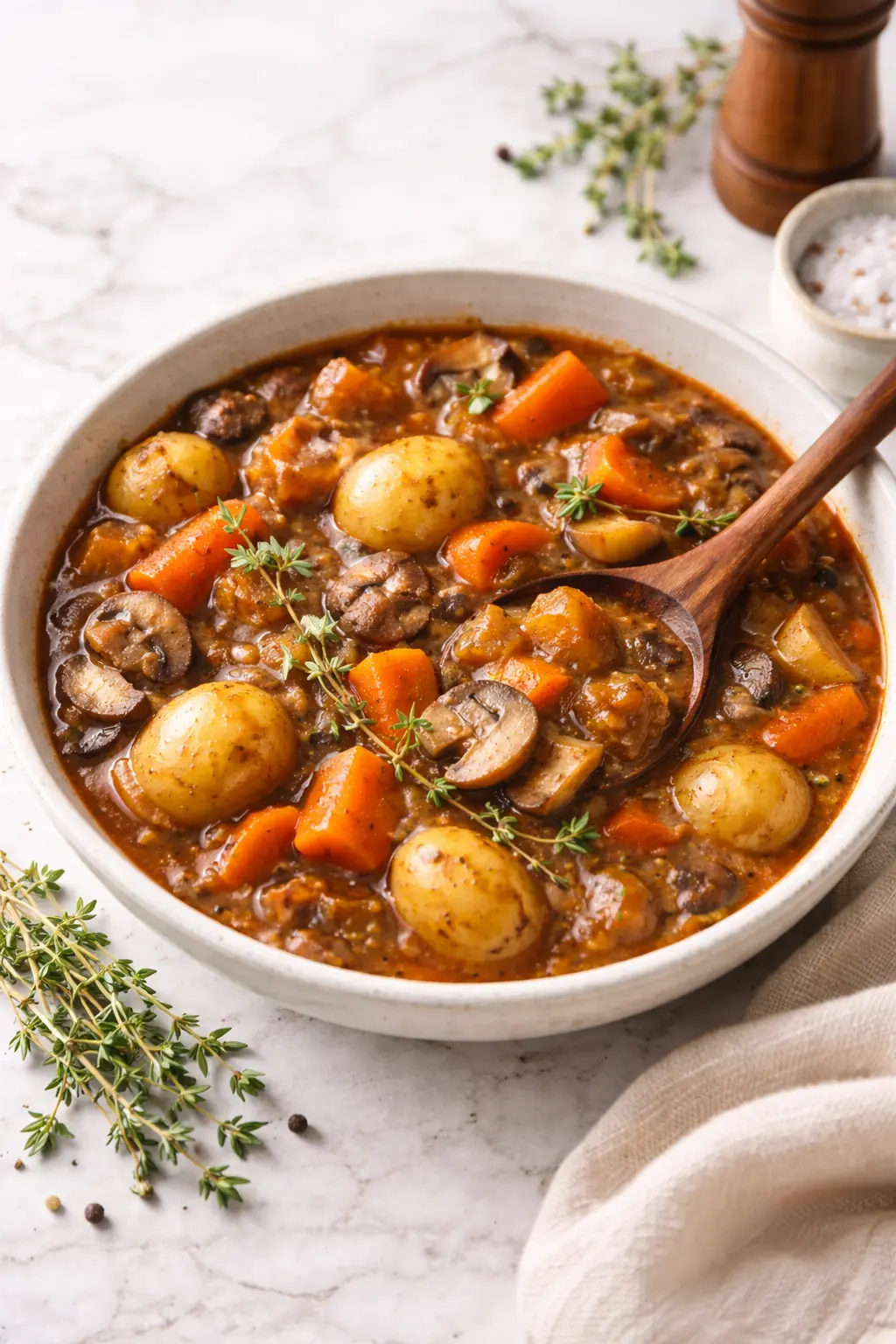
- Warm, balanced flavor from simple vegetables
- One-pot cooking keeps prep stress low
- Filling without leaving you sluggish
- Needs a slow simmer to reach its best texture
- Mild profile may feel too gentle for spice lovers
Table of Contents
Why You’ll Love Irish Vegetarian Stew Recipe
I keep coming back to this Irish Vegetarian Stew because of how it makes us feel after the meal. Full, warm, and steady. No heaviness. No need to lie down after eating. Much like a bowl of vegan creamy sun-dried tomato pasta, it offers a satisfying comfort that doesn’t weigh you down.
I’ve been making this most Sundays lately. It’s easy to start, then it takes care of itself. The kitchen smells calm and familiar. Soft potatoes, gentle herbs, and a broth that feels soothing rather than rich. Sometimes I’ll pair it with a side of crispy oven-roasted cauliflower to add a bit of texture to the table while keeping the meal light and nourishing.
Here’s why it works so well in real life:
- It’s simple to prepare, even on busy days
- The flavors are mild, creamy, and comforting
- It fills you up without bloating
- It reheats well and tastes better the next day
Even my family asks for this one again and again, especially when the weather cools down. For me, that’s the best sign. This is food that fits into a healthy routine without feeling like work.
Get The Recipe

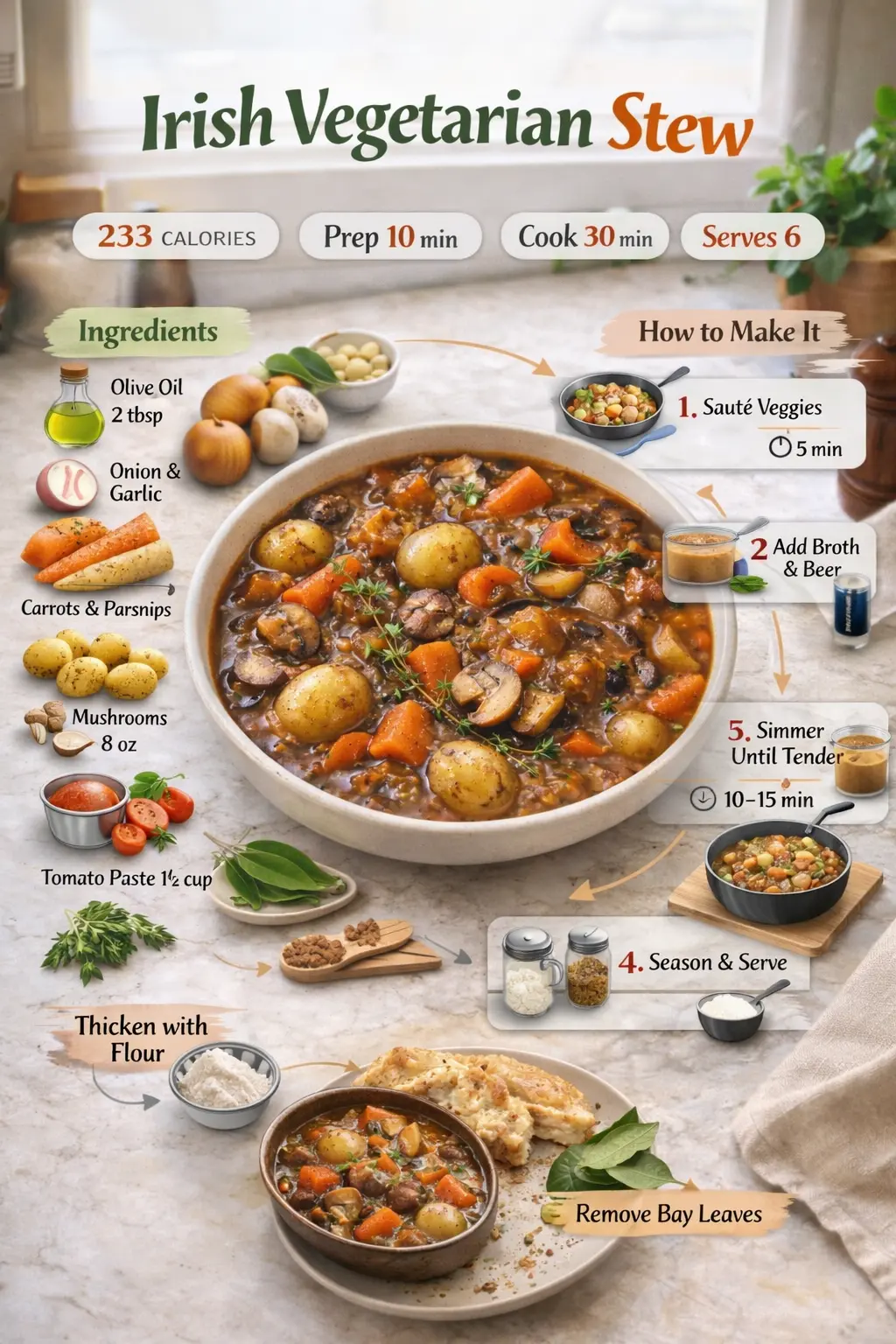
Irish Vegetarian Stew
Ingredients
Equipment
Instructions
- Heat olive oil in a large pot. Sauté celery, onion, and mushrooms for 5 minutes. Add garlic for the final minute.
- Stir in the tomato paste. Cook for 2–3 minutes until it turns a deep brick-red. This is the secret to the "rich, earthy" flavor.
- Sprinkle in the flour. Stir constantly for 1 minute to cook out the "raw" flour taste.
- Pour in the stout beer first. Use a wooden spoon to scrape the flavorful brown bits off the bottom of the pot.
- Add 2 cups of broth, potatoes, carrots, parsnips, and all seasonings.
- Bring to a boil, then reduce heat to low. Cover and simmer for 35–40 minutes.
- If the stew is too thick, add the remaining broth. Remove bay leaves and serve.
Notes
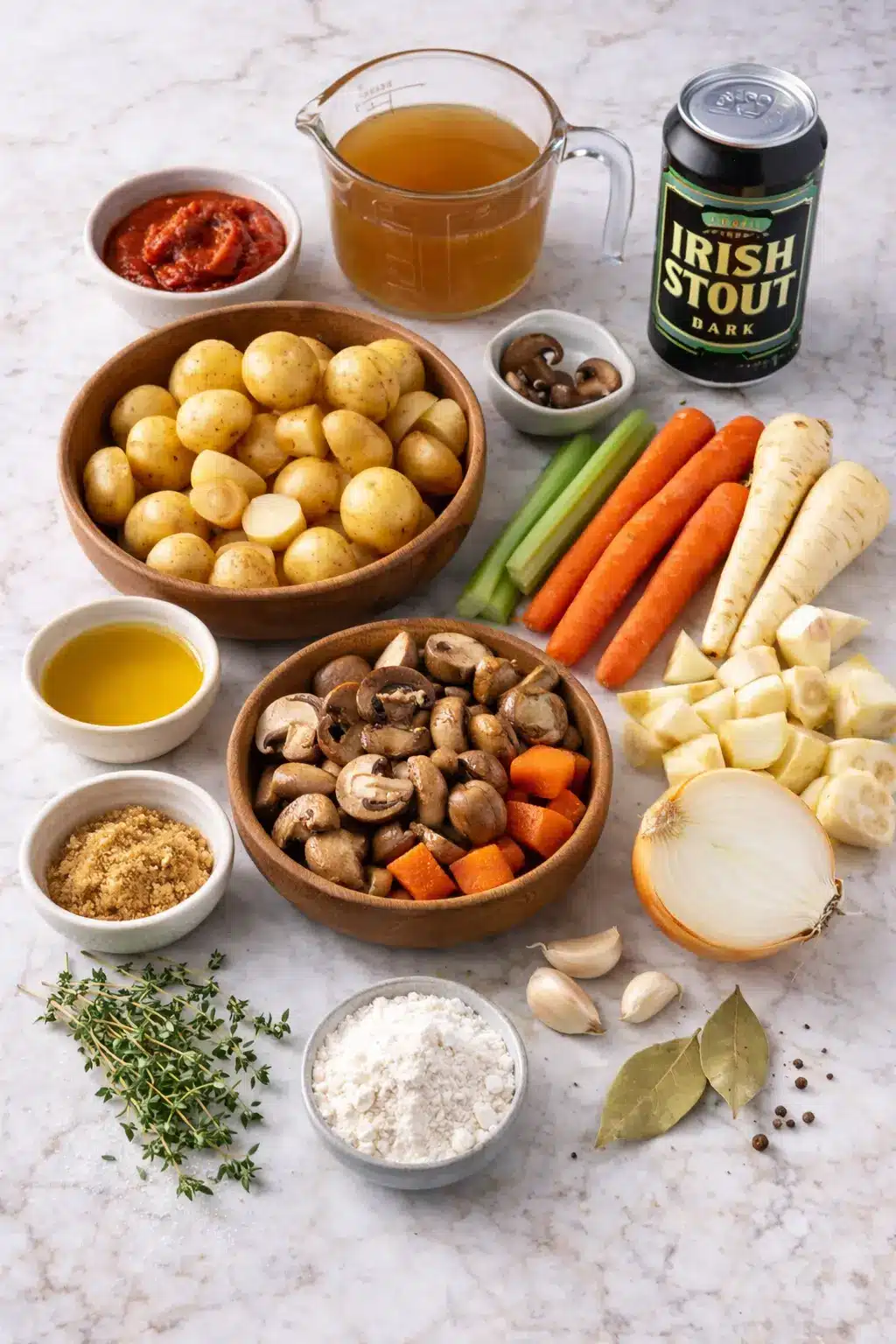
Irish Vegetarian Stew Ingredients
Stew Base
- 2 tablespoons olive oil
- 2 ribs celery chopped
- 1 yellow onion chopped
- 4 cloves garlic minced
- 1/4 cup all-purpose flour
- 2-4 cups vegetable broth
- 1 can vegan stout beer 473 ml
Vegetables
- 3 carrots peeled and cut into chunks
- 2 parsnips peeled and cut into chunks (optional)
- 8 oz mushrooms quartered
- 2 1/2 cups baby potatoes halved
- 1/2 cup tomato paste
Seasoning
- 2 bay leaves
- 2 teaspoons brown sugar
- 1 teaspoon dried thyme leaves
- 3/4 teaspoon salt
- 1/2 teaspoon ground pepper
This list stays simple on purpose. Each ingredient has a clear role, helping the stew feel warm, balanced, and easy to enjoy. If you’re curious about how spices support flavor in everyday cooking, you can read more about spices.
As Chef Thomas, I’ve found that when every item has a reason to be there, the dish naturally feels steady and comfortable.
[elementor-template id=”35384″]
How to Make Irish Vegetarian Stew
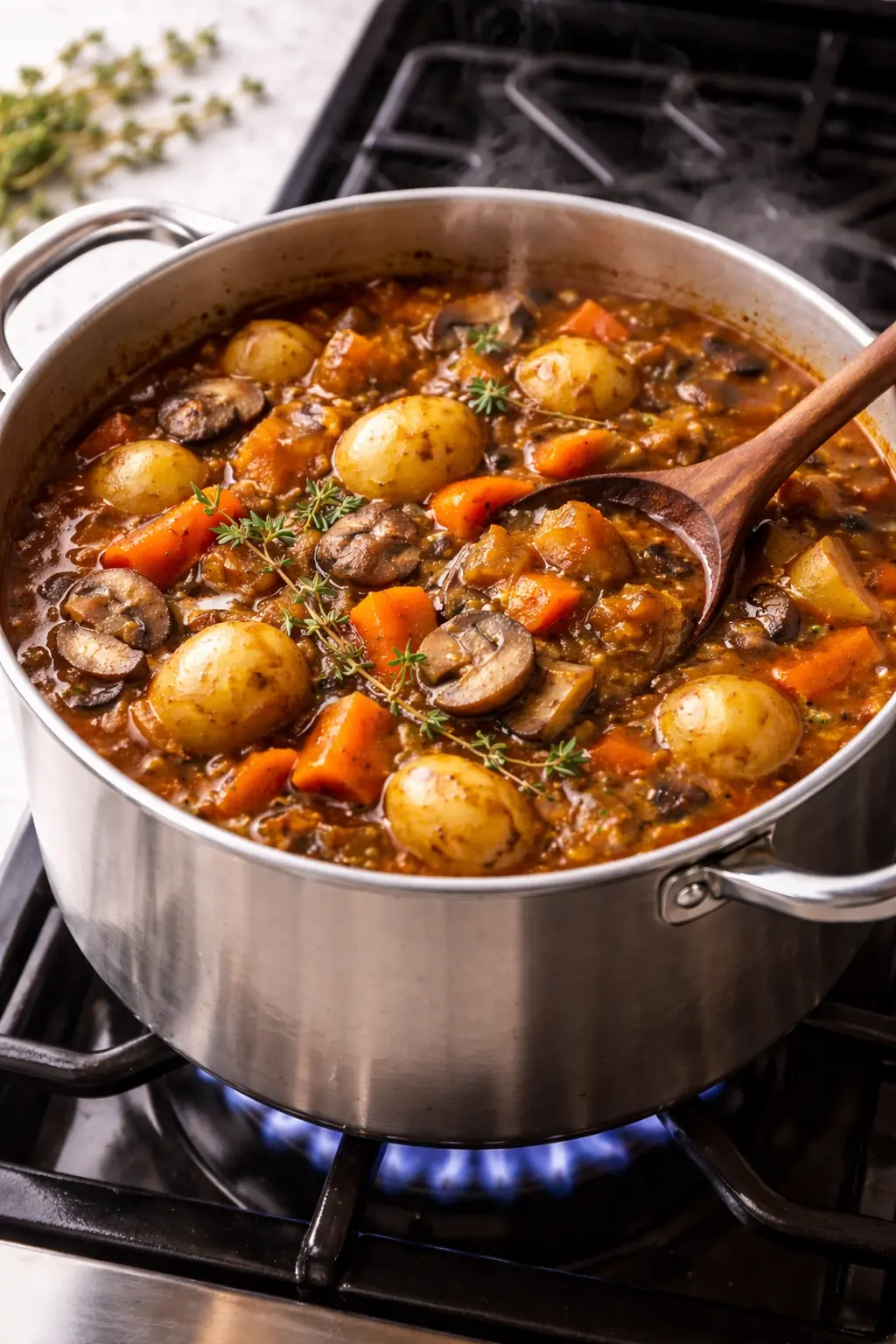
Equipment & Tools I Used for This Recipe
When I make a steady vegetable stew like this, I keep the setup simple and dependable. A sturdy pot that holds heat well and a few basic prep tools make the cooking feel calm from start to finish. That’s the kind of quiet rhythm I always aim for in my kitchen.


Having reliable basics like these makes everyday cooking smoother and less stressful over time. Browse my complete list of recommended cooking essentials.
How to Serve Irish Vegetarian Stew
Once the stew is done, I usually turn off the heat and let it sit while I clear the counter. That short pause makes a difference. Everything settles, and the broth feels thicker and calmer.
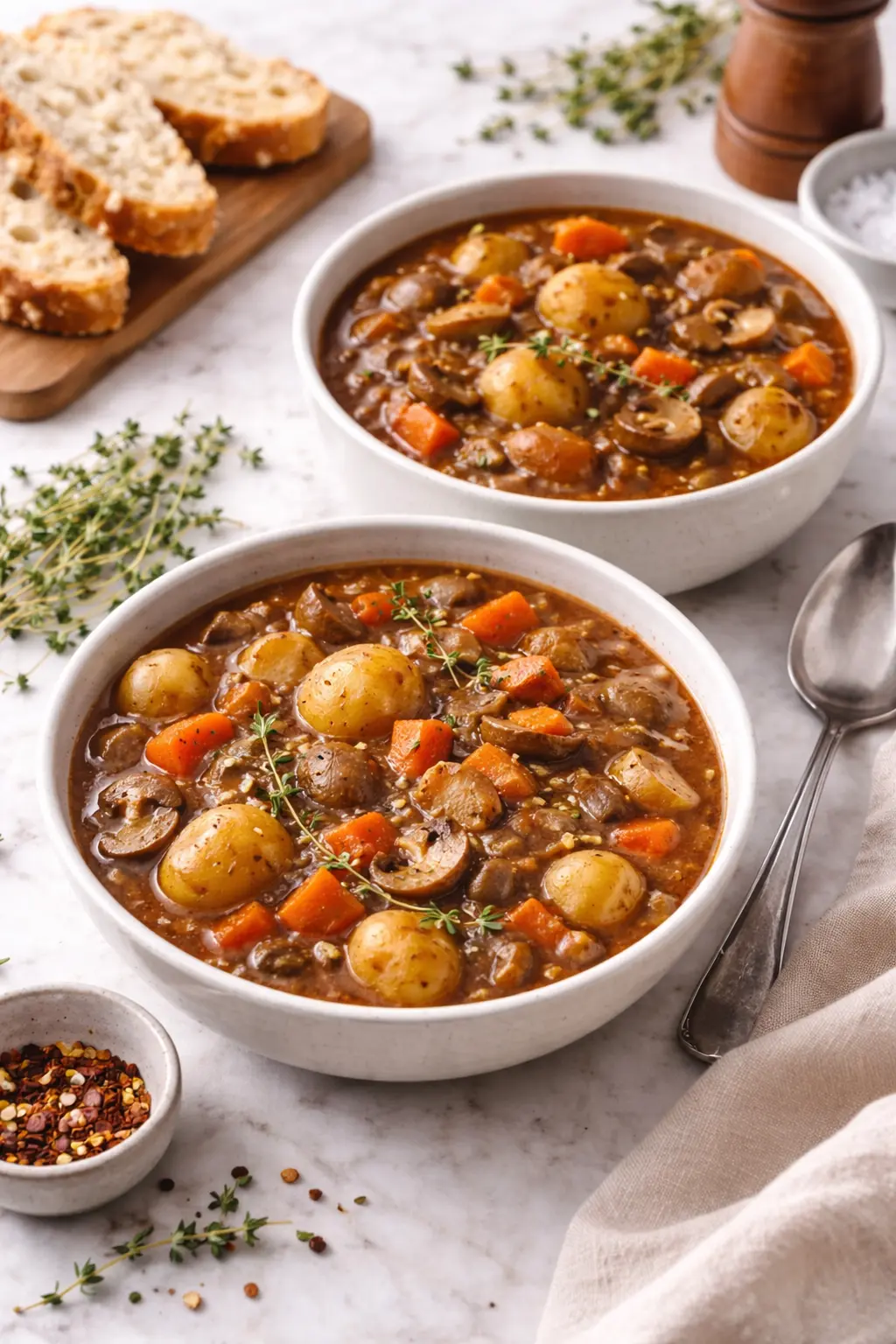
We almost always eat this in big bowls. No sides, no fuss. It holds its own. On days when it’s colder or we’re extra hungry, I’ll grab some bread and put it on the table. People tear it, dip it, and that’s that. Sometimes, when I want a meal that brings that same quiet comfort but with more vibrant colors, I’ll prepare a tray of one-pan Greek vegetables to keep things simple and oven-roasted.
If there’s a handful of greens in the fridge, I’ll throw together a small salad. Nothing planned. Just enough to freshen things up. And if someone at the table wants a bit of natural sweetness to balance the savory broth, I might set out a few roasted sweet potato rounds with honey to share.
This is how Chef Thomas serves it at home. Quiet food, eaten slowly, without trying to make it more than it is.
How to Store Irish Vegetarian Stew
After dinner, I usually leave the pot on the stove and let it cool while we talk or clean up. No lid, no rush. Hot stew trapped too fast turns watery, and I’ve learned that the hard way.
Once it’s cool, I move it into a container and put it in the fridge. It holds well for up to five days. That timing isn’t random. Food safety groups generally agree that cooked vegetable dishes stay at their best within that window when kept cold. In my own kitchen, day two is the sweet spot. The flavors settle, and the stew tastes fuller than it did the first night.
Reheating matters too. I always use low heat on the stove. I stir gently and add a splash of broth or water if it’s thick. Slow reheating helps the vegetables stay soft instead of breaking apart.
One thing I like about this stew is how practical it is. Studies on home cooking habits show that meals that reheat well help reduce food waste, which can account for nearly a third of household food loss. This stew almost never gets thrown away in my house.
Chef Thomas treats leftovers with the same care as the first serving. When you do that, the food keeps giving back.
What Most People Miss About This Recipe
What surprised me with this Irish Vegetarian Stew wasn’t the flavor. It was how the timing changed how we felt after eating it.
Most people cook stew hard and fast. They bring it to a strong boil and keep it there until everything is soft. I did that for years. The stew tasted fine, but it sat heavy—much like the weighted feeling you get after a heavy homemade Big Mac copycat. We felt full in a way that slowed us down.
The small change that made the biggest difference was keeping the heat low once everything went into the pot. A gentle simmer lets the potatoes break down slowly, the mushrooms stay tender, and the broth turn smooth instead of thick and muddy. This lighter technique reminds me of how I prepare oven-roasted garlic cabbage steaks; when you treat the vegetables with a bit of patience, the meal feels lighter, and we stopped reaching for snacks later at night.
There’s a simple reason behind it. High heat can stress vegetables and push starches out too fast, which affects both texture and how the body handles the meal. Slow heat keeps things calm, in the pot and afterward.
So if you’ve been rushing this stew on high heat, try turning it down and letting it take its time. That one small shift changed the whole experience for me, says Chef Thomas.
Chef Thomas Real-Life Tips
I’ve made this Irish Vegetarian Stew enough times now to know where it shines and where small choices matter. These are the little habits that make it easier and better in real life.
These little habits didn’t come from a rule book. They came from repetition. Small adjustments, made over time, are what make this stew easy to live with. That’s how Chef Thomas keeps cooking calm and steady, week after week.
FAQ – Irish Vegetarian Stew Recipe
Is Irish Vegetarian Stew healthy?
Yes, it’s made with vegetables, potatoes, and plant-based fats that feel filling without being heavy. I like it because it leaves us satisfied and steady after eating, not sluggish.
Can I make Irish Vegetarian Stew without beer?
Yes, you can replace the beer with extra vegetable broth. I’ve done this many times, and the stew still comes out rich and comforting, just a bit milder.
Why does my stew taste bitter?
Bitterness often comes from too much tomato paste or a beer you don’t enjoy on its own. I suggest starting with less and adjusting slowly as it simmers.
How long does Irish Vegetarian Stew last in the fridge?
It keeps well for up to five days when stored in a covered container. In my experience, the flavor is best on day two or three.
Can I freeze Irish Vegetarian Stew?
Yes, you can freeze it, but the texture of the potatoes may soften after thawing. I prefer keeping it in the fridge and enjoying it within the week.
Final Thoughts on This Irish Vegetarian Stew
This Irish Vegetarian Stew has become one of those steady meals I rely on. It warms me up, keeps my digestion calm, and leaves me feeling satisfied without that heavy end-of-day drag. If you give it a try, I’d love to hear how it fits into your routine. Save the pin, leave a comment, or share your own twist.
And if you’re looking for more comforting meals that bring a similar warmth to the table, you might enjoy the rich flavors of Marry Me shrimp or a classic, hearty easy Shepherd’s pie casserole. Both follow that same simple, soul-warming approach to a family dinner.
[elementor-template id=”35338″]