
Tomatillo ranch chicken is baked chicken coated and simmered in a from-scratch tomatillo ranch sauce roasted tomatillos blended with garlic, cilantro, lime, and a ranch base until the sauce becomes something you will want on everything.
The tomatillos are doing serious structural work here: their natural pectin thickens the sauce as it bakes, their acid tenderizes the protein surface, and their cooked-down tartness turns into a low, earthy sweetness that holds the whole dish together.
This is a medium-effort weeknight dinner. You need about 20 minutes of active prep husking, roasting, blending and 25 minutes in the oven. No special equipment beyond a blender and a baking dish.
Whether you came here looking for a green ranch chicken recipe for busy nights, or you found this searching for baked tomatillo chicken with real sauce depth, this is the recipe.
I have come back to this one more times than I can count. The sauce never fails once you roast the tomatillos first.
If you are new to working with this ingredient, What Is a Tomatillo covers everything before you start.

| Serves | 4 |
| Prep Time | 20 minutes |
| Cook Time | 25 minutes |
| Total Time | 45 minutes |
| Skill | Easy |
| Cost | Budget |
What Is Tomatillo Ranch Chicken?
Tomatillo ranch chicken is a Southwestern baked chicken dish in which the protein is both marinated and cooked inside a creamy tomatillo-based sauce. It belongs to a tradition of green-sauced chicken preparations common across Mexican home cooking and the American Southwest dishes where Physalis philadelphica, the tomatillo, provides both the acid and the body of the sauce rather than tomato or cream.
The dish is distinct from salsa chicken, which uses a finished jarred salsa poured over protein. Here the sauce is built from scratch: raw tomatillos are roasted to collapse their structure, then blended with aromatics, then used as both a marinade and a baking liquid. That sequence is what separates it from the shortcuts.
It is also different from chile verde, which is a long-braised pork dish. This is a fast oven recipe. The tomatillo sauce needs less than 30 minutes to do its work on the chicken because the roasting step has already driven off the harsh raw acidity before the protein ever enters the pan.
Dishes like this one belong to a wider family of tomatillo-based green sauces built on the same logic: roast the fruit, blend it hot, use the sauce as the cooking medium. The method transfers. Learn it once and you can apply it to pork, fish, or vegetables. The tomatillo is the constant.
The Tomatillo’s Role in Tomatillo Ranch Chicken
Raw tomatillos register a pH of approximately 3.6 to 3.8, which gives them an aggressive tartness that would overwhelm any protein cooked directly in the raw juice. Roasting at high heat drives off between 15 and 25 percent of their water content, concentrates the natural sugars, and raises the effective pH toward 4.3 to 4.5.
The result is a sauce with measurably lower perceived acidity and a pronounced sweetness that was not present in the raw fruit. The color shift bright lime green to a dull army green is the reliable visual indicator that this transformation has occurred. When you see that color, the sugars have developed and the sauce is ready to blend.
At the protein level, the residual acidity in the roasted tomatillo sauce denatures the outermost layer of myosin in the chicken surface, which opens the muscle fibers slightly and allows the sauce to penetrate rather than sit on top.
As the dish bakes, the sauce’s natural pectin concentrated during roasting binds with the released collagen from the chicken and thickens the liquid into a coating consistency without added starch or cream. This is what tomatillo does structurally that tomato cannot: the pectin load in tomatillos is higher, and the result is a self-thickening sauce.
On the canned versus fresh question for this recipe specifically: canned tomatillos are already cooked, which means you skip the Maillard development and the char notes that roasting produces on a fresh surface.
The sauce will be milder, thinner, and lack the slight smokiness that makes a roasted tomatillo sauce distinct from a green salsa poured over chicken. I use fresh for this dish. The roasting step is not optional in my kitchen, and I have not switched to canned even when fresh tomatillos are harder to source in late winter it changes the sauce too much.


Table of Contents
Tomatillo Ranch Chicken (Easy Baked Green Ranch Chicken)
Ingredients
Equipment
Instructions
- Preheat oven to 425°F (220°C). Arrange tomatillos, quartered onion, garlic cloves, and jalapeño on a sheet pan. Drizzle with olive oil. Roast for 18 to 20 minutes until tomatillo skins blister and turn army green.
- Reduce oven heat to 375°F (190°C). Transfer all roasted vegetables and pan juices to a blender. Add cilantro, sour cream, ranch seasoning, lime juice, salt, cumin, and black pepper. Blend on high for 45 to 60 seconds until completely smooth.
- Place chicken thighs in a baking dish. Pour two-thirds of the tomatillo ranch sauce over the chicken and turn each piece to coat. Reserve the remaining sauce for finishing.
- Bake at 375°F (190°C) for 25 to 30 minutes, until internal temperature at the thickest point away from the bone reaches 165°F (74°C).
- Remove from oven. Spoon the reserved tomatillo ranch sauce over each piece. Rest 5 minutes before serving.
Notes
Ingredients
| Ingredient | Amount |
|---|---|
| Fresh tomatillos, husked and rinsed | 1 lb (450g) |
| Bone-in, skin-on chicken thighs | 4 pieces (approx. 2.5 lbs / 1.1 kg) |
| Garlic cloves | 4 |
| White onion, quartered | ½ medium |
| Fresh jalapeño | 1 |
| Fresh cilantro | ½ cup (15g) |
| Sour cream | ¼ cup (60g) |
| Ranch seasoning mix | 1 packet (1 oz / 28g) |
| Lime juice, fresh | 2 tbsp |
| Olive oil | 2 tbsp |
| Kosher salt | 1 tsp |
| Ground cumin | ½ tsp |
| Black pepper | ½ tsp |
Ingredient Notes
Tomatillos — start here. Fresh tomatillos need to feel firm under the husk, not soft. The husk should be dry and papery. A good fresh tomatillo will be solid with no give when you squeeze it. If you skip the roasting step and use them raw in the blender, the sauce will taste aggressively sour the kind of sharp that doesn’t mellow in 25 minutes of baking. Roasting is the step that converts this from a harsh green liquid into a sauce. Canned tomatillos work in a pinch but the sauce body and smokiness will not be the same. See above.
Chicken thighs. I always use bone-in, skin-on thighs for this dish. The collagen from the bone releases into the tomatillo sauce during baking and gives the liquid a body that boneless cuts cannot produce. Boneless thighs will cook faster reduce oven time by about 8 minutes but you lose sauce depth. Chicken breasts work structurally but require careful monitoring because they dry out above 165°F (74°C) and the tomatillo acid cannot reverse that.
Sour cream. This is what makes it a ranch-style sauce rather than a straight salsa verde baked chicken. The fat in the sour cream carries the ranch seasoning and softens the tomatillo’s acid into a creamy coating. Greek yogurt is a functional substitute it will be slightly tangier and thinner.
Ranch seasoning. One standard packet is calibrated for this sauce volume. Don’t double it. The salt level in most ranch packets is significant and the tomatillos already bring their own mineral edge.
How to Make Tomatillo Ranch Chicken
The sequence matters here: roast the tomatillos first so the sauce has real depth, blend the sauce second, then bake the chicken inside the sauce. Reversing any step produces a different and lesser result.
Step 1: Roast the Tomatillo Base
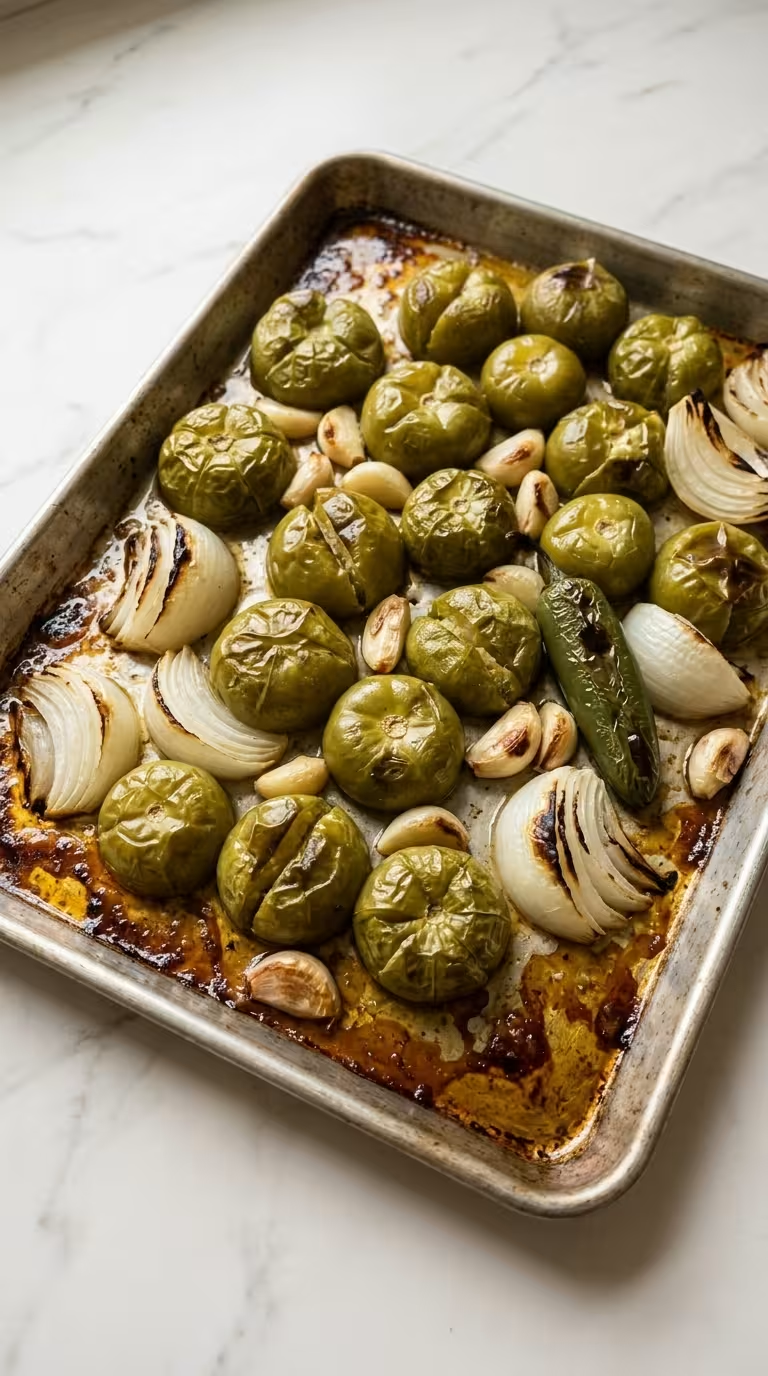
Set your oven to 425°F (220°C). Arrange husked and rinsed tomatillos, quartered onion, garlic cloves, and jalapeño on a sheet pan in a single layer. Drizzle with olive oil and roast for 18 to 20 minutes.
Roasting drives off the tomatillos’ surface moisture and triggers the Maillard reaction on their skin, developing char notes and converting the harsh raw acidity into a rounded, slightly sweet base. Without this step, the sauce tastes raw and one-dimensional the pectin doesn’t concentrate and the sauce will not thicken properly in the oven.
If you skip this step, you will have a thin, sour sauce that separates from the chicken rather than coating it.
The tomatillos are done when their skins have blistered and darkened to an army-green color, the garlic is soft when pressed, and the pan has visible caramelized liquid around the edges. You will smell a roasted, slightly smoky note that is what you want.
Step 2: Build the Tomatillo Ranch Sauce — Blending
Reduce oven heat to 375°F (190°C). Transfer all roasted vegetables and their pan juices to a blender. Add cilantro, sour cream, ranch seasoning packet, lime juice, salt, cumin, and black pepper.
Blend on high for 45 to 60 seconds until completely smooth.
The heat of the just-roasted vegetables partially cooks the cilantro in the blender, which fixes its bright color and prevents the oxidation that turns fresh cilantro brown in a sauce. The sour cream emulsifies with the tomatillo pectin to create a coating texture. Under-blending leaves fiber chunks that don’t adhere to the chicken.
A thin, separated sauce at this stage means the tomatillos were under-roasted and didn’t release enough pectin. Run it a bit longer or add one tablespoon of sour cream to bind it.
The finished sauce should be pale green, smooth, and thick enough to coat the back of a spoon. It will smell like roasted tomatillo, cilantro, and garlic not raw salsa verde.
Step 3: Marinate and Bake the Chicken — Tomatillo Sauce Method
Place chicken thighs in a baking dish. Pour approximately two-thirds of the sauce over the chicken and turn each piece to coat. Reserve the remaining sauce for finishing.
Bake at 375°F (190°C) for 25 to 30 minutes.
The residual acid in the tomatillo sauce continues to work on the protein surface during baking, keeping the outer layer tender while the heat cooks the interior. The baking liquid also self-bastes the chicken as the sauce reduces and concentrates in the dish.
Dry, tough chicken here means one of two things: overcooked, or cooked in a sauce that was too thin and didn’t insulate the protein from direct heat.
The chicken is done when the internal temperature at the thickest point, away from the bone, reads 165°F (74°C). The skin will have pulled back slightly from the bone and the sauce around the edges of the pan will have thickened and darkened. Check with a thermometer do not rely on color alone.
Step 4: Finish with Reserved Sauce
Remove from the oven. Spoon the reserved tomatillo ranch sauce over each piece of chicken.
The fresh sauce on top reactivates the cilantro flavor that baked off during cooking and adds a creamy finish that the reduced pan sauce alone doesn’t provide.
Let it rest 5 minutes before serving. The sauce will continue to thicken as it cools slightly.
Above is the core of this dish. What follows variations, tips, storage, and troubleshooting is everything else you might need depending on how you want to work with it.
Slow Cooker Variation
The slow cooker version of this dish produces a different sauce character. Because the tomatillos cannot brown in a slow cooker, the char notes from Step 1 are lost which means you still need to roast the tomatillos on a sheet pan first, even for the slow cooker version.
Once the sauce is blended, place chicken thighs in the slow cooker, pour the sauce over, and cook on LOW for 5 to 6 hours or HIGH for 2.5 to 3 hours. The tomatillo sauce will be slightly thinner at the end because of additional moisture released from the chicken.
What you gain: the chicken becomes fall-off-the-bone tender. What you lose: the caramelized skin and the tighter sauce consistency of the baked version.
For a full recipe dedicated to this method, Slow Cooker Tomatillo Chicken covers the technique in detail.
Chef Thomas Tips for the Best Tomatillo Ranch Chicken
- Do not skip the tomatillo roasting step. Raw tomatillos blended directly into the sauce produce an aggressive sharpness that does not cook out in 25 minutes of baking. Roasting is where the flavor is built.
- Use a thermometer. Pull the chicken at exactly 165°F (74°C) at the thickest point away from the bone. At 170°F it is still good. At 180°F it is noticeably drier and the tomatillo sauce cannot fix that.
- Let the sauce rest 5 minutes before serving. The tomatillo pectin continues to bind as the sauce cools. Cut into the chicken immediately and the sauce will run. Wait and it sets into a proper coating.
- Roast the jalapeño whole. A whole roasted jalapeño produces less heat than a seeded raw one — the capsaicin compounds moderate under high heat. If you want it hotter, add a raw serrano when blending.
- Double the sauce. The tomatillo ranch sauce freezes well on its own. I usually make a double batch and freeze half in a jar. Reheat it over low heat and it works as a drizzle for tacos, a base for soup, or a sauce for eggs. Best decision I make about once a month.
- For a similar flavor profile with much less hands-on time, Tomatillo Chicken Tacos with Salsa Verde uses a streamlined version of this sauce.
- For the creamiest result, keep the sour cream at room temperature before blending. Cold sour cream doesn’t emulsify as smoothly with hot roasted tomatillos and you can get small flecks rather than a uniform coating.
The tomatillo ranch sauce in this recipe belongs to the same sauce family as the salsa verde and green enchilada sauces on this site. The roasting method is the constant. The protein, the finish, and the presentation change the base technique does not.
Variations and Substitutions
Tomatillo Substitutions
Fresh tomatillos are the correct choice for this dish the roasting step produces char and concentrates pectin in ways that processed products cannot replicate.
Canned tomatillos are pre-cooked. You can skip the roasting step and blend them directly, but the sauce will be thinner, milder, and lack the smokiness. Add a half teaspoon of smoked paprika to partially compensate.
Jarred salsa verde removes the need for a blender and significantly cuts prep time. Use 1½ cups of a good jarred salsa verde in place of the blended sauce. Blend it with the sour cream and ranch seasoning. The sauce will be saltier taste before adding additional seasoning. Check out Fresh vs Canned Tomatillos for a full breakdown of the flavor difference.
Green enchilada sauce works as a substitute in the same proportion. It is smoother and less bright than a from-scratch tomatillo sauce, but the dish holds together. When I make this on a night when I have nothing in the house, that is what I reach for.
Protein Substitutions
Boneless, skinless chicken thighs: reduce bake time to approximately 18 to 20 minutes at 375°F (190°C). The sauce will be slightly thinner without the bone collagen contribution.
Chicken breasts: watch the internal temperature carefully. Breasts have less fat and go from 165°F (74°C) to dry very quickly. I prefer to pound them to an even thickness before coating.
Pork tenderloin: slice into medallions and reduce bake time to 20 minutes or until internal temperature reaches 145°F (63°C). The tomatillo acid pairs well with pork Roasted Tomatillos Chickpea Curry shows a different angle on the same tomatillo roasting logic for a plant-based approach.
Spice Level Adjustments
The base recipe is mild. The single roasted jalapeño produces minimal heat after blending.
Mild: remove jalapeño seeds before roasting, or skip the jalapeño entirely.
Medium: leave jalapeño seeds in and add ¼ teaspoon of cayenne to the blender.
Hot: replace the jalapeño with 2 serranos, or add 1 raw serrano to the blender after roasting the milder pepper. Adding raw heat after roasting preserves more capsaicin intensity.
Increasing spice level does not change the tomatillo sauce body or cooking method.
Dietary Adaptations
Dairy-free: replace sour cream with full-fat coconut cream. The sauce will lose some of its ranch tang add an extra teaspoon of lime juice and a pinch of dried dill to compensate. Use a dairy-free ranch seasoning packet.
Gluten-free: most ranch seasoning packets are gluten-free, but check your brand. The rest of the recipe as written is naturally gluten-free.
Lower carb: the recipe as written is already low carbohydrate. Serve over cauliflower rice or roasted vegetables instead of white rice to keep it under 10g of net carbs per serving.
Troubleshooting
The Tomatillo Sauce Is Too Thin or Watery
Cause: The tomatillos were under-roasted and did not concentrate their pectin enough before blending. Fix: Pour the sauce into a small saucepan and simmer on medium heat for 5 to 8 minutes before adding it to the chicken. It will reduce and thicken. Prevention: Roast until the tomatillos are fully collapsed and the pan edges show caramelized liquid minimum 18 minutes at 425°F (220°C).
The Sauce Is Too Tart or Sour
Cause: Either the tomatillos were under-roasted (raw acidity still dominant) or the lime juice was over-measured.
Fix: Stir in another tablespoon of sour cream and a pinch of sugar. Both will buffer the acid without masking the tomatillo flavor.
Prevention: Roast until the color shift to army green is complete. That color change is the indicator that the acid has mellowed.
The Sauce Is Too Thick or Paste-Like
Cause: Over-roasting drove off too much liquid, or the tomatillos were very small and low in moisture.
Fix: Add 2 to 3 tablespoons of chicken stock to the blender and re-blend briefly.
Prevention: Check at the 15-minute mark during roasting. If the tomatillos look collapsed and charred but not fully blistered, pull them early.
The Chicken Is Dry or Overcooked
Cause: Internal temperature exceeded 170°F (77°C), or the baking dish had too little sauce and the chicken cooked in dry heat.
Fix: Slice the chicken and fold it into the remaining sauce in the pan. Cover with foil and let it sit in the turned-off oven for 5 minutes the sauce will rehydrate the surface.
Prevention: Use a meat thermometer. Pull at exactly 165°F (74°C). Make sure the sauce covers at least the bottom third of each chicken piece.
The Sauce Separated or Looks Greasy
Cause: The sour cream broke during baking because the oven temperature was too high or the sauce sat uncovered too long.
Fix: Remove the chicken. Whisk the pan sauce with 1 tablespoon of cold sour cream over low heat. It will re-emulsify.
Prevention: Bake at 375°F (190°C), not higher. If your oven runs hot, use an oven thermometer.
The Sauce Tastes Flat After Baking
Cause: The reserved sauce was not added at the end, so the baked-off cilantro and fresh lime were not replaced.
Fix: Add the reserved sauce and a fresh squeeze of lime before serving.
Prevention: Always hold back one-third of the sauce for finishing.
Storage, Make-Ahead, and Reheating
Refrigerator
Store cooled chicken and sauce together in an airtight container. Keeps for up to 4 days. The sauce may thicken further in the refrigerator this is the tomatillo pectin continuing to set, not spoilage.
Freezer
The tomatillo ranch sauce freezes better than the cooked chicken. Freeze sauce separately in a sealed jar or freezer bag for up to 3 months. If freezing the assembled dish, store chicken and sauce together in a freezer-safe container for up to 2 months. Thaw overnight in the refrigerator before reheating.
Tomatillos are notably high in citric and malic acid, which act as natural preservatives. This is part of why tomatillo-based sauces freeze and reheat without flavor loss the acid stabilizes the sauce structure during the freeze-thaw cycle.
Reheating
Oven: Place chicken in a covered baking dish with a splash of chicken stock or water. Reheat at 325°F (165°C) for 15 to 18 minutes. The covered dish traps steam and prevents the sauce from drying out.
Microwave: Cover loosely with a damp paper towel. Heat on 70% power in 90-second intervals, checking between each. At full power the sauce can separate and the chicken surface dries.
Make-Ahead
The tomatillo ranch sauce can be made up to 3 days ahead and refrigerated. It actually improves — the roasted flavors deepen overnight. Bring it to room temperature before using it as a marinade.
The fully assembled dish chicken coated in sauce, uncooked can be refrigerated in its baking dish for up to 24 hours before baking. Add 5 minutes to the bake time if starting from cold.
Estimated Nutrition Per Serving
| Nutrient | Amount per Serving |
|---|---|
| Calories | ~390 kcal |
| Protein | 34g |
| Carbohydrates | 9g |
| Fat | 23g |
| Saturated Fat | 6g |
| Sodium | 820mg |
| Fiber | 2g |
Estimates only. Values vary with tomatillo preparation method, protein cut, and additional ingredients used.
Frequently Asked Questions
Can I use canned tomatillos instead of fresh?
Yes, but the sauce will be different. Canned tomatillos are pre-cooked, so you lose the Maillard development from the roasting step the char notes, the concentrated sweetness, and most of the sauce body that fresh tomatillos produce. The finished dish will taste more like salsa chicken and less like a roasted green ranch sauce. Use them when fresh are unavailable, and compensate with a half teaspoon of smoked paprika in the blender.
What does tomatillo taste like in this dish?
After roasting and blending with sour cream and ranch seasoning, the tomatillos taste earthy, mildly tart, and slightly smoky. The raw sharpness is gone. What remains is a green, herby base that gives the ranch sauce a depth that bottled ranch dressing doesn’t have. Most people can’t identify the tomatillo specifically they just notice the sauce tastes like more than the sum of its parts.
Is this the same as green ranch chicken or salsa verde chicken?
Close, but not quite. A green ranch chicken recipe typically uses bottled ranch dressing mixed with jarred salsa verde no roasting, no from-scratch sauce. This version builds the sauce from roasted tomatillos, which changes both the flavor depth and the sauce body. Salsa verde chicken is usually a simpler braise without the ranch element. This sits between those two dishes.
How spicy is tomatillo ranch chicken?
At the base recipe level one roasted jalapeño very mild. The roasting process moderates the jalapeño’s heat. Most adults who are sensitive to spice handle it easily. Adjust using the spice guidance in the variations section above.
Can I make tomatillo ranch chicken ahead of time?
Yes. Two options: make the sauce up to 3 days ahead and refrigerate it, or assemble the full dish uncooked and refrigerate for up to 24 hours before baking. The sauce improves with time. Add 5 minutes to the bake time if cooking from cold.
What should I serve with tomatillo ranch chicken?
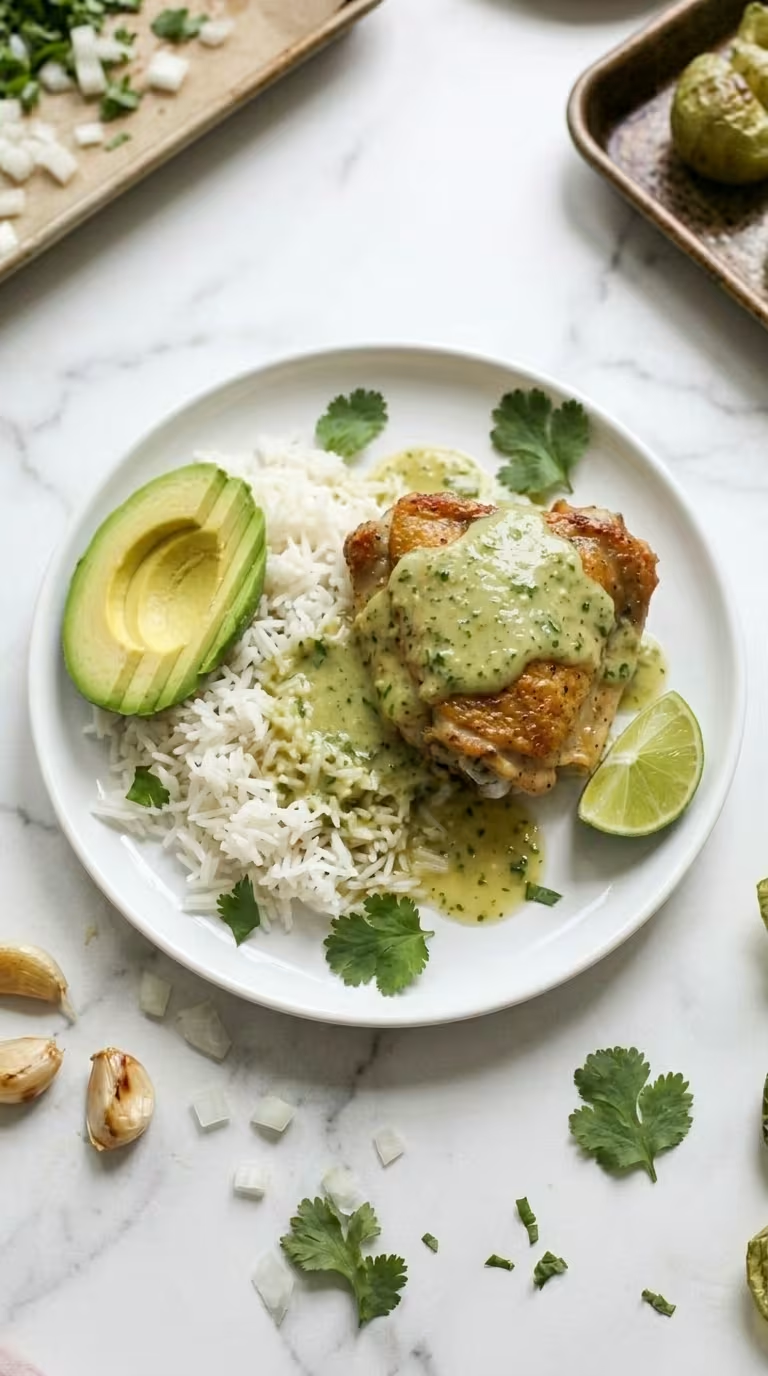
White rice absorbs the sauce well the tomatillo ranch clings to the grains and makes every bite better. Warm flour tortillas, black beans, and sliced avocado are the other natural pairings. For a green-forward plate, serve alongside Tomatillo Salsa Verde as a table condiment. Roasted corn works if you want something with sweetness to balance the acid in the sauce.
Can I make this without a blender?
You can use an immersion blender directly in the roasting pan if it is oven-safe. Otherwise, mash the roasted tomatillos, garlic, and onion with a fork into a rough paste, then whisk in the sour cream, ranch seasoning, and lime juice. The sauce will be chunkier but still functional. Texture changes the body and smoothness of a blended sauce are different from a hand-mashed one.
What is the best cut of chicken for this recipe?
Bone-in, skin-on thighs. The bone contributes collagen to the sauce, and the skin protects the meat during baking. If you want to use chicken breasts for a leaner result, see the substitution notes above the bake time and monitoring change.
A Few Final Notes
Roast first. The rest of the dish follows from that one step.
The tomatillo sauce is what makes this recipe worth repeating. It is not a marinade that you rinse off or a sauce you drizzle at the table it is the cooking medium and the finish. Getting it right means roasting the tomatillos until the color has shifted, blending it smooth while still hot, and reserving enough to add back at the end. Those three things are the whole method.
When you want a similar tomatillo flavor built into a soup format, Tomatillo Chicken Soup uses the same roasted base in a completely different direction. And if you want to stretch the tomatillo ranch sauce into a full taco spread, Tomatillo Chicken Tacos with Salsa Verde is the natural next step.